A pallet line fails when the conveyor is sized around a headline load rating instead of the pallet underside, load distribution, transfer method and operating cycle. By defining those inputs first, you can compare conveyor designs, calculate the required capacity and test a supplier’s system before installation disrupts production.
Key takeaways
- Choose conveyors from pallet underside features and route requirements.
- Specify pallet length, width, weight, clearance and conveyor roller pitch.
- Calculate motor torque, speed, accumulation capacity and required throughput.
- Test transfers, stops and accumulation logic before approving the conveyor design.
Which conveyor design suits your pallet and production route?
Choose the conveyor from the pallet’s underside and route, not from its advertised load rating.
| Option | Best fit | Main limitation |
|---|---|---|
| Powered roller | Straight transport, scanning, accumulation and controlled stops | Requires at least three load-bearing rollers beneath the pallet at every transfer point |
| Chain | Heavy pallets with defined runners or stringers, dirty environments and short transfers | Gaps, broken boards and uneven loads can catch or destabilise the pallet |
| Belt | Continuous support for unstable loads, cartons on pallets or pallets with poor roller contact | Friction, wrap and debris increase drive load and complicate cleaning |
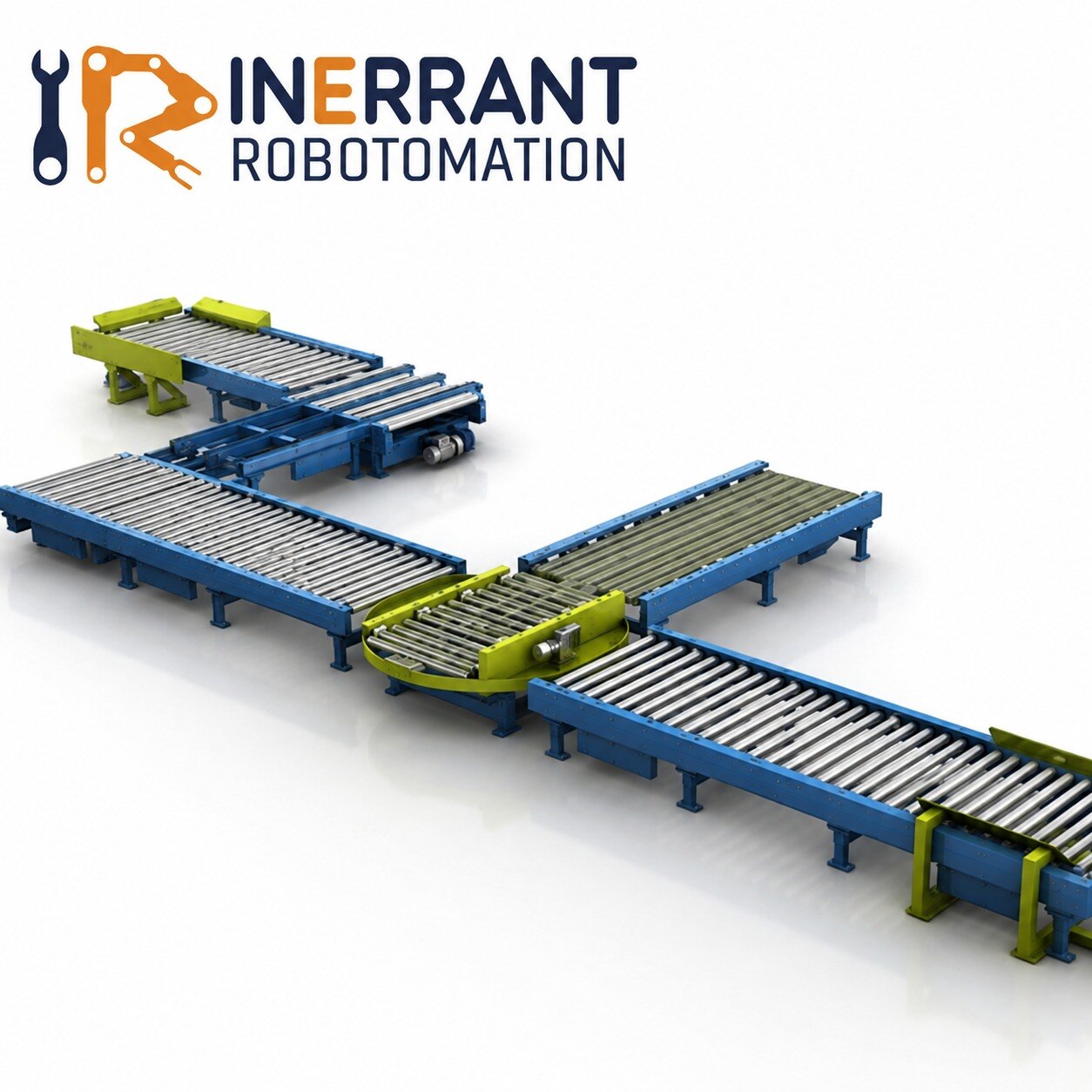
| Pallet-transfer | Crossing lanes, changing direction, rotating or joining lines | Chain transfers, pop-up rollers, turntables and pallet lifts are different devices; timing and underside clearance decide success |
| Free-roller | Manual movement or gravity-fed, low-cost sections | It cannot reliably start, stop, space or accumulate pallets without assistance |
For an automated material handling conveyor, confirm whether you use Euro, block, stringer, steel or plastic pallets, then check length, width, mass, load distribution, underside gaps, damaged boards, wrap overhang and disposable or reusable condition. A roller’s nominal capacity means little if the weight sits on one roller.
Define pallet orientation and the response to missing, skewed, double or misplaced pallets. A photoelectric sensor can detect presence while the pallet remains unsafe for transfer or scanning. Specify stops, guides and transfer timing with the pallet’s actual clearance.
For a continuously running industrial conveyor, ideal rate is 3,600 × speed in metres per second ÷ pallet pitch in metres; starts, stops, scans and transfers reduce the real rate.
What pallet and conveyor dimensions must you specify?
A quotation needs the pallet’s actual footprint, underside and loaded weight, not only the nominal “pallet size.” Send these details for every pallet format:
- Length and width, in millimetres
- Total mass of pallet plus product
- Load distribution, including concentrated or uneven loads
- Pallet material: timber, plastic or steel
- Bottom-board layout, stringer gaps, feet, runners and underside clearance
- Maximum load overhang on each side
- Condition: reusable, disposable, broken boards, protruding wrap or damaged corners
- Required travel orientation and any rotation requirement
Pallet type changes the support design.
| Pallet type | Check before quotation | Why it matters |
|---|---|---|
| Euro or block pallet | Blocks, bottom boards and gaps | Rollers can lose support at gaps |
| Stringer pallet | Stringer spacing and direction | Chain or roller contact may not align |
| Plastic pallet | Feet, runners and underside ribs | Small contact areas can sag or catch |
| Steel pallet | Base profile and concentrated load points | Weight may sit on only one or two rollers |
Specify the material handling conveyor’s usable width, roller pitch, transfer height, conveyor elevation, accumulation length, line speed and minimum pallet spacing. Powered rollers normally need at least three load-bearing rollers beneath the pallet at a transfer point; calculate this from the real underside, not the catalogue rating.
For material handling automation, also state scanner positions, pallet orientation, and responses to missing, skewed or double pallets. Give the PLC or system handshake states—ready, occupied, blocked, faulted, released and completed—so a scan failure or communication loss does not leave a pallet trapped between machines.
How do you size the drive, motor and throughput?
Start with the real production cycle, not the conveyor’s maximum catalogue speed. If one pallet leaves every 30 seconds, the required rate is 120 pallets per hour.
For a continuously running line, ideal throughput is 3,600 × speed in metres per second ÷ pallet pitch in metres; at 1 metre pitch and 0.033 m/s, that equals 119 pallets per hour before control losses.
Set pallet pitch as the pallet length plus the required gap. Alternatively, calculate it as speed × release interval, then use the larger value. Reduce the result for transfer time, scans, line stops and downstream machine availability.
A 120-pallet-per-hour takt does not justify a 120-pallet-per-hour design; specify recovery capacity and a sustained rate below the ideal calculation.
Size motor power from the worst moving condition: P = F × v ÷ efficiency. Include rolling resistance, incline force (mass × 9.81 × sin of the incline angle), acceleration force (mass × acceleration), and losses in rollers, chains or transfers.
Check peak torque for starting a loaded pallet and RMS torque across the repeated start-stop cycle; continuous horsepower alone can overheat a motor in a heavy-duty industrial conveyor.
Calculate accumulation capacity as usable accumulation length ÷ pallet pitch. At 1.2 metres per pallet and 24 metres available, the zone holds 20 pallets, or 10 minutes at 120 pallets per hour.
In material handling automation, confirm that the PLC releases pallets only when the downstream equipment reports ready, not merely when the conveyor is running.
How should pallets enter, transfer, stop and accumulate without jams?
A photoelectric sensor proves presence, not readiness. Use paired sensors or a laser scanner to confirm pallet position, orientation and load envelope; add barcode or RFID verification before a transfer or scan. Define responses for a missing pallet, skewed pallet, double pallet and timeout instead of allowing the PLC to keep advancing.
Specify these control actions:
- Enter: release one pallet only when the downstream zone reports ready and clear. Stop an off-centre or overhanging load before it reaches a transfer.
- Transfer: use a pop-up chain transfer, roller transfer or turntable sized for the pallet base, with sensors confirming fully seated positions at both ends. Retract the device only after the destination confirms occupied.
- Accumulate: divide the material handling conveyor into zero-pressure zones with independent drives and controlled release. A blocked downstream machine must stop feeding without compressing pallets behind it.
Damaged deck boards, loose stretch wrap and protruding cartons need a reject or recovery route. A jam sensor should distinguish a skewed pallet from a full zone, then display the fault location and inhibit automatic restart.
For material handling automation, define PLC handshake states such as ready, occupied, blocked, faulted, released and completed. Emergency stops, guard switches and restart prevention need a risk-assessed safety function designed against ISO 13849-1; guard nip points at rollers, chains and transfers under ISO 14120.
Test loaded pallets during FAT and SAT, including power-loss recovery, accumulation release and sensor faults.
How do you assess a conveyor system manufacturer in Pune before purchase?
Do not judge a conveyor system manufacturer in Pune by a catalogue load rating. Require evidence that the proposed industrial conveyor works with your pallet underside, damaged-board limits, load distribution, throughput and control-system interfaces.
1. Review the layout and calculations. Check usable width, roller pitch, transfer height, accumulation length, line speed, stopping distance and motor duty against actual pallet mass, dimensions, incline and stop frequency. Require handshake states for ready, occupied, blocked, faulted, released and completed—not only a dry-contact start signal.
2. Request the safety file before approval. It should include a machine risk assessment, guard layout for rollers, chains, sprockets, transfers and drives, emergency-stop circuit details, guard-switch logic, restart prevention and safety-related control performance under ISO 13849-1 where selected. ISO 14120 should govern fixed and movable guards.
3. Walk the Pune installation site with the supplier. Confirm floor flatness and load capacity, conveyor elevation, electrical supply, earthing, ambient dust, drainage, access for forklifts, maintenance clearances and interfaces with scanners, PLCs and adjacent machines. Record every assumption.
4. Put the specified pallet mix and load range into FAT and SAT. Measure sustained throughput, transfer success, accumulation release, barcode scans, sensor faults, emergency-stop recovery, power-loss restart and fault messages. A no-load speed demonstration proves little.
5. Make handover a deliverable. Obtain drawings, PLC backups, spare-parts list, lubrication schedule, sensor settings, fault-code guide, inspection intervals and operator training records. Inerrant belongs on your comparison list only after it supplies this evidence in writing.
Related products
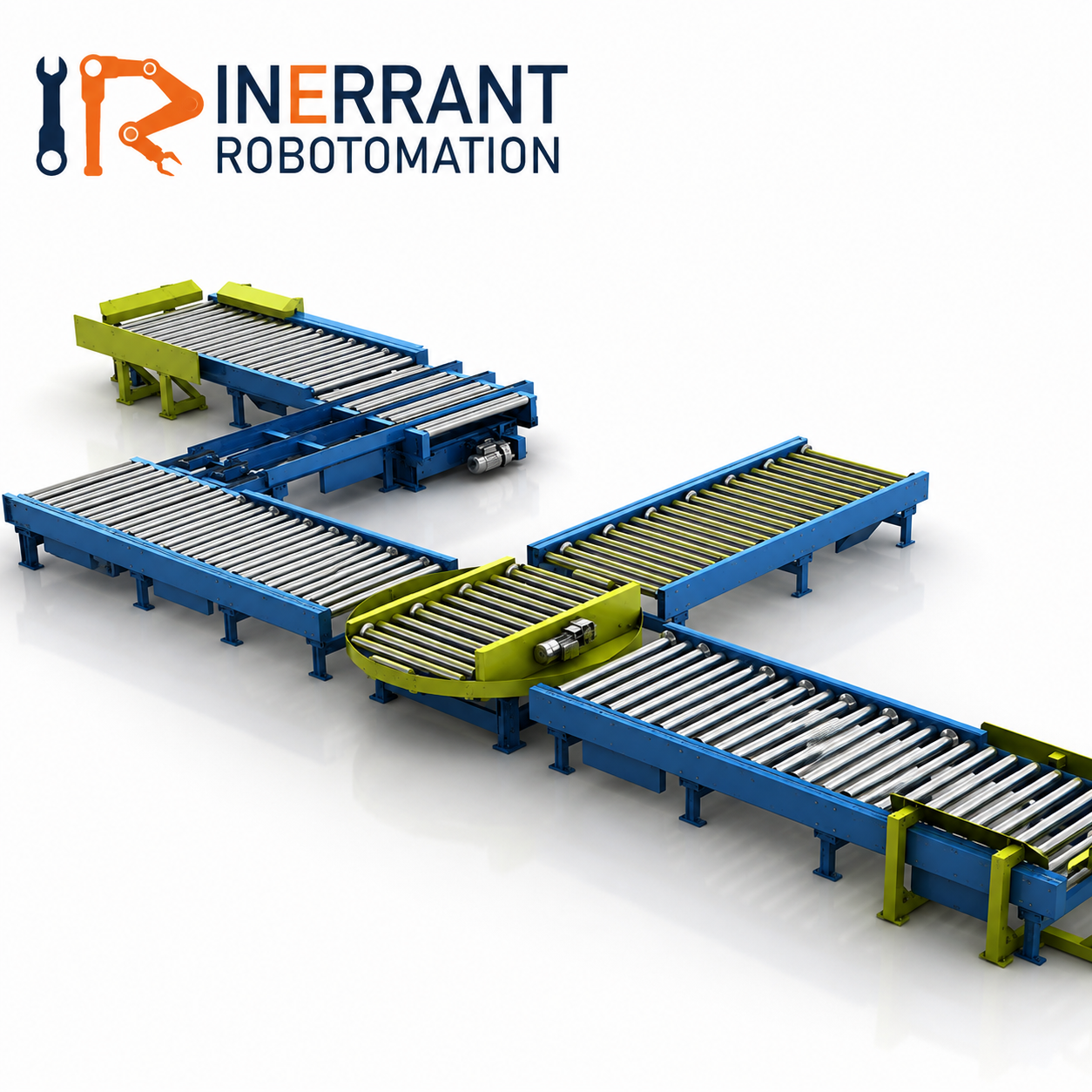 | Conveyors At Inerrant Robotomation Pvt. Ltd., we design and manufacture advanced Pallet Conveyor Systems engineered for precision, reliability, and seamless... View product → |
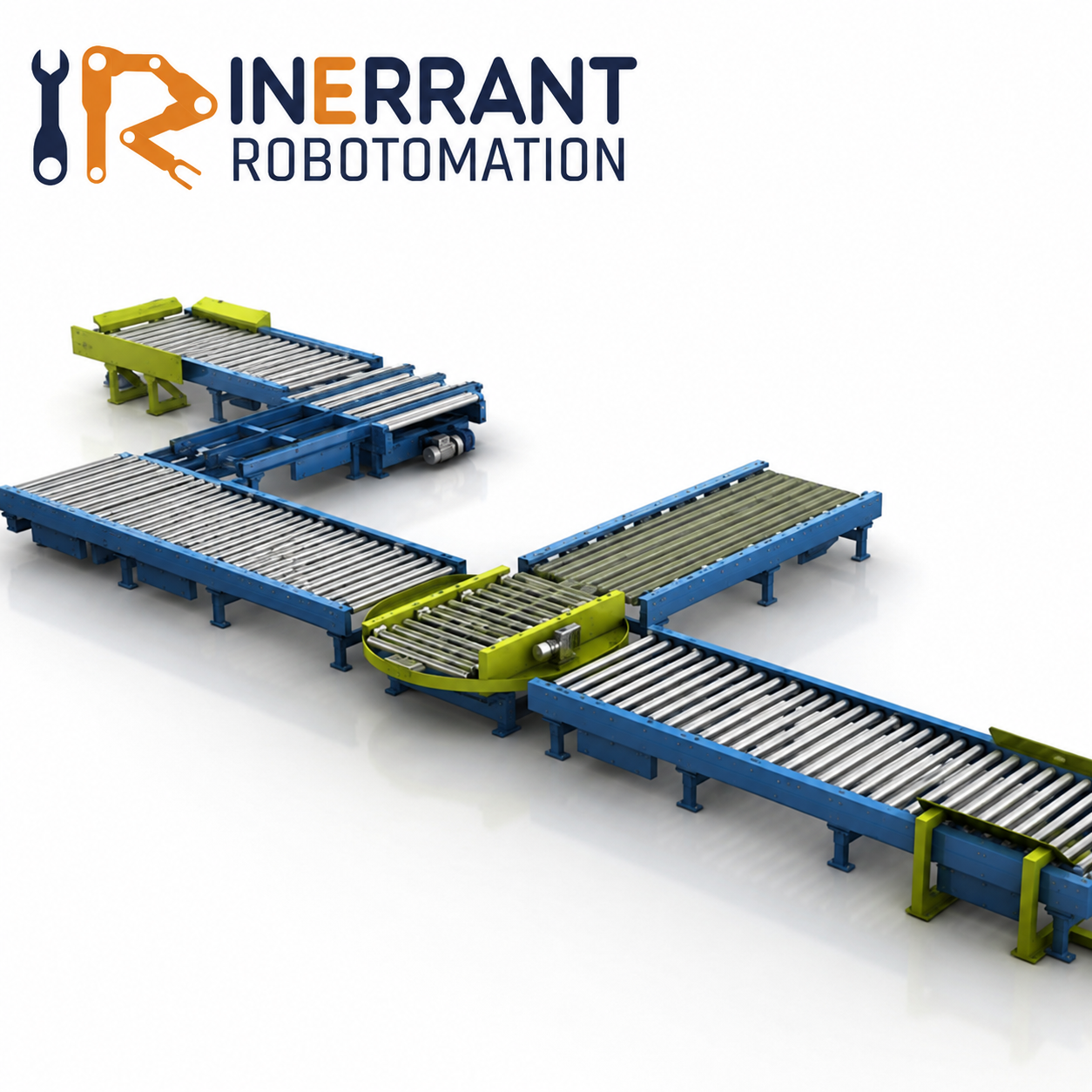 | Conveyors Conveyors At Inerrant Robotomation Pvt. Ltd. , we design and manufacture a wide range of industrial conveyor systems that ensure smooth, efficient, and... |
Frequently asked questions
Which conveyor design suits a pallet and production route?
Choose rollers, chains, belts, transfers or lifts based on the pallet underside, load, route changes and required stops.
What pallet and conveyor dimensions must you specify?
Provide pallet length, width, height, weight, underside openings, conveyor width, roller pitch, transfer clearance and loading height.
How do you size the drive, motor and throughput?
Use pallet weight, conveyor length, incline, friction, acceleration, operating speed and required pallets per hour to calculate drive demand.
How should pallets enter, transfer, stop and accumulate without jams?
Define entry alignment, sensors, stop positions, transfer gaps, zone controls, spacing rules and restart behaviour before fabrication.
How do you assess a conveyor system manufacturer in Pune before purchase?
Review the manufacturer’s layout calculations, site references, safety provisions, controls documentation, testing process, service coverage and spare-parts plan.
Related products
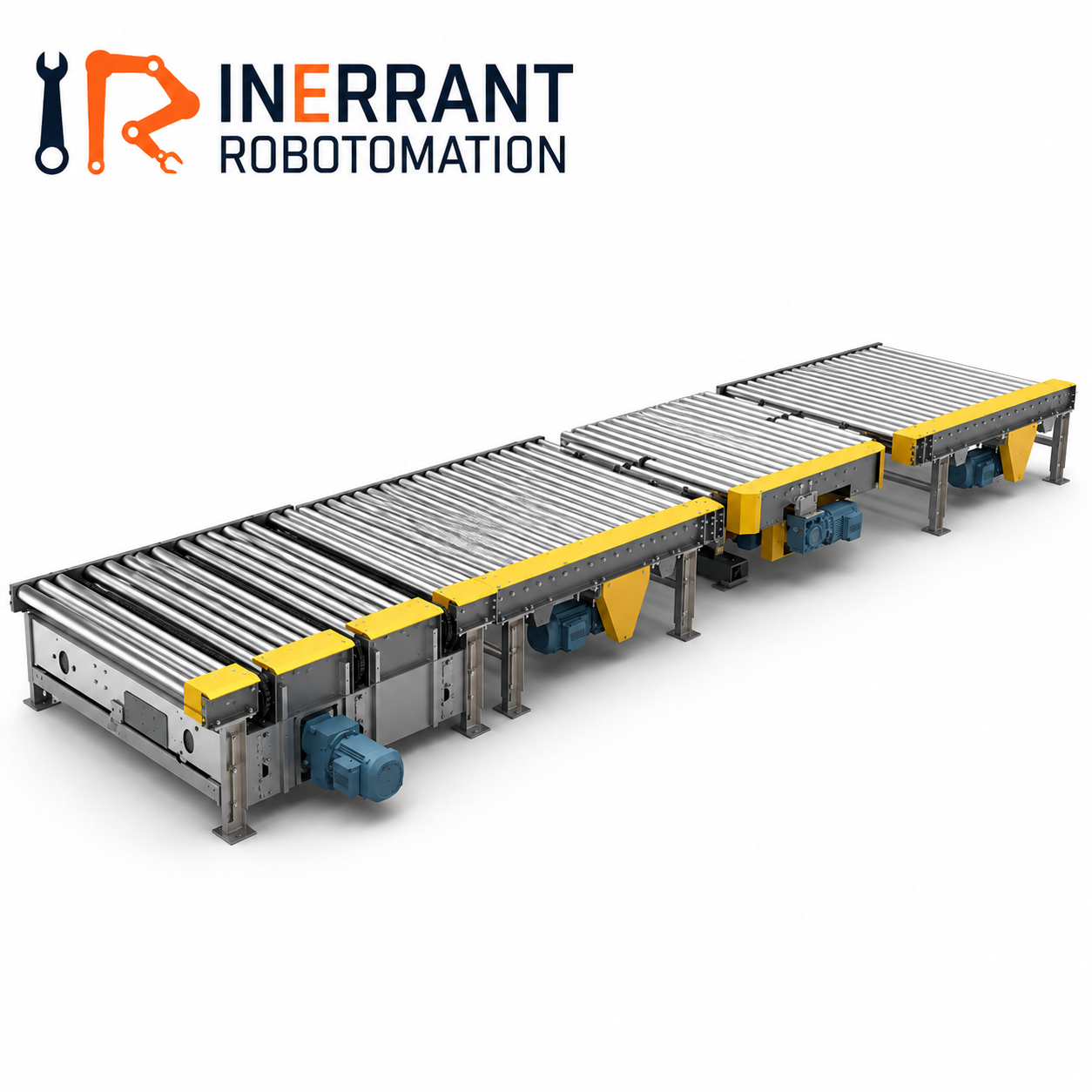 | Conveyors At Inerrant Robotomation Pvt. Ltd., we specialize in the design and manufacturing of high-quality Roller Conveyor that enhance efficiency,... View product → |
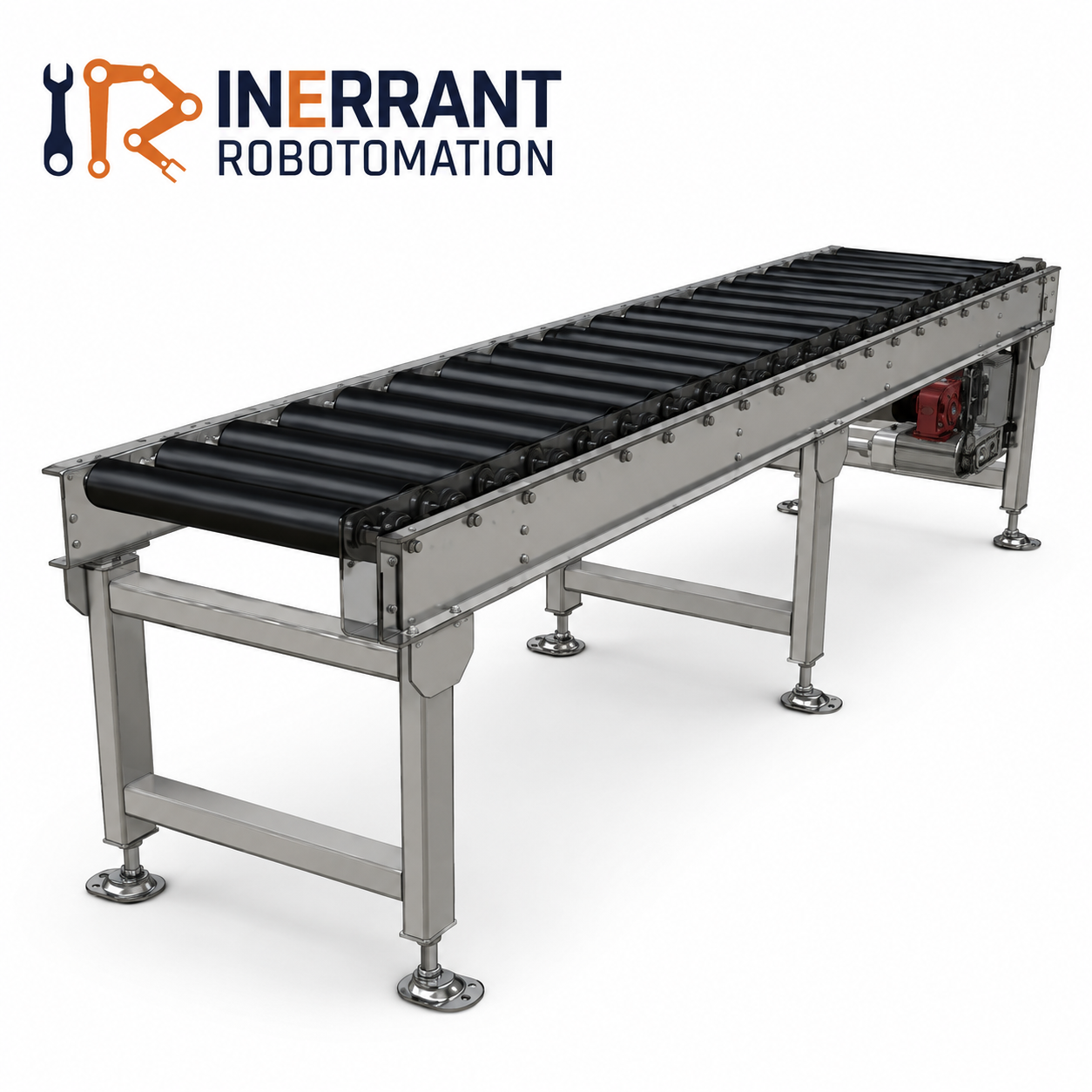 | Conveyors Chain Conveyors at Inerrant Robotomation Pvt. Ltd. – Reliable Material Handling Solutions In today’s fast-paced industrial world, efficient and... View product → |
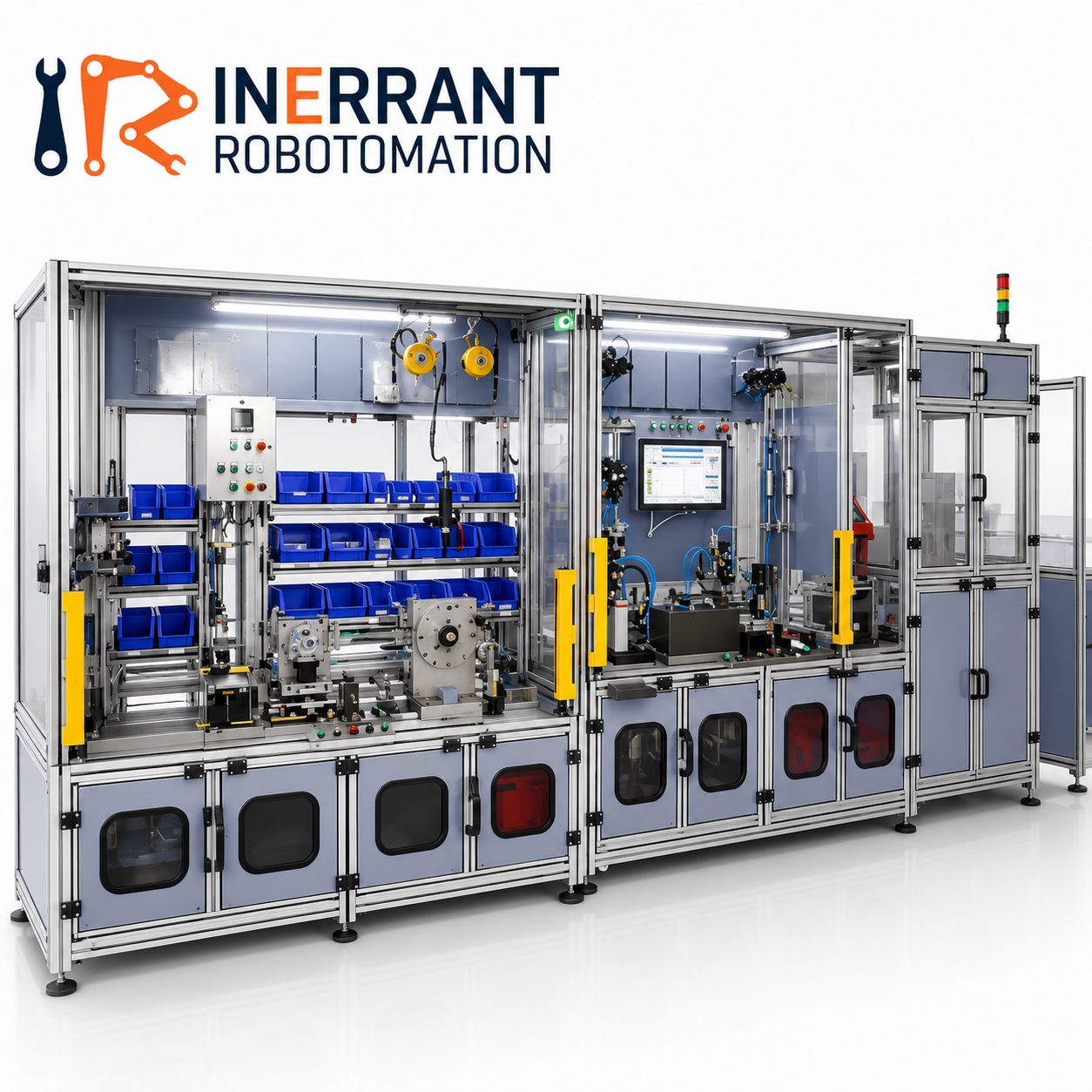 | Assembly Line And Automation System Assembly Line And Automation System Our assembly line and automation systems offered at Inerrant Robotomation Pvt. Ltd. View product → |