A fly marking system applies a laser mark while each component moves on a conveyor, but line speed alone does not prove that the process will meet your takt time or code-quality requirements. By the end, you will know which motion, laser, material, safety and acceptance details to demand before choosing a system or supplier.
Key takeaways
- Match encoder feedback and sensor timing to your conveyor speed.
- Demand tested marks per minute, not only laser wattage.
- Use pulse settings that preserve insulation, housings and terminals.
- Request sample marks, safety documents and acceptance criteria before ordering.
How fly marking keeps pace with a moving conveyor
Reliable fly marking depends on synchronized motion, not laser speed alone. A photoelectric sensor detects each part, an encoder reports conveyor travel, and motion-compensation software adjusts the galvo scan so the mark retains its geometry at the actual line speed.
If trigger timing drifts, characters stretch, codes shift, or the laser marks the gap between products.
1. Confirm the conveyor speed, line takt time, product pitch, minimum gap, and positional tolerance. The sensor-to-marking distance must remain fixed, because the controller uses that travel time to predict when the part reaches the laser.
2. Ask for validated figures as one production set: line speed, product pitch, minimum gap, encoder resolution, trigger repeatability, maximum mark length, and achievable character height. A galvo speed quoted by itself does not prove throughput.
3. Match the mark to the available travel. Product movement equals line speed multiplied by marking time, so long text, filled graphics, multiple Data Matrix codes, deep engraving, and low laser power increase motion distortion or reduce output.
4. Verify the scan lens at the required working distance. Request its focal length, field size, nominal spot size, and resolution; a larger field improves coverage but can reduce fine-feature resolution.
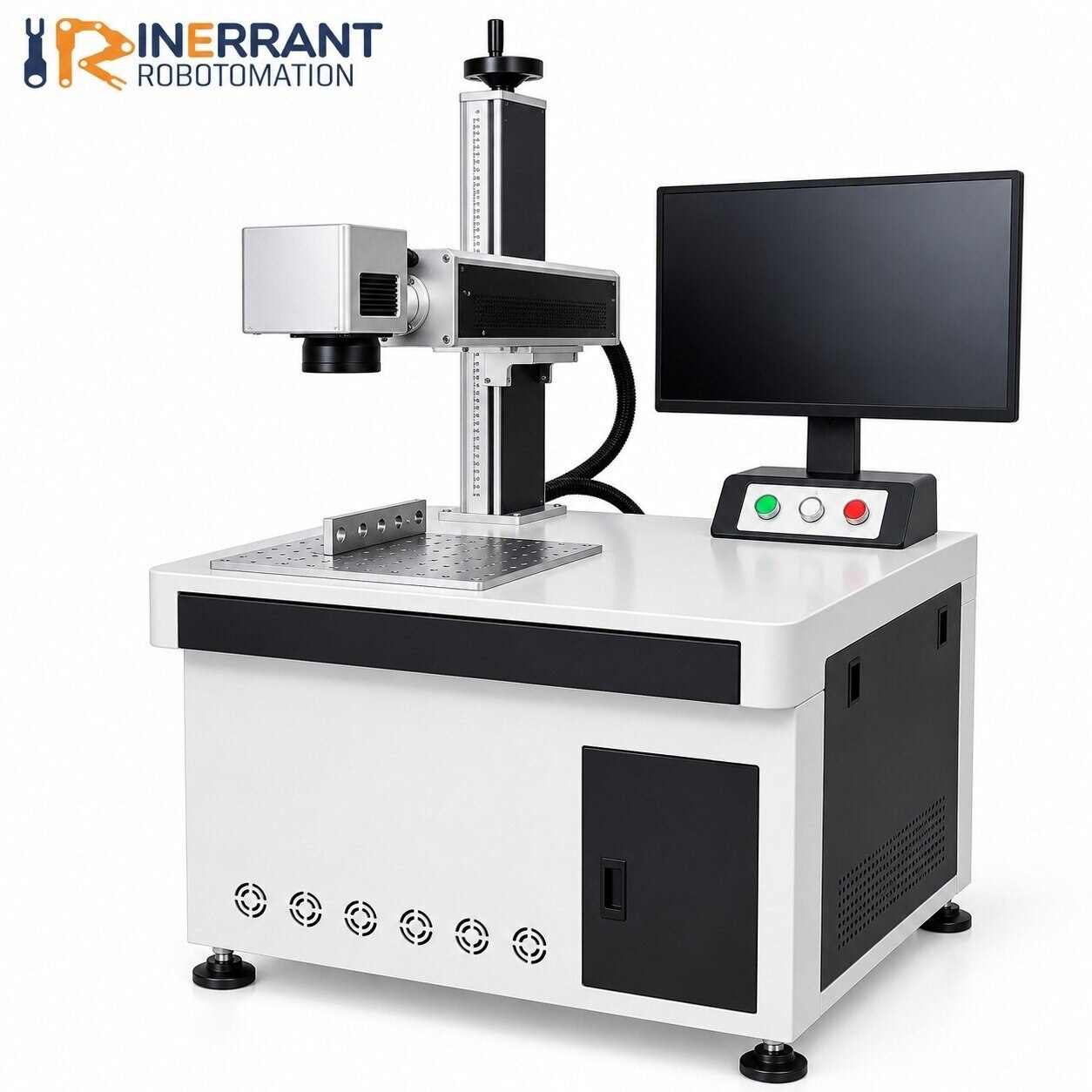
Key fly marking system features include encoder feedback, stable triggering, recipe-based changeover, code inspection, guarding, and fume extraction. Before selecting a fly laser marking machine in Pune, run the actual component and coating at the required speed, spacing, code size, and inspection standard. Accept the system only against recorded run-at-rate results.
Which specifications separate real throughput from a catalog claim
A catalog’s galvo speed does not prove production throughput. Compare a fly system and stop-and-mark cell at the same component, code, character height, inspection method, and takt time; demand a witnessed run-at-rate result.
| Option | Throughput evidence | Main trade-off |
|---|---|---|
| Fly marking | Validated line speed, product pitch, minimum gap, encoder resolution, trigger repeatability, and maximum mark length stated together | Higher output, but sensor distance, encoder feedback, motion compensation, rejects, and PLC handshakes require integration |
| Stop-and-mark | Cycle time measured from part arrival through clamp, mark, release, and verification | Simpler positional control, but stopping consumes takt time and increases mechanical handling |
| Catalog claim | Galvo scan speed or “high-speed marking” alone | Not acceptance evidence; it ignores code content, spacing, acceleration, and inspection |
Specify the fiber laser against the application, not the brochure. Record the substrate and coating, 1,064 nm wavelength suitability, power, pulse duration, beam quality, marking-field size, focal distance, scan speed, maximum mark length, and achievable character height.
A larger field can reduce repositioning but spreads energy over a wider area; excessive power can burn insulation or distort a connector.
Ask the fiber laser marking machine manufacturer fly system in pune to validate line speed with the actual product spacing, photoelectric trigger, encoder, product-present logic, vision verification, reject output, recipe changeover, serial-number audit trail, enclosure, and extraction. The search phrase fiber laser marking machine manufacturer fly system in pune identifies a supplier, not a specification.
Put the measured acceptance conditions into the purchase document.
Marks, materials and damage risks on electrical components
Choose the mark before choosing the source: a 1,060–1,070 nm fiber laser suits bare stainless steel, aluminium, copper, brass, and many plated or anodised surfaces. It can create a dark anneal mark without removing material, or controlled engraving and coating ablation when deeper contrast is required.
| Material | Suitable mark | Main damage risk and control |
|---|---|---|
| Bare or plated metal | Anneal, engraving, or coating ablation | Excess energy causes burrs, distortion, or loss of corrosion protection |
| Anodised aluminium | Coating ablation for bright contrast | A deep pass exposes soft metal and weakens the surface |
| Engineering plastic | Foaming, carbonisation, or colour-change mark | Resin, pigment, glass fibre, and additives determine whether it melts, chars, or stays unreadable |
| Copper terminals | Low-energy surface mark | Reflectivity and heat can damage plating or loosen a termination |
Engineering plastics need an application test, not a metal-optimised recipe. A laser marking machine for electrical components must preserve insulation, creepage surfaces, terminal geometry, and sealing features; a readable mark is a failure if it creates a crack or conductive debris.
Prevent damage by:
- Test the actual resin, plating, pigment, and production finish at the required character height and code size.
- Start with defocused, low-energy passes, then tune pulse duration, speed, hatch spacing, and repetition count.
- Mask contacts and sealing faces; use extraction to remove fumes and ablated particles.
- Check dimensions, insulation resistance, dielectric withstand, solvent resistance, and abrasion after marking.
- Define permanence and exposure tests using UL 969 and IEC 60445 where applicable; neither replaces product-specific qualification.
How to qualify readability, durability and machine safety
Prove the mark and the machine separately: a readable code does not prove that the component’s insulation or the laser enclosure is safe. A laser marking machine for electrical components needs a documented qualification using production settings, materials and line speed.
1. Record character height, contrast, position, code grade and legibility immediately after marking. For 1D codes use ISO/IEC 15416; for 2D codes use ISO/IEC 15415 or ISO/IEC 29158 for direct-part marking. Save images and scan results.
2. Expose marked samples to the actual environment: temperature and humidity cycling, UV or chemical exposure, and the specified solvent and abrasion challenge. Recheck contrast, dimensions and scan grade afterward. UL 969 addresses marking and labeling systems, but it does not replace a product-specific qualification.
3. Test identification requirements against IEC 60445 when the mark identifies terminals, conductors or connection points. Confirm that the mark stays legible after assembly, cleaning and handling; a label or code that disappears under isopropyl alcohol fails its purpose.
4. Qualify the completed machine under IEC 60825-1. Verify enclosure integrity, door and access-panel interlocks, emergency-stop function, viewing-window protection, beam dump and warning labels. Check protective-earth continuity, insulation resistance and dielectric withstand under the machine electrical-safety procedure, such as IEC 60204-1 requirements.
Request the supplier’s test records, sample images, exposure conditions and acceptance limits. The fly marking system features should include interlock status, fault logging and safe laser shutdown—not just conveyor speed and marking quality.
What to request from a Pune supplier before placing an order
A catalog claim of “high-speed marking” proves nothing until the machine marks your actual component at your actual takt time. Ask every fiber laser marking machine supplier in Pune to run a witnessed test using your substrate, coating, code, spacing, line speed and inspection method.
1. Send the supplier production parts, including worst-case surface finishes, and define the mark before testing. State character height, maximum mark length, Data Matrix size, position tolerance, permanence, contrast and permitted cosmetic damage.
2. Require a run-at-rate demonstration on the intended conveyor. Record validated line speed, product pitch, minimum product gap, encoder resolution, trigger repeatability and maximum mark length together. A quoted galvo speed alone does not establish throughput.
3. Watch the complete cycle, including sensor trigger, encoder feedback, motion compensation, extraction and inspection. Count unreadable codes, misplaced marks, missed triggers, damaged parts and conveyor stops; record changeover time between two approved recipes.
4. Request the test report with raw inspection results, photographs, machine settings, laser wavelength and power, focal distance, safety-enclosure details, and the proposed interface to your traceability system. Repeat the test after solvent or abrasion exposure if the component faces those conditions.
The search phrase “fiber laser marking machine manufacturer fly system in Pune” is not a specification. Ask Inerrant or any competing supplier to convert it into this evidence-based acceptance test before you compare quotations. Reject a proposal that cannot state the tested conditions and pass-fail criteria.
Related products
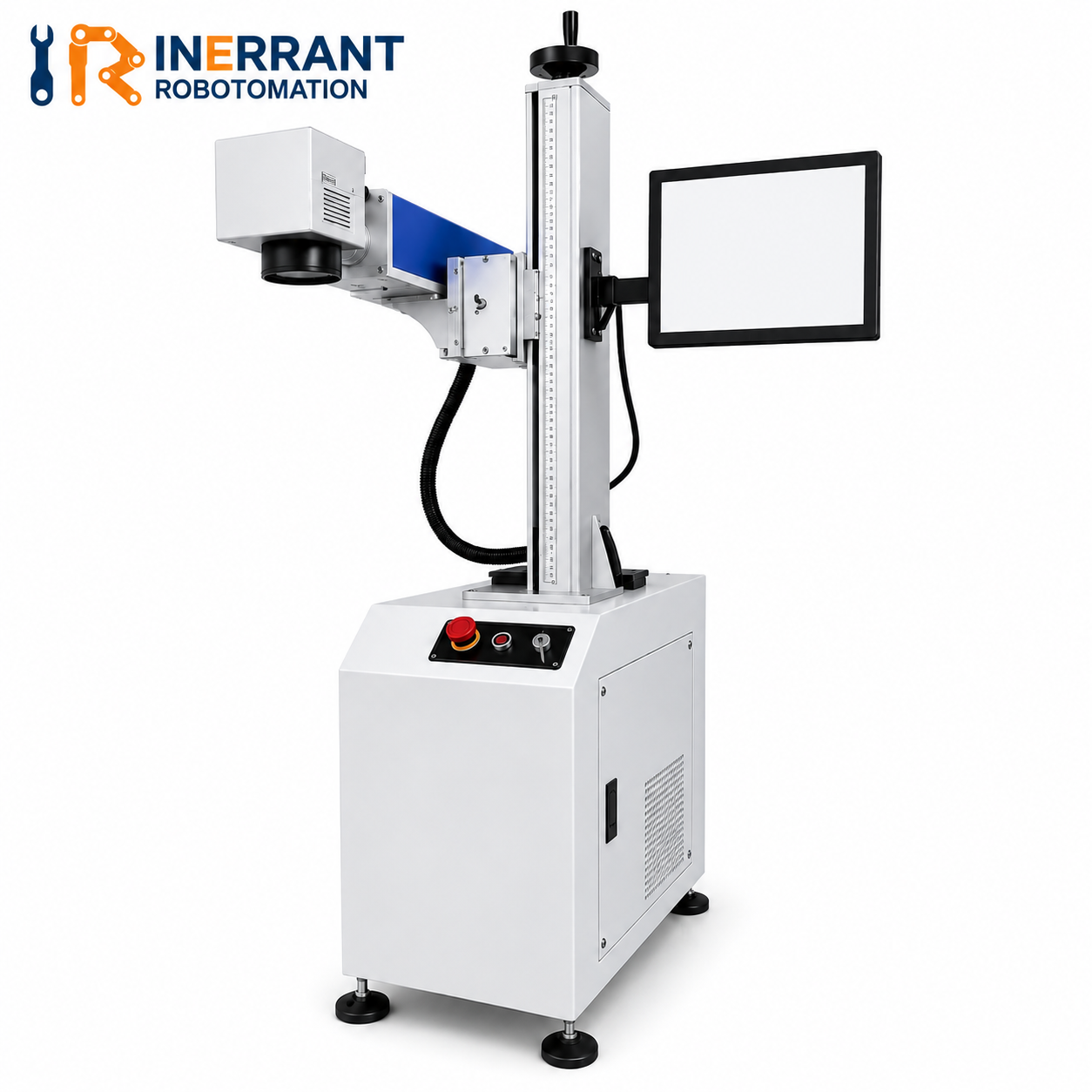 | Laser Marking Machine Inerrant Robotomation Pvt. Ltd. is proud to offer fly laser marking machines, a revolutionary technology for adding permanent and precise markings to... View product → |
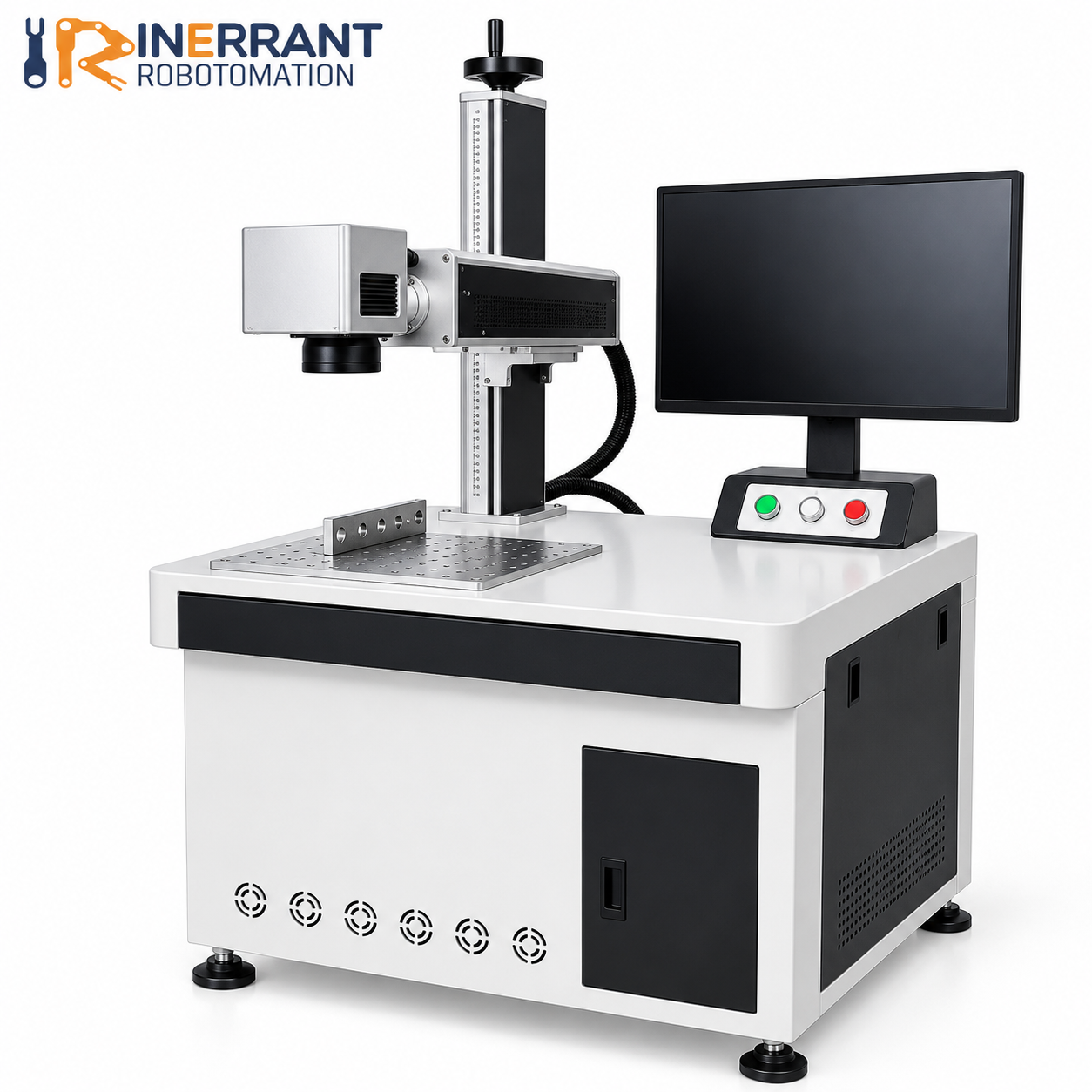 | Laser Marking Machine Inerrant Robotomation Pvt. Ltd is a leading Manufacturer and Supplier of Laser Marking Machine from Pune, Maharashtra, India. View product → |
Frequently asked questions
How does fly marking keep pace with a moving conveyor?
A photoelectric sensor detects each part, an encoder measures conveyor travel, and motion-compensation software adjusts the galvo scan during marking.
Which specifications reveal a fly marking machine’s real throughput?
Ask for tested parts per minute, mark-field size, character height, conveyor speed, trigger-to-mark delay and results using your actual component geometry.
What risks does laser marking create for electrical components?
Excessive energy can char plastic, weaken insulation, expose conductive material or distort terminals. Qualify power, pulse duration, focus and marking depth on production samples.
What should you request from a Pune fly marking supplier before ordering?
Request sample marks, a throughput test, laser and enclosure specifications, interlock details, fume-extraction requirements, service coverage and written acceptance criteria.
Related product
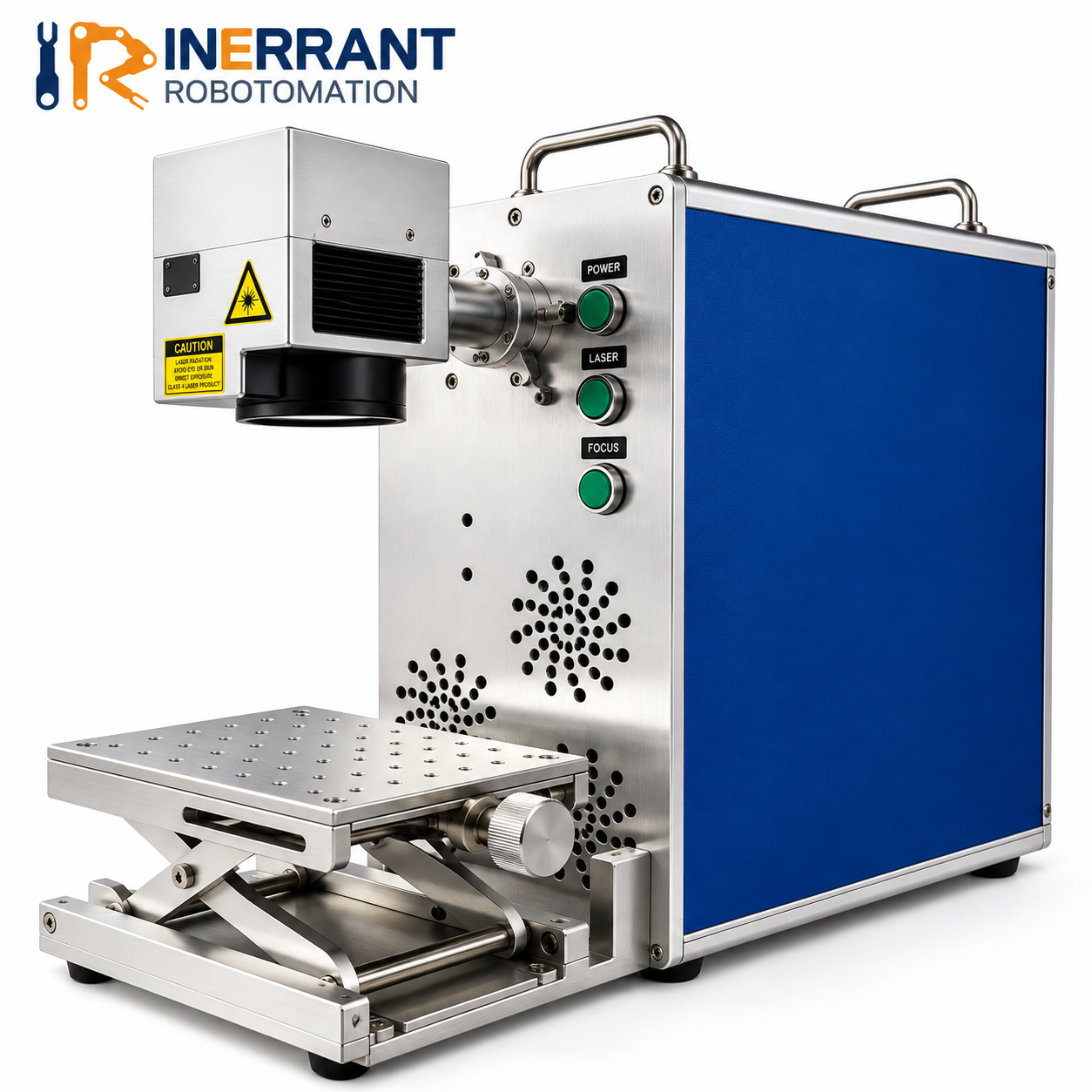 | Laser Marking Machine Laser Hallmarking Marking Machine Inerrant Robotomation Pvt. Ltd. is the best Laser Hallmarking Marking Machine Manufacturers, suppliers Company in Pune, Maharashtra, India. View product → |