A compact marking machine only works when its usable marking field, fixture, power arrangement and cycle time fit the part and the production cell. By the end, you will be able to classify the Patmark Mini correctly, test its marks, compare it with other marking methods and question a supplier about installation, integration and service.
Key takeaways
- Measure the complete part and fixture envelope, including overhang and stylus access.
- Test marks on every material, surface finish and production orientation before approval.
- Specify the data format, character size and readability checks for traceability codes.
- Choose a compact machine when space and repeatability matter more than high-volume automation.
Will the Patmark Mini fit your bench, part and electrical installation?
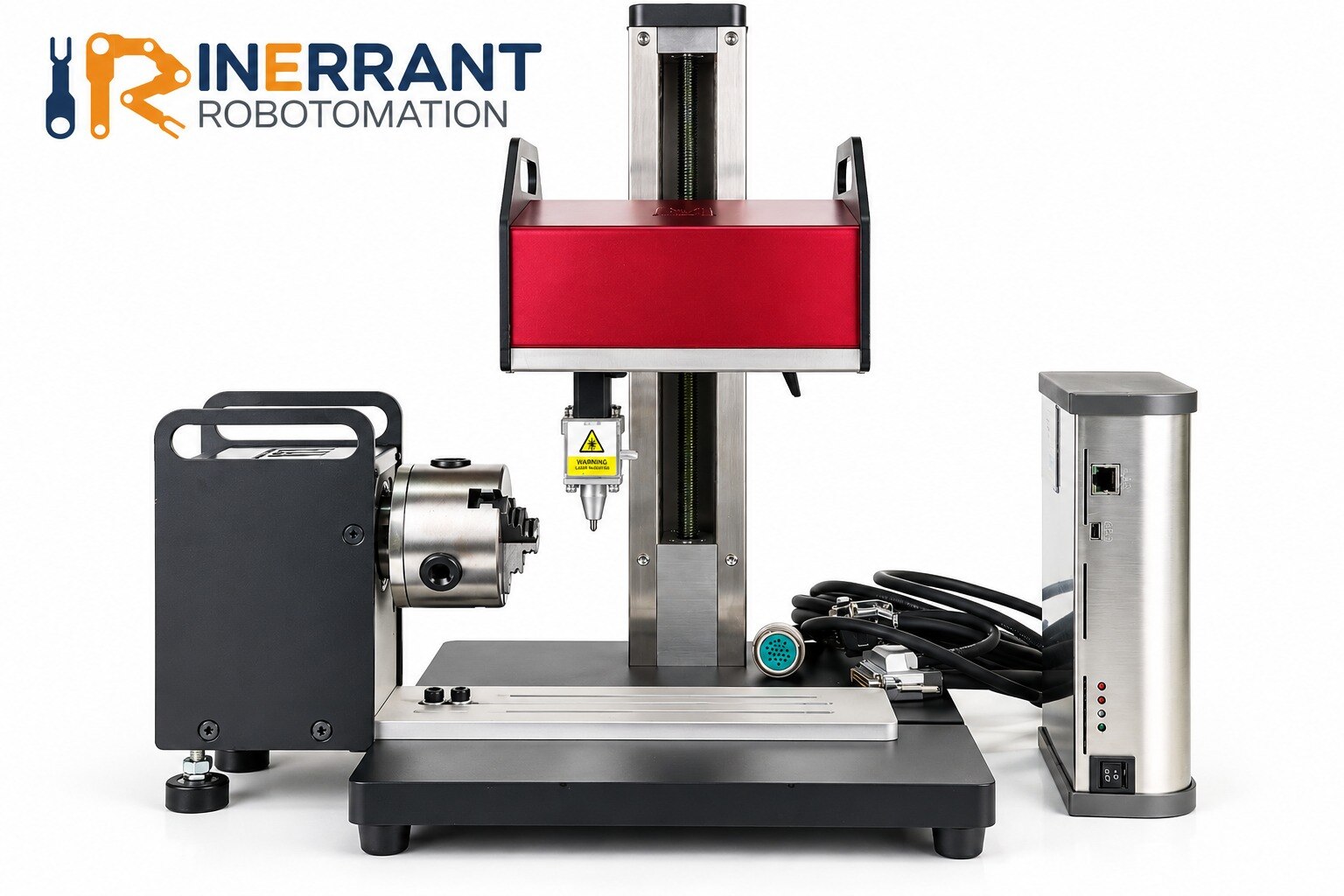
Approve the Patmark Mini only after proving that the largest part and fixture envelope fit, not merely the machine’s outer case. A compact marking machine in Pune can fit a bench yet fail on a tool cart, light bench or cramped cell when the part overhangs, the stylus cannot reach, or the fixture blocks loading.
1. Request exact dimensions, weight, usable X/Y marking window, maximum part height, stylus-to-part clearance, fixture footprint, access direction and required support beneath the workpiece. Measure the largest part with its locating pins, clamps and cables installed.
2. Put the electrical specification in the purchase order: battery voltage, charging time, runtime, charger type, mains voltage and frequency, maximum current, earthing, controller protection, plug or hard-wired connection, operation during charging and restart behaviour after power loss.
3. Confirm noise at a stated distance, vibration transmission, debris control, rigid mounting, guarding and safe access to the moving stylus. Ask the electrical marking machine manufacturer for installation drawings and a mounting plan; “portable” is not a load rating or safety assessment.
Use ISO 12100 for risk assessment and risk reduction, and evaluate safety-related control functions under ISO 13849-1 when they govern guarding, clamping or restart. Before approval, check bench load, outlet capacity, cable routing, operator reach and clearance for loading and unloading. A numbered dimensional checklist beats the word portable.
How do you create a repeatable mark on different parts and materials?
A repeatable mark comes from fixing the part and controlling the marking parameters, not from holding it steady by hand. Place the Patmark Mini square to the surface, support or clamp the workpiece, set the origin, create or import the text, preview the layout, then start the mark.
- Use a fixture, locating pins, magnetic or mechanical support, or controlled mounting arrangement for a large, heavy or irregular component. Hand stabilisation is not a repeatable production method.
- Ask for the marking area, character-height range, dot pitch, stroke depth, marking speed, and supported fonts and symbols.
- Reject speed figures that omit character height, message length, dot pitch, depth, acceleration, and whether the test used serial text or a Data Matrix symbol.
Mild steel and stainless steel usually suit dot-peen marking. Aluminium and thin sheet need support directly beneath the mark because impact can distort them; coatings can flake, while rough or curved surfaces reduce readability. Plastics require a controlled trial, and hardened steel may need a suitable carbide or diamond stylus with lower depth expectations.
A dot peen marking machine manufacturer should validate depth with samples matched to hardness, surface scale or coating, impact energy, point geometry, pitch, and number of passes. Accept the measured depth and legibility on your actual part, rather than a single nominal figure.
A mark that looks clear immediately can fail after handling, coating, or corrosion exposure.
Can it mark production data and produce readable traceability codes?
A dot-peen mechanism does not prove that the Patmark Mini can create every traceability code your line requires. Confirm each capability separately:
| Capability | Ask the electrical marking machine manufacturer | Acceptance check |
|---|---|---|
| Fixed text, serial numbers, date/time, counters | Which functions are built in, and what limits apply? | Run changing production data |
| Logos, QR codes, Data Matrix | Can the controller generate these formats, or only mark imported geometry? | Read the finished symbol |
| Data Matrix quality | What reader and grading method will be used? | Apply ISO/IEC 15415 |
Changing production data also requires a software assessment. Confirm phone or tablet entry, stored jobs, user permissions, offline operation, marking-history logs, and connection to a factory system through USB, Ethernet or PLC I/O. The supplier must identify which interfaces actually exist; mobile connectivity does not imply factory integration.
For Data Matrix, accept marks with a reader rather than visual inspection. Test cell deformation, contrast, quiet zone, damage and reader configuration. A clear-looking mark can still fail decoding.
Repeat the test after painting, shot blasting, corrosion exposure and repeated handling. Record software-update responsibility, calibration records and ownership of traceability data. The trial should capture the message, reader result and post-finishing result, not just a photograph of the fresh mark.
When is the Patmark Mini a better choice than another marking system?
A PatMark Mini is the better choice when you need portable, contact-based dot-peen marking for small or medium parts, but not a full automated cell. Judge the part and production duty, not the smallest catalogue footprint.
| Option | Strength | Trade-off and boundary |
|---|---|---|
| PatMark Mini | Portable, low consumable cost, durable indented dots, moderate code capability | Needs a fixture for repeatability; contact force creates noise, vibration and surface damage |
| Benchtop dot-peen machine | Larger window, stronger locating and higher repeatability | Less portable; better for fixed workstations and repeat batches |
| Integrated electromagnetic marker | Ready for line control and automatic triggering | Requires machine integration, guarding and planned access |
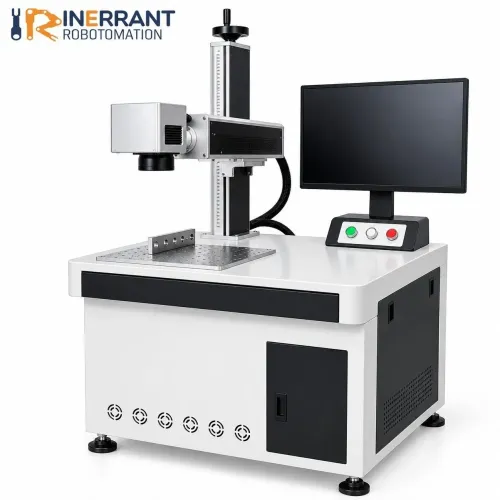
| Handheld laser marker | No stylus contact, fine marks and low mechanical vibration | Needs laser safety controls, enclosure planning and suitable surface contrast |
| Scribe marker | Continuous line, less dot texture and often lower noise | Contact force remains; fixtures and depth control still matter |
| Manual engraving | Low equipment cost and no software dependency | Weak repeatability, code capability, throughput and traceability |
Choose another architecture for high-volume unattended marking, very large fields, extremely fine marks, non-contact marking or automatic part sensing. A laser suits delicate surfaces, but its enclosure, interlocks and contrast requirements can outweigh portability; a benchtop unit suits repeatability when the fixture stays fixed.
Before choosing a compact marking machine in Pune, request documented differences between the PatMark Mini, PatMark Plus and PatMark Desktop: marking window, portability, battery arrangement, stylus clearance, fixture capacity and intended production volume. Run the actual part, coating and message through a reader-based acceptance trial.
Ask a dot-peen marking machine manufacturer to measure depth, legibility, code grade, cycle time, placement repeatability, noise and cosmetic damage.
What should you demand from an electrical marking machine manufacturer in Pune?
Demand named ownership, a witnessed trial and written service commitments from an electrical marking machine manufacturer for Patmark Mini in Pune. The quotation must identify whether the supplier is the original equipment manufacturer, distributor, local integrator or service partner, and who owns the marking head, controller, software, fixture, installation, training, warranty and post-warranty repairs.
1. Ask Inerrant, or any competing supplier, to run the Patmark Mini on your actual alloy, hardness, coating, curvature, oil condition, fixture and required message. Record acceptance limits for mark depth, legibility, Data Matrix grade, cycle time, placement repeatability and cosmetic damage.
2. Require a written setup plan covering setup effort, fixture-making work, operator training time, origin and calibration method, stylus and carbide-pin replacement intervals, cleaning, battery replacement, software updates, consumables, electricity and planned downtime. Include the inspection reader used for code acceptance.
3. For Pune support, specify response time, spare stylus availability, remote diagnostics, commissioning coverage and escalation for controller or marking-head failures. A local address alone proves nothing.
4. Put the measured noise value, safety documents, electrical drawings, manuals, risk-assessment inputs and restart behaviour after power loss in the purchase order. State who supplies each document and who approves the final acceptance.
This brief separates an electrical marking machine manufacturer from a seller offering equipment delivery without engineering or service accountability.
Related product
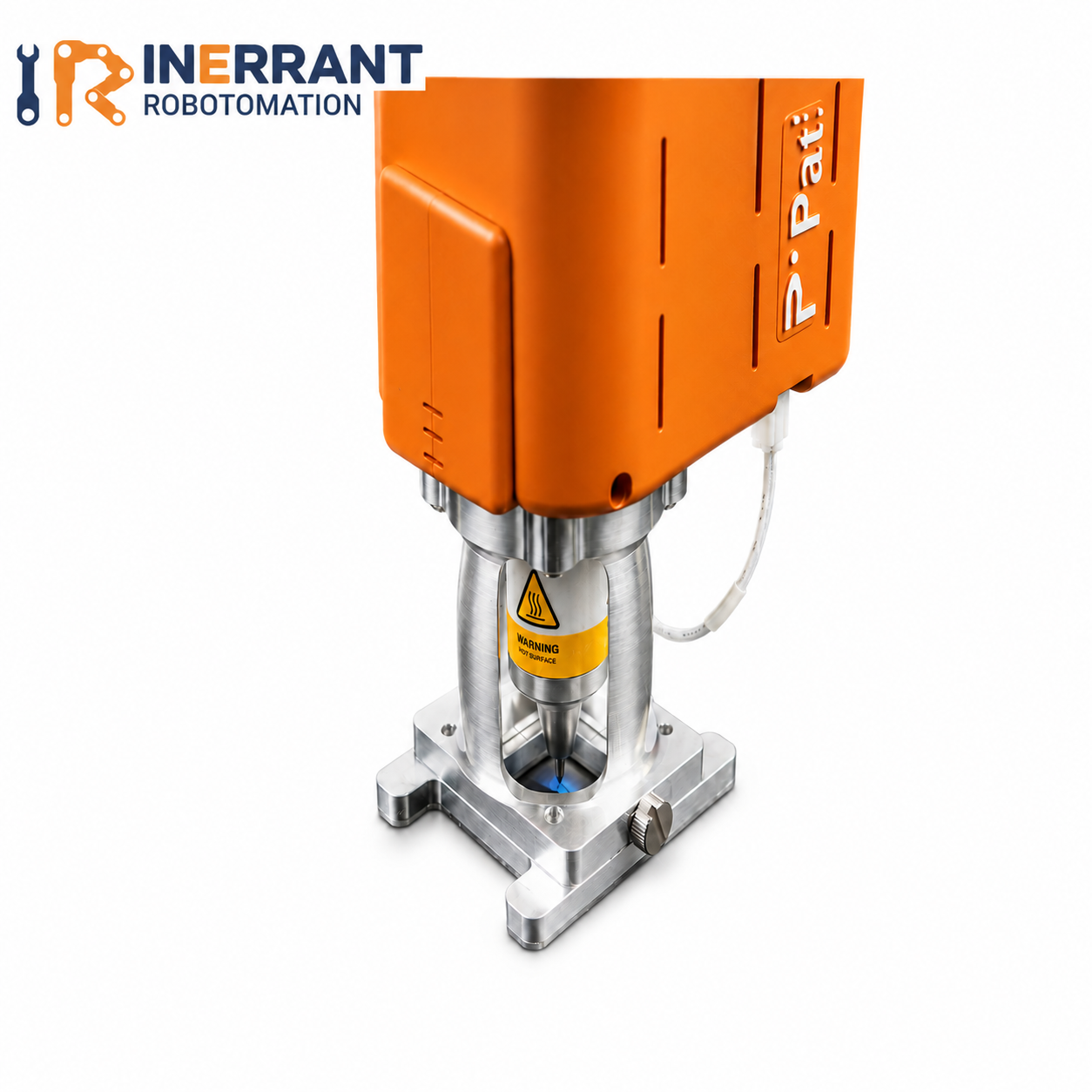 | Dot Peen Marking Machine Patmark lets you expand your marking capabilities, efficient and cost-effective marking solution. View product → |
Frequently asked questions
Will the Patmark Mini fit a bench, part and electrical installation?
Check the machine footprint together with the largest part, fixture, loading clearance, part overhang, stylus reach, tool-cart position and available electrical connection. A bench measurement alone does not prove fit.
How do you create a repeatable mark on different parts and materials?
Run samples on each material and surface condition, then control fixture location, part orientation, marking force, character size, spacing and stylus access. Approve the setup only when repeated samples remain readable and positioned correctly.
Can the Patmark Mini mark production data and readable traceability codes?
Define the required production data, code format, character size, location and verification method before purchase. Check samples for contrast, depth, distortion and scanner or operator readability.
When is the Patmark Mini a better choice than another marking system?
Choose it when a compact production area needs repeatable identification without the space or complexity of a larger automated cell. Compare it with other systems using part size, material, throughput, code requirements, fixture needs and integration effort.
What should you demand from an electrical marking machine manufacturer in Pune?
Ask for application samples, machine and fixture envelope drawings, electrical installation requirements, repeatability evidence, data-input details, operator documentation, service coverage and a clear acceptance-test process.