“Electrical marking machine” is not a complete procurement specification: it could describe a dot-peen, scribe, laser, electrochemical or thermal-transfer system. You will be able to define the marking process, sequence it safely with a hydropneumatic press, compare suppliers and prepare an acceptance test for your Pune production site.
Key takeaways
- Define the marking technology, character format, position and traceability data first.
- Program press arrival, clamping, marking, inspection and release as one controlled sequence.
- Match dot-peen, scribing, laser or etching to the part and production environment.
- Make force, air, power, guarding and acceptance tests part of one quotation.
Define the marking system before you request a quotation
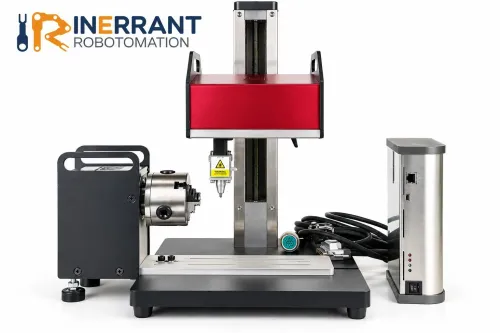
An electrical marking machine is not a defined machine class. In a press application, it can mean an electrically powered dot-peen marker, electric scribing head, laser marker, electrochemical etching unit, thermal-transfer printer, integrated press-and-marking cell, or marking controller connected to the press PLC.
Before contacting an electrical marking machine manufacturer, require the quotation to name the process, marking head, controller, power requirement, enclosure and verification method. “PLC controlled” does not identify how the mark is made or accepted.
State exactly what the system must produce:
- Part numbers, serial numbers, date codes, alphanumeric text, logos, arrows and inspection characters.
- QR codes or Data Matrix codes, with the required data format and code size.
- Character height, mark depth or contrast, location tolerance and allowable cycle time.
Presence detection only confirms that a code-shaped mark exists. Two-dimensional code verification checks readability and data content. A readable mark is not automatically a traceable mark.
Name the press force, stroke position and tooling with the marking requirement. The force and stroke can change the part’s surface, distortion and access to the marking area; die shut height, fixture location and ram position determine whether the head can reach the specified mark without damaging it.
Build the press-and-marking sequence into the controls
A hydropneumatic press in Pune needs a PLC-controlled handshake with the marker, not an operator waiting for one machine to finish.
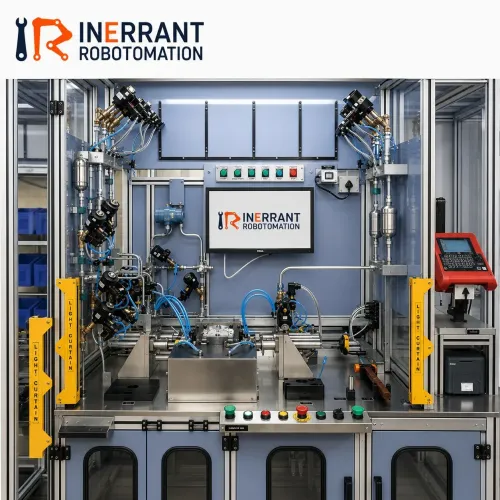
Mount the marker beside the press so its head reaches the clamped part without entering the die space; place the locating fixture on the bolster, the guard around the working envelope, and sensor brackets on rigid frame members rather than on vibrating tooling.
- Load the part into the locating fixture and confirm part-present and correct-orientation sensors.
- Close the guard and prove guard status before enabling motion.
- Clamp the part or begin the press cycle.
- Confirm press-at-home, the commanded stroke position, press-at-force, or the end-of-press signal.
- Position the marking head, issue mark-start, and apply the code.
- Confirm mark-complete or receive a code-quality result from the verifier.
- Retract the head, release the part, and confirm the marker is clear.
- Send an incomplete or unreadable part to reject handling; never allow it into the good-part output.
Program cycle-start, part-present, press-at-home, press-at-force, mark-start, mark-complete, guard status, fault and reject as PLC and HMI signals. Operator timing is not a control strategy.
| Marking position | Use it when | Check on production parts |
|---|---|---|
| Before pressing | The preformed surface must be identified | Distortion, access and fixture contact |
| After pressing | The final assembly needs traceability | Surface movement and burr formation |
| Between operations | Later tooling could damage the code | Tool access, code survival and repeatability |
Choose the order only after testing distortion, access, burr formation and surface movement on production parts.
Match the marking process to the part and press operation
Select the method by the part’s response to marking, not by the label “electrical marking machine.” On an industrial press machine in Pune, the wrong process can distort a finished face, hide a code under oil or coating, or add rejects after pressing.
| Method | Impact and heat | Contrast, consumables and noise | Enclosure and surface compatibility |
|---|---|---|---|
| Dot-peen | Impacts the surface; negligible heat | High contrast, no ink; audible | Usually open, but test thin walls, sealed parts, finished faces and small dense codes |
| Laser | No contact; heat-affected zone needs checking | Strong contrast, no consumables; quiet | Enclosed interlocked cell; test oily, reflective, coated, curved or heat-sensitive surfaces and any process needing cleaning or coating control |
| Scribe | Low impact, continuous engraved line; negligible heat | Permanent contrast, no consumables; low noise | Guard the moving head; requires a stable fixture and controlled movement |
| Ink | No impact; no heat | High initial contrast, but uses ink and solvents; quiet | Manage drying, contamination and permanence; surface porosity and oil matter |
Treat laser as an application check, not an automatic upgrade. Test dot-peen before approval when impact threatens the part or the required code exceeds the supplier’s tested process window.
Check these press-side conditions:
- Material and hardness
- Marking area, character height, depth and code density
- Fixture access and repeatability
- Noise, cycle time and allowable deformation
Require marks on production-representative parts, using production tooling and process conditions, before approving the design. Record location, readability and reject results.
Specify force, utilities, safeguarding and acceptance tests together
A 100 mm-bore cylinder at 6 bar produces about 4.7 kN theoretical extension force; a 200 mm-bore cylinder produces about 18.8 kN. Neither figure is automatically the usable press force: friction, pressure loss, intensifier efficiency, tooling geometry and force position reduce output.
Compare proposals against these conditions, not nominal tonnage or an unqualified cycle time:
| Item | Require in the quotation | Why it matters |
|---|---|---|
| Force and motion | Approach, pressing and return speeds; stroke, dwell and load profile | A hydropneumatic press changes speed during its power stroke |
| Tooling envelope | Die shut height, bolster size, guides, ram parallelism, off-centre load limit, workpiece location and required stroke | A force rating is useless if the die cannot close squarely |
| Electrical supply | Incoming voltage and frequency, connected load, control voltage, short-circuit protection, earthing, cable entry, enclosure rating and PLC I/O or protocol | “PLC controlled” does not prove line compatibility or safe stopping |
Measure inlet air pressure throughout the cycle. Specify filtration, water separation, regulator capacity, hose size, leakage limit and compressor free-air delivery; wet air causes valve sticking, seal wear and variable force.
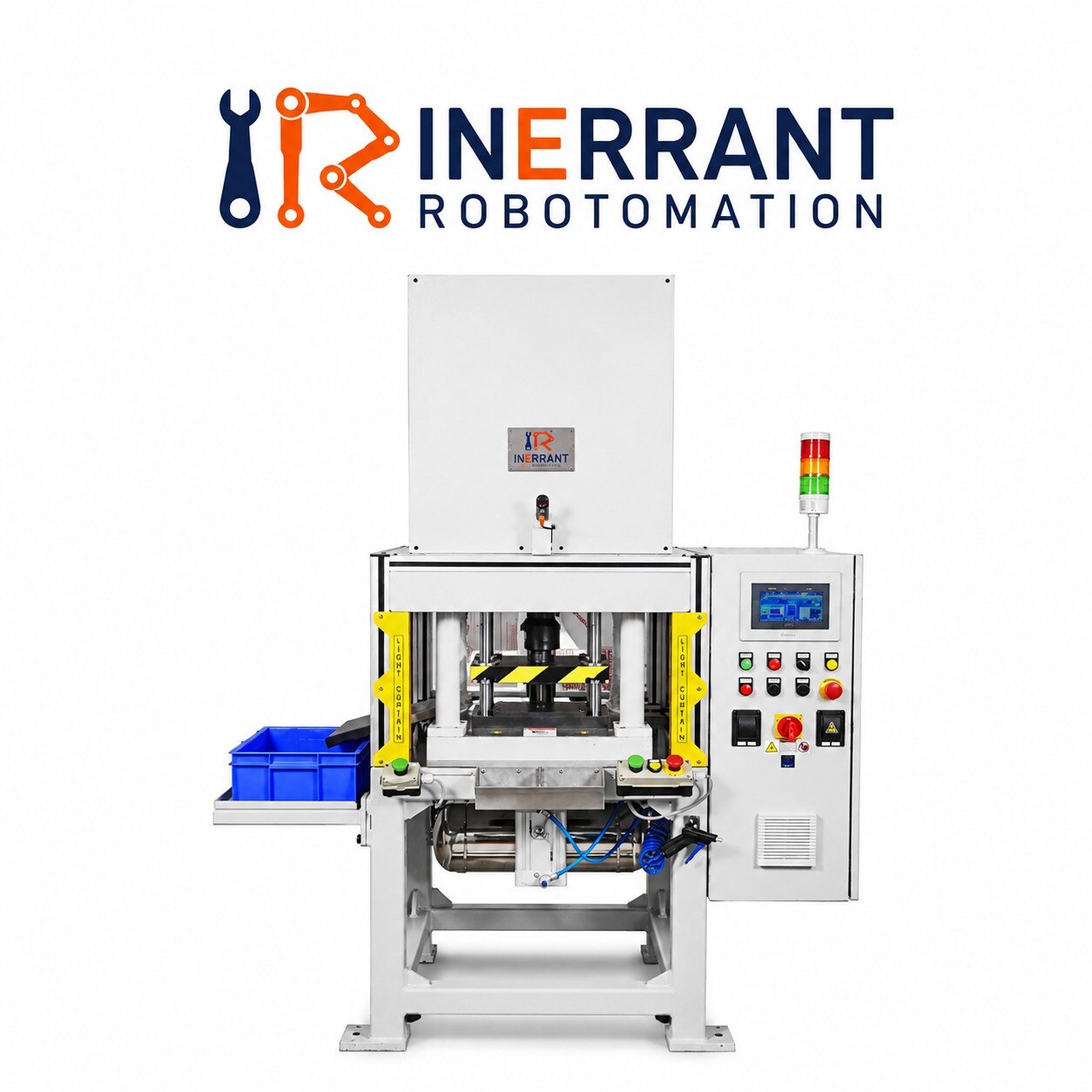
Require fixed or interlocked guards, two-hand control or light curtains where the ISO 12100 risk assessment demands them, plus safe exhaust, pressure dissipation, lockout/tagout and mechanical ram support. An emergency-stop button alone is not safeguarding.
Accept the machine using production parts and tooling at the specified utilities. Record force, stroke, cycle time, mark location and readability, rejects, guarding operation and repeatability over a defined run. An unloaded demonstration proves little.
Evaluate a Pune manufacturer by integration responsibility, not proximity
A nearby supplier is not automatically the safer choice: evaluate the installation boundary. An electrical marking machine manufacturer and a press machine manufacturer in Pune should be compared on who delivers a working cell, not who has the shortest travel distance.
1. Ask each bidder to name the owner of the fixture, marking-head mount, PLC code, HMI screens, safety circuit, code-generation software, scanner or verifier, reject chute and production-data interface.
2. Require a site survey that records three-phase voltage and frequency, compressed-air pressure during a full cycle, floor or bench loading, dust, humidity, operator access and connection points on the existing line. A “standard utility” assumption can invalidate quoted force and cycle time.
3. Make the quotation assign responsibility for foundation or bench work, pneumatic and electrical installation, tooling setup, sample trials, operator training, spare parts, preventive maintenance and commissioning response time. Include lockable air isolation, controlled exhaust, hydraulic pressure dissipation and mechanical ram support.
4. Ask for a documented sample-mark report and a factory or site acceptance protocol using production parts, tooling and stated utilities. Evaluate Inerrant on whether its press and marking engineering are managed as one integration responsibility.
Compare proposals in one record:
| Measure | Record |
|---|---|
| Press performance | Force at stated stroke position; cycle conditions |
| Marking | Process; code-verification method; mark location |
| Integration | Utility demand; safety functions; data interface |
| Evidence | Repeatability result; sample report; acceptance protocol |
| Commercial scope | Exclusions; spare-parts and support commitments |
This makes “hydropneumatic press in Pune” an installation specification, not a location shortcut.
Related products
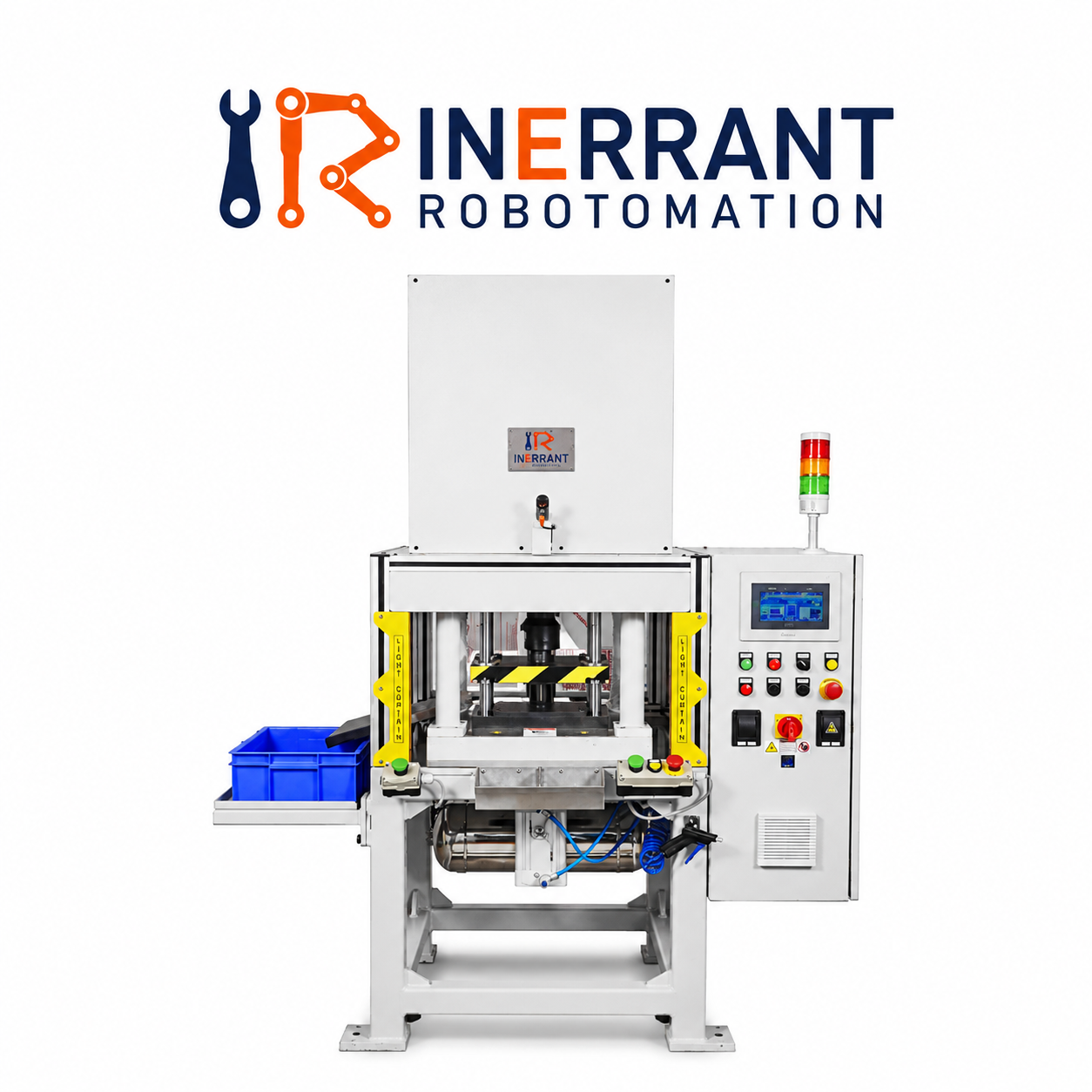 | Press Machine Inerrant Robotomation Pvt. Ltd. provides advanced hydropneumatic press or air-over-oil presses that blend the speed of pneumatic systems with the... View product → |
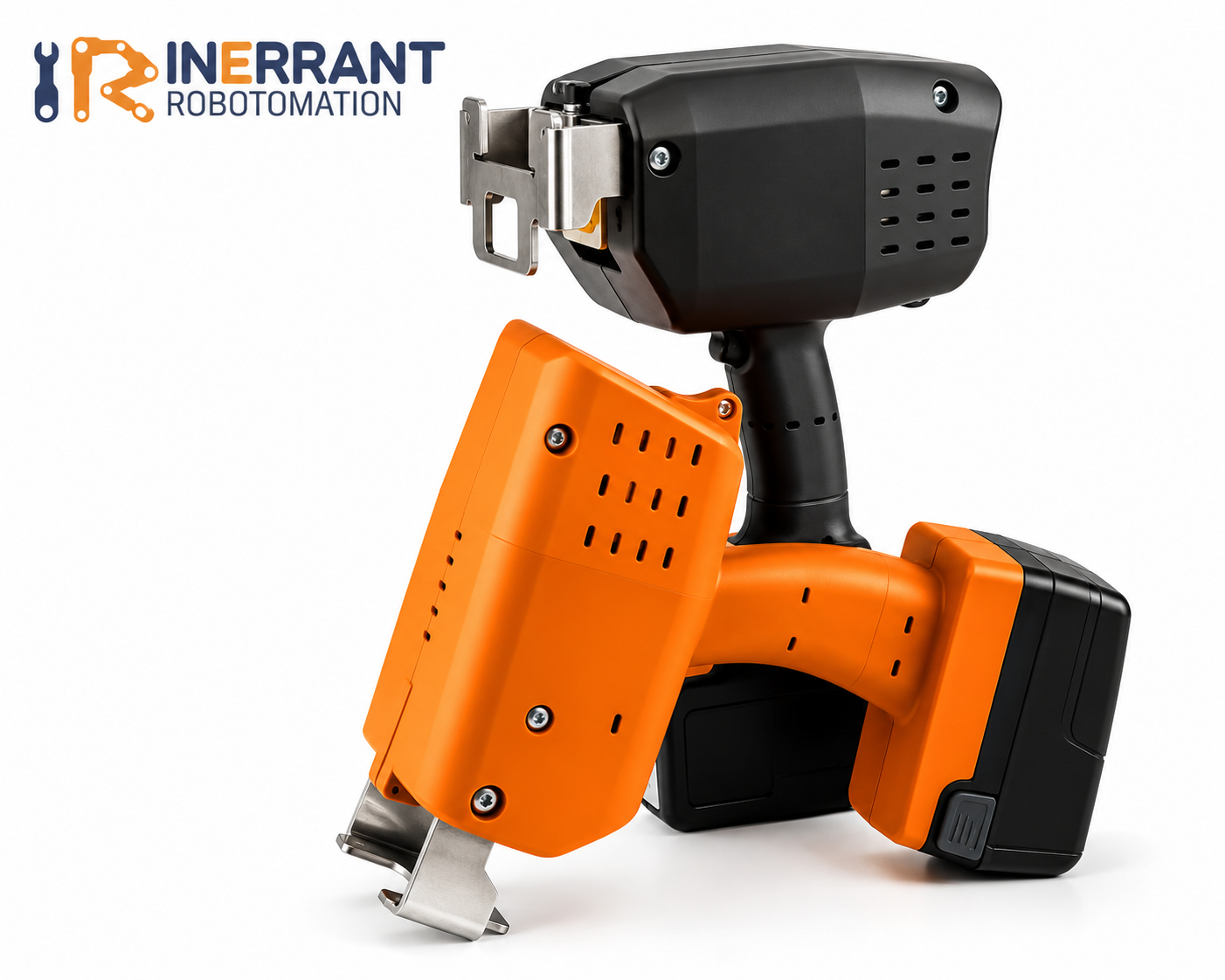
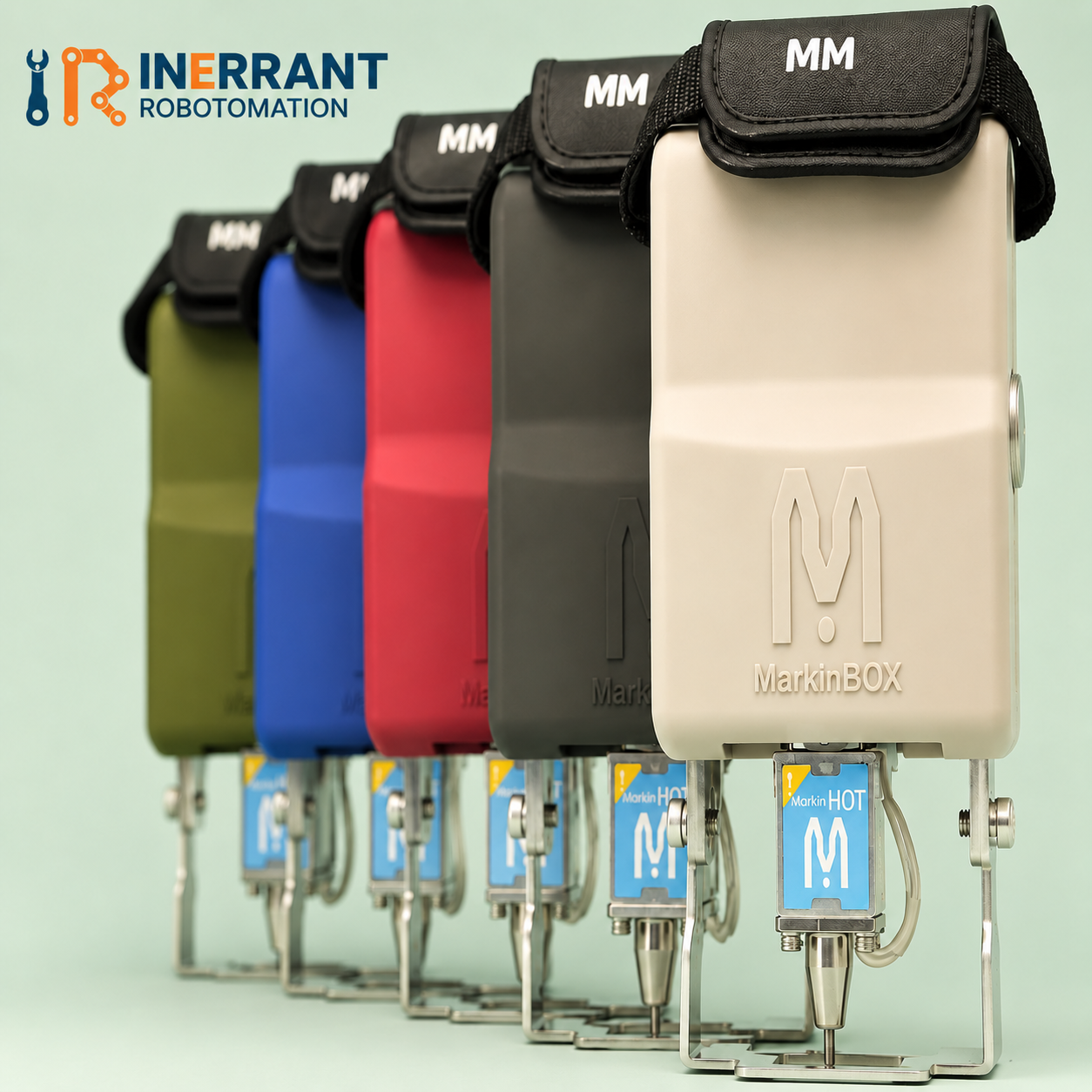 | Portable Marking Machine Inerrant Robotomation Pvt. Ltd. Produces portable marking machine used on-site to mark metals, plastics, and other materials. View product → |
Frequently asked questions
What should you define before requesting a marking-machine quotation?
State the marking technology, mark content, character size, position tolerance, substrate, cycle time, traceability data and inspection method.
How should a marking machine integrate with a hydropneumatic press?
Specify the complete sequence: part present confirmation, clamping, press stroke, marking permission, mark completion, inspection and safe release.
How do you choose between dot-peen, scribing, laser and electrochemical marking?
Compare permanence, contrast, surface damage, material, cleanliness, noise, cycle time and the part’s downstream inspection needs.
What must a press-and-marking quotation include?
Require force, stroke, working height, air pressure and flow, electrical supply, guarding, interlocks, controls, documentation and witnessed acceptance tests.
How should you evaluate a Pune manufacturer for this application?
Ask who owns mechanical integration, PLC sequencing, safeguarding, marking validation, commissioning, operator training and final acceptance.
Related products
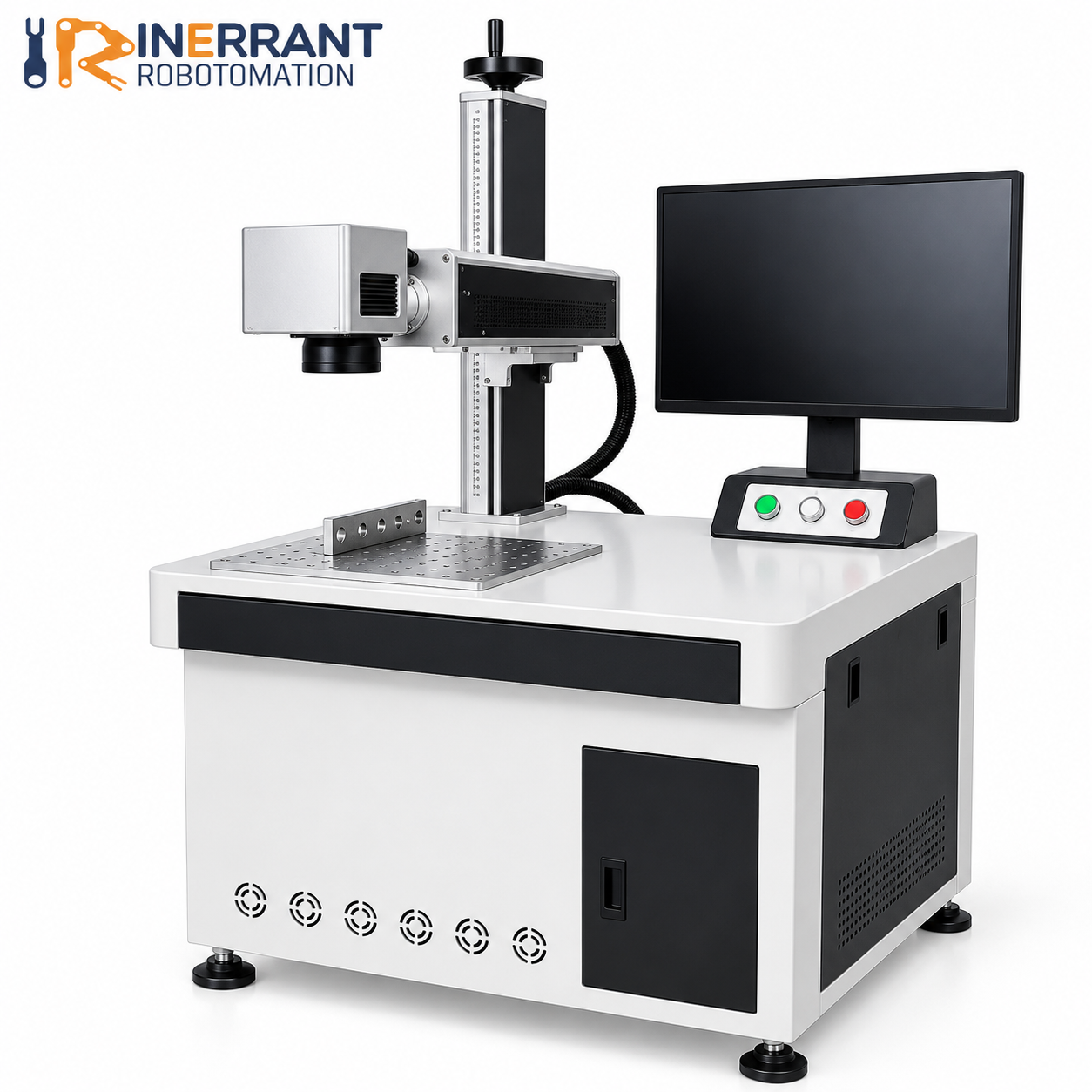 | Laser Marking Machine Inerrant Robotomation Pvt. Ltd is a leading Manufacturer and Supplier of Laser Marking Machine from Pune, Maharashtra, India. View product → |
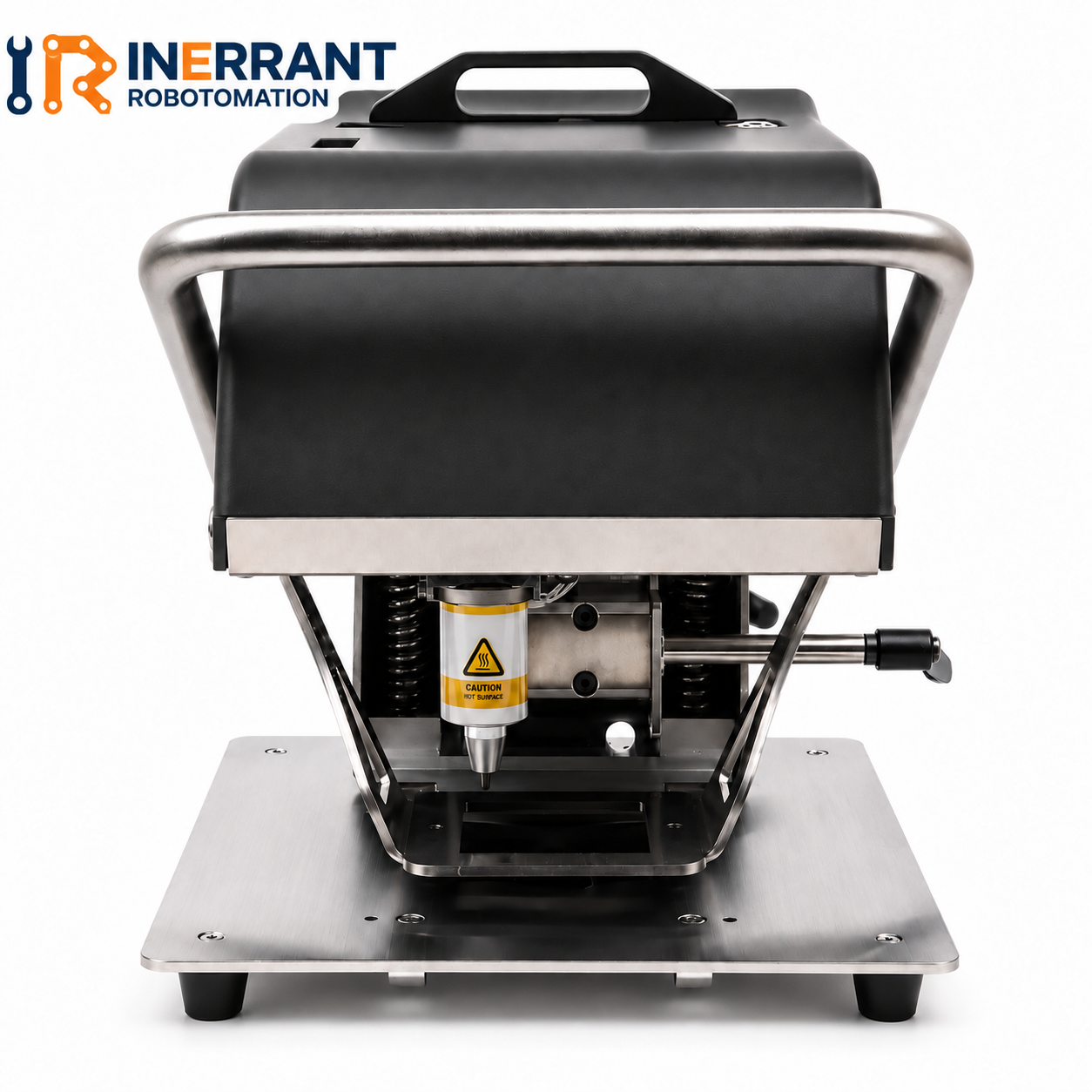 | Dot Peen Marking Machine Patmark lets you expand your marking capabilities, efficient and cost-effective marking solution. View product → |
 | Dot Peen Marking Machine Patmark lets you expand your marking capabilities, efficient and cost-effective marking solution. View product → |