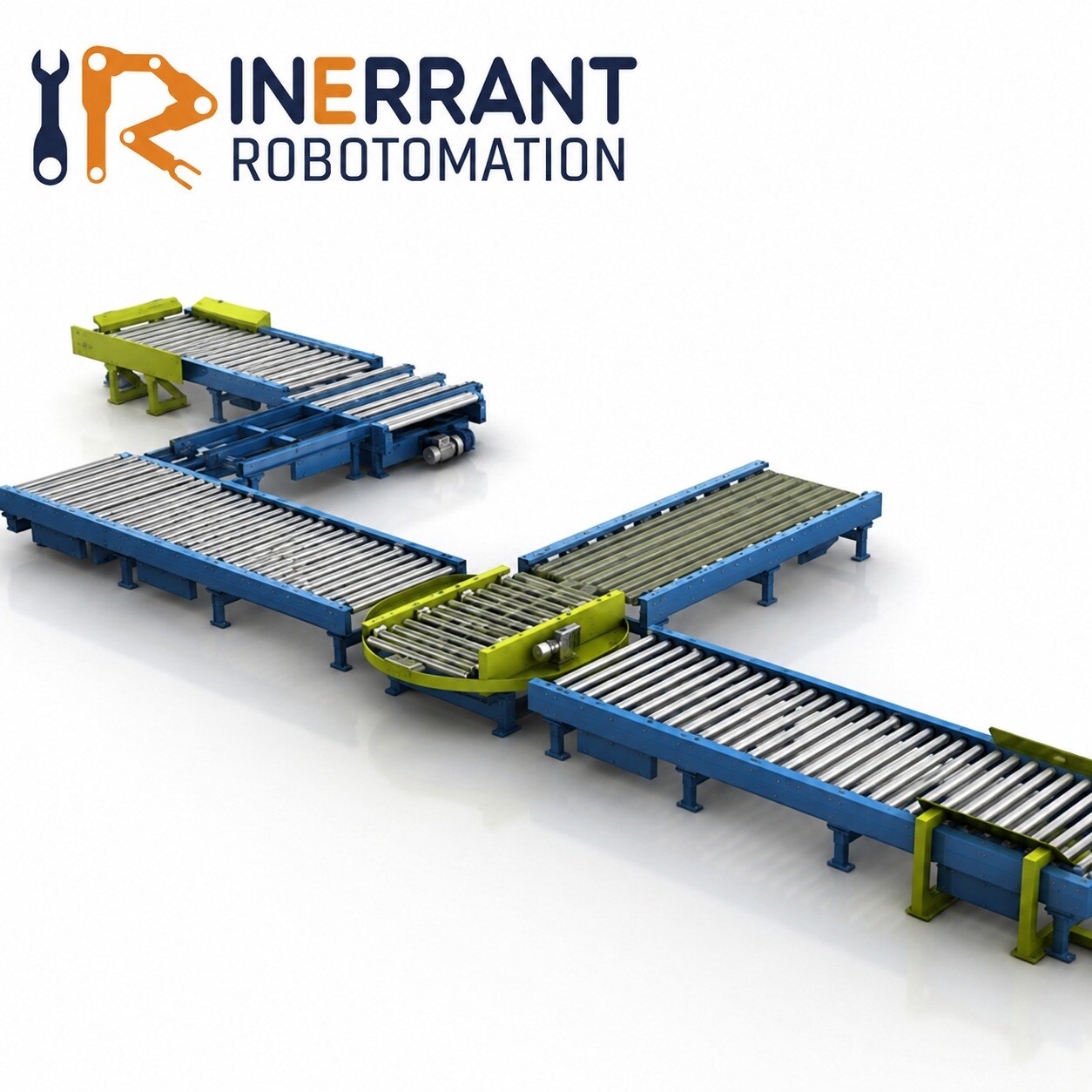
A conveyor selection based only on belt width or motor power can create jams, product damage and difficult maintenance. By the end, you will be able to match conveyor applications to Pune plant processes, define the inputs a manufacturer needs, and compare layouts, controls and lifecycle trade-offs before requesting a design.
Key takeaways
- Match belt, roller, chain or overhead conveyors to the load and route.
- Design transfers around part orientation, height changes and access for maintenance.
- Specify load, speed, duty cycle, controls, guarding and cleaning requirements.
- Compare purchase price with energy, downtime, labour and replacement-part costs.
Where conveyors fit into Pune manufacturing processes
Stamped parts, machined components, bins and cartons are strong conveyor candidates when they follow a repeatable route between fixed stations. An industrial conveyor in Pune can connect presses, machining centres, assembly benches, inspection points, packing stations and dispatch docks while reducing manual lifting and walking.
| Task | Good conveyor application | Check before specifying |
|---|---|---|
| Production | Move stamped parts from presses, feed machining centres, transfer bins between workstations | Confirm part temperature, oil, sharp edges, weight and loading orientation |
| Inspection | Accumulate components before vision, dimensional or leak testing | Define spacing, stop accuracy, sensor access and reject diversion |
| Packing | Carry pouches, boxes or finished cartons to sealing, labelling and palletising | Check carton base, permitted contact pressure, speed and changeover frequency |
| Dispatch | Move cartons or pallets to staging, wrapping and loading areas | Confirm load capacity, floor height, incline, pallet dimensions and dock position |
Use material handling automation where throughput, travel distance or repeatability justifies the controls and maintenance effort. Accumulation needs more than placing products close together: zero-pressure accumulation requires independently controlled zones, sensors and logic that stops upstream feeding when downstream availability is lost. Specify jam detection, sensor-failure behaviour, emergency-stop restart and accumulation-full response.
For food, pharmaceutical or wet-process lines, dust, washdown and chemicals can outweigh speed in the design decision. Ask for hygienic geometry, drainage, sealed bearings and corrosion-resistant materials; an IP rating alone does not prove hygienic suitability. Include labour, damage, changeovers, energy, maintenance access and downtime when comparing lifecycle cost.
How to choose the conveyor type and conveying method
Start with the product, not the motor. Match the conveyor and flow method to mass, dimensions, surface, speed, accumulation, contact pressure and plant conditions.
| Option | Best match | Flow and plant considerations |
|---|---|---|
| Belt | Cartons, bags, small parts and irregular products | Continuous flow; choose oil-resistant, heat-resistant or food-grade belting where required. Inclines need cleats or a suitable belt profile. |
| Roller | Rigid cartons, bins, totes and pallets | Use powered rollers for controlled spacing; gravity rollers suit short, low-throughput moves where operators can push loads. |
| Pallet | Defined workpieces or fixtures needing accurate positioning | Indexing or stop-start flow supports assembly and inspection; confirm pallet mass, transfer height and fixture repeatability. |
| Chain | Heavy, hot, sharp-edged or oily loads | Use for pallets, press-shop components and harsh conditions; protect contact surfaces and specify lubrication access. |
Do not call a powered conveyor an accumulator simply because products touch. Zero-pressure accumulation needs independently controlled zones, sensors and logic that stop upstream feeding before a downstream fault creates a pile-up. Define responses to sensor failure, jam detection, lost downstream availability, emergency-stop restart and a full accumulation zone.
Give the conveyor manufacturer product mass and size, units per minute or mass flow, loading pattern, usable width, belt speed, accumulation length, transfer spacing, elevation change, shifts and duty classification. Require starting, stopping and steady-state tension calculations under ISO 5048, plus acceptance tests for throughput, spacing and stopping.
Compare industrial material handling solutions by labour, changeovers, damage, energy, maintenance access and downtime—not purchase price alone.
How layouts, transfers and controls affect line performance
Design around the slowest machine, not the nominal belt width. For an industrial conveyor in Pune, confirm product mass and dimensions, throughput, accumulation length, transfer spacing, elevation change and permissible contact pressure; ISO 5048 provides the basis for belt power and tensile-force calculations.
- Straight sections should feed machines at a constant pitch, with enough accumulation length to absorb short stops without blocking the preceding operation.
- Curved sections should change direction only where the product remains stable; a tight curve can rotate, jam or expose parts to a machine outside its pickup position.
- Inclined sections need controlled speed and suitable cleats, flights or side guides when gravity can cause rollback or sliding. Place the incline before accumulation, not directly at a precision transfer.
- Serpentine layouts save floor space, but every reversal adds guides, sensors and maintenance points. Keep access aisles and avoid hiding a jam behind another machine.
- Transfers should be short, level and aligned with the receiving fixture. Use a dedicated transfer device when product gaps, orientation or height change exceeds what the conveyor can handle.
Control material handling automation so a failed sensor, unavailable downstream machine or detected jam stops upstream feeding before products form a pile-up. Define what happens when accumulation is full, how an emergency-stop reset prevents automatic restart, and how connected machines respond.
Zero-pressure accumulation needs independently controlled zones and sensing; simply driving products closer together increases damage risk. Keep drives, belts, rollers and sensors removable without dismantling adjacent equipment, because access time belongs in lifecycle cost.
What to include in a conveyor design brief for a Pune plant
Give a conveyor manufacturer a measured production brief, not “one conveyor for 20 metres.” Include these inputs before requesting a quotation:
1. Product: length, width, height, mass, centre of gravity, surface, temperature, oil exposure, sharp edges and permitted contact pressure. State units per minute, mass flow, spacing, loading pattern, accumulation length, belt speed, usable width, incline angle and allowable load.
2. Layout: overall length, straight and curved sections, elevation change, infeed and discharge heights, floor loading, obstructions, operator access and clearance for replacing belts, rollers, sensors and drives without dismantling adjacent equipment. Identify every transfer gap.
3. Operation: shifts per day, duty class, start-stop frequency, batch changeover time, ambient temperature, dust, washdown or corrosion exposure and accumulation method. Request starting, stopping and steady-state belt-tension calculations; poor acceleration control causes slip and drive-train stress. Reference ISO 5048 for belt power and tensile-force calculations.
4. Electrical and controls: motor voltage and frequency, phase, available short-circuit current, earthing, voltage disturbances, panel location, enclosure rating, PLC and network interface, and compliance with IEC 60204-1. Define responses to sensor failure, jams, downstream unavailability, full accumulation, emergency-stop reset and restart; stop upstream feeding before a downstream fault creates a pile-up.
5. Acceptance: specify throughput at the stated load, speed tolerance, tracking, noise, transfer performance, accumulation behaviour, safe-stop function, production-trial duration and required documentation. Price installation, commissioning, training, spares, maintenance access and downtime into the quote.
Inerrant can use this brief to separate mechanical design from controls and compare industrial material handling solutions by labour, energy, product damage, maintenance and downtime—not purchase price alone.
Related products
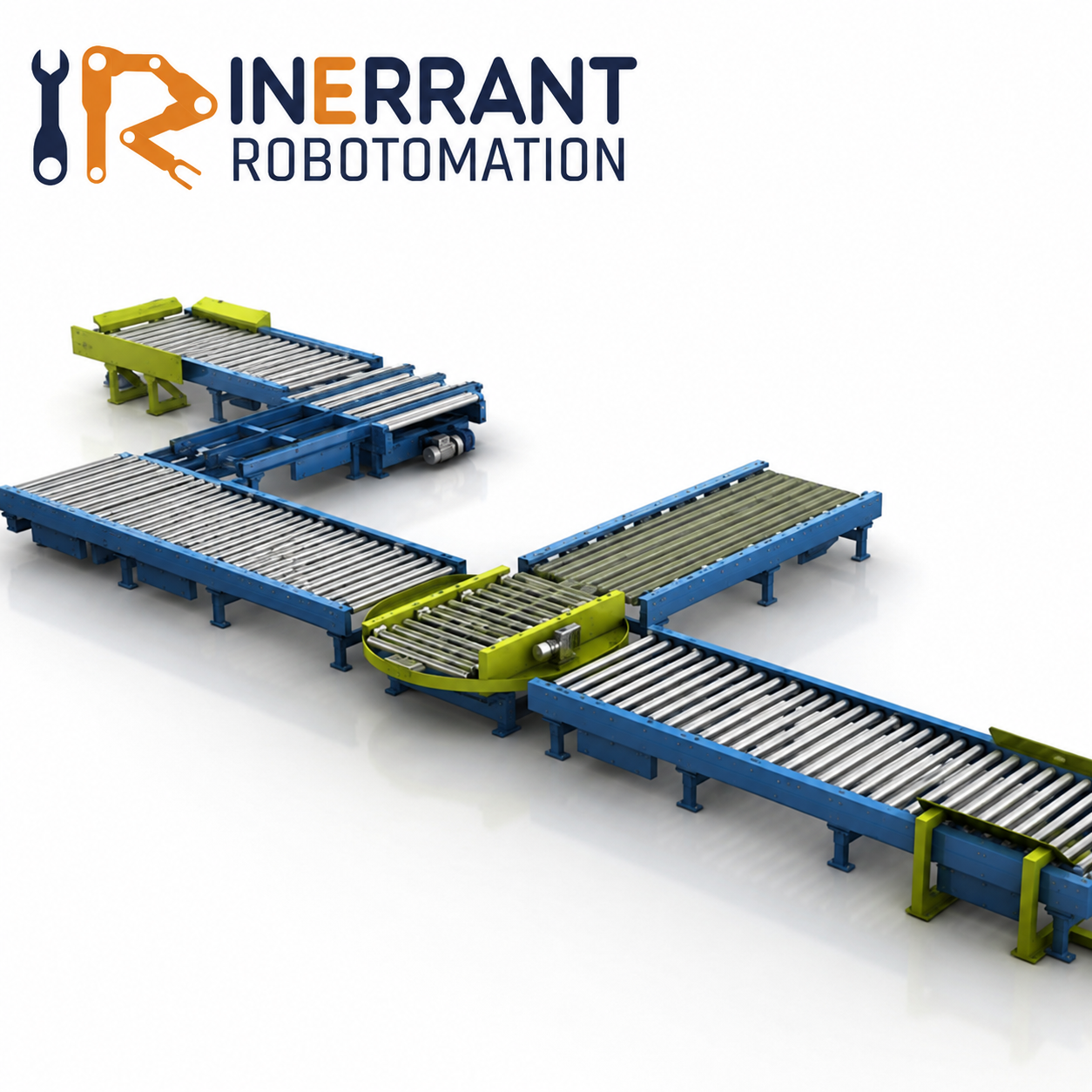 | Conveyors Conveyors At Inerrant Robotomation Pvt. Ltd. , we design and manufacture a wide range of industrial conveyor systems that ensure smooth, efficient, and... |
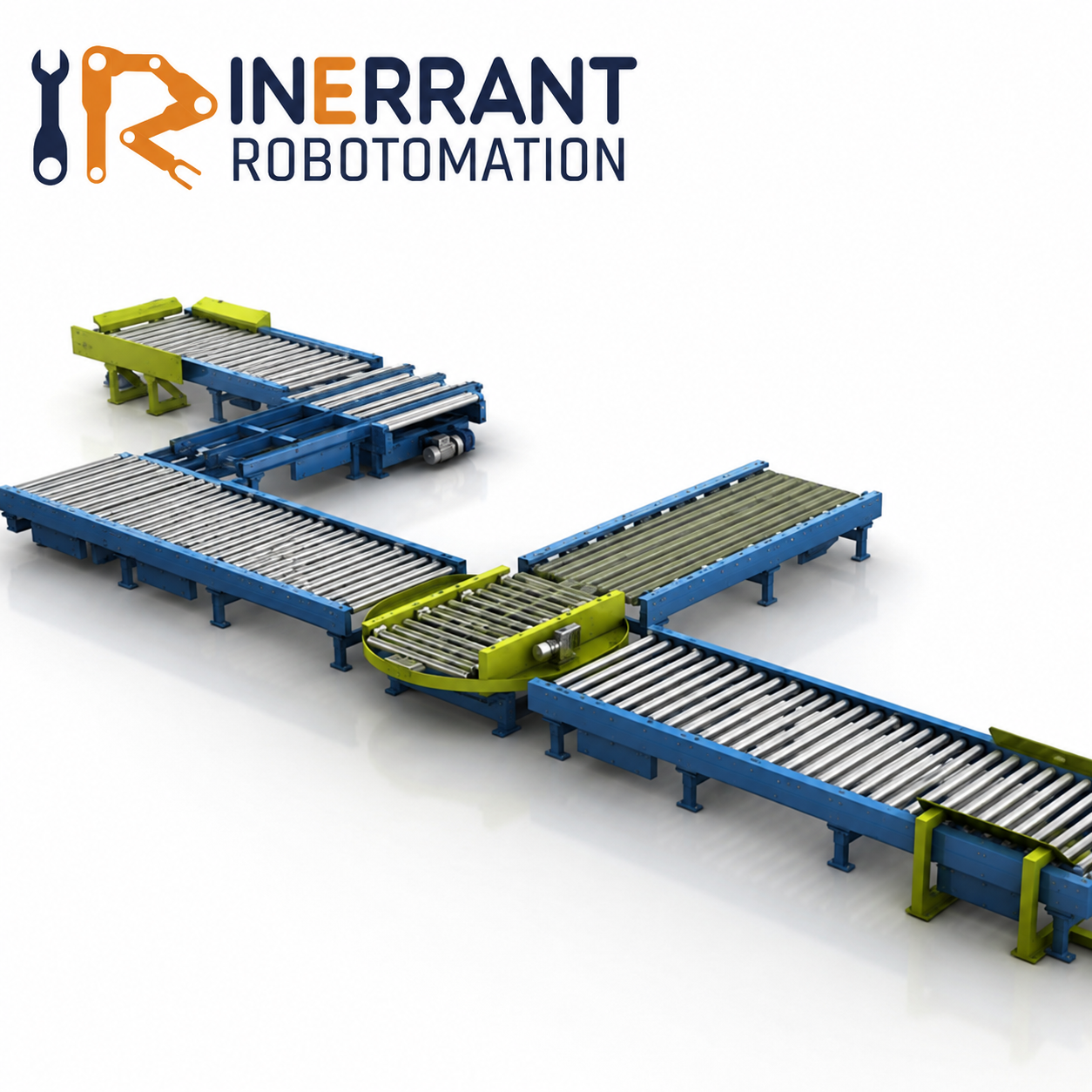 | Conveyors Inerrant Robotomation Pvt. Ltd. builds Belt Conveyor Systems aimed at making material handling more efficient in many industries. View product → |
How to control risk, hygiene and lifecycle cost
Specify guarding, emergency stops, environmental protection, maintenance access and measurable acceptance criteria before you compare prices. A low-cost conveyor becomes a production constraint when a failed sensor or belt requires dismantling adjacent equipment, or when one jam stops every upstream process.
An industrial conveyor in Pune must suit the room as well as the product. Record motor voltage and frequency, available short-circuit current, earthing, panel location, ambient temperature, washdown exposure, oil, dust and voltage disturbances; IEC 60204-1 covers the machine’s electrical equipment and protective bonding.
1. Guard nip points, pulleys, rotating shafts, chains, sprockets and accessible return strands according to the access hazard. Emergency stops do not replace fixed or interlocked guarding.
2. Design emergency stops under ISO 13850 and safety-related controls under ISO 13849-1. Specify stopping performance, reset location, restart prevention and how connected machines respond.
3. Define sensor failure, downstream unavailability, jam detection, emergency-stop restart and accumulation-full logic. For zero-pressure accumulation, use independently controlled zones and sensors that stop upstream feeding before loads collide or a pile-up spreads.
4. Provide removable guards, lift-out rollers, inspection doors, isolation points and clear maintenance space. State belt, roller, sensor and drive replacement times as acceptance measures.
Calculate lifecycle cost across labour, changeovers, damaged or rejected product, energy, maintenance and unplanned downtime. These measures distinguish practical industrial material handling solutions from a cheap purchase that limits output.
Frequently asked questions
Where do conveyors fit into Pune manufacturing processes?
Use conveyors for repeatable routes between presses, machining centres, assembly stations, inspection points, packing areas and dispatch docks. They suit stamped parts, machined components, bins and cartons that need controlled movement between fixed stations.
How do you choose a conveyor type and conveying method?
Start with the load’s weight, dimensions, surface, temperature, orientation and required speed. Select belt conveyors for mixed or delicate loads, roller conveyors for rigid flat-bottomed items, chain conveyors for pallets and heavy fixtures, and overhead conveyors when floor space is limited.
How do layouts, transfers and controls affect line performance?
Keep transfers short and accessible, match conveyor heights to each station, and prevent gaps that allow parts to tip or jam. Define sensors, stops, accumulation zones, variable-speed drives, interlocks and emergency stops before fabrication.
What should a conveyor design brief for a Pune plant include?
State the product or container, dimensions, weight range, throughput, conveyor length, elevation changes, operating hours, environmental conditions, loading and unloading points, controls, guarding, utilities, cleaning access and acceptance tests.
How can you control conveyor risk, hygiene and lifecycle cost?
Use fixed guards at nip points, accessible emergency stops, lockout procedures and documented risk assessments. Specify cleanable surfaces where required, then compare energy use, maintenance access, wear parts, downtime and operator effort alongside the purchase price.
Related products
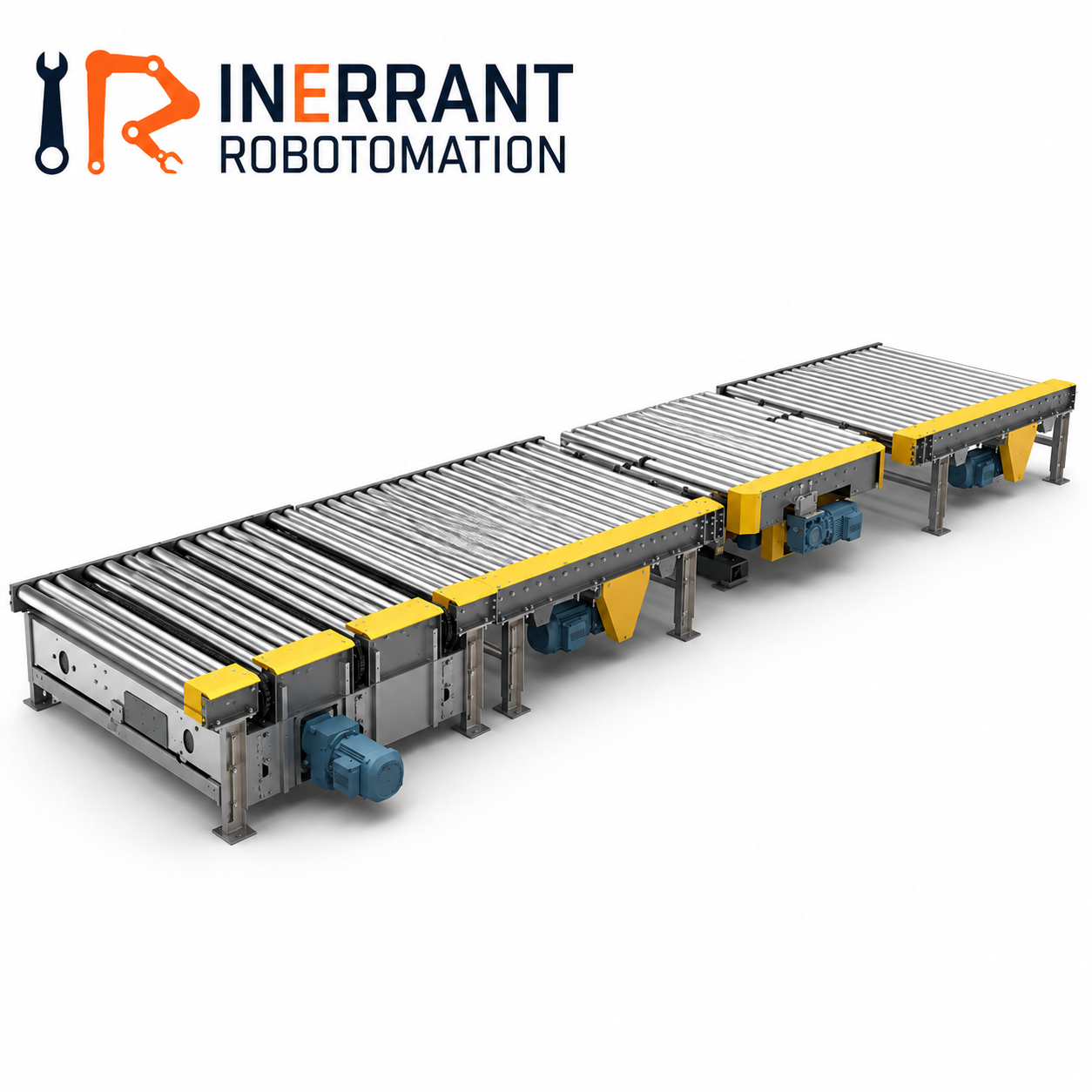 | Conveyors At Inerrant Robotomation Pvt. Ltd., we specialize in the design and manufacturing of high-quality Roller Conveyor that enhance efficiency,... View product → |
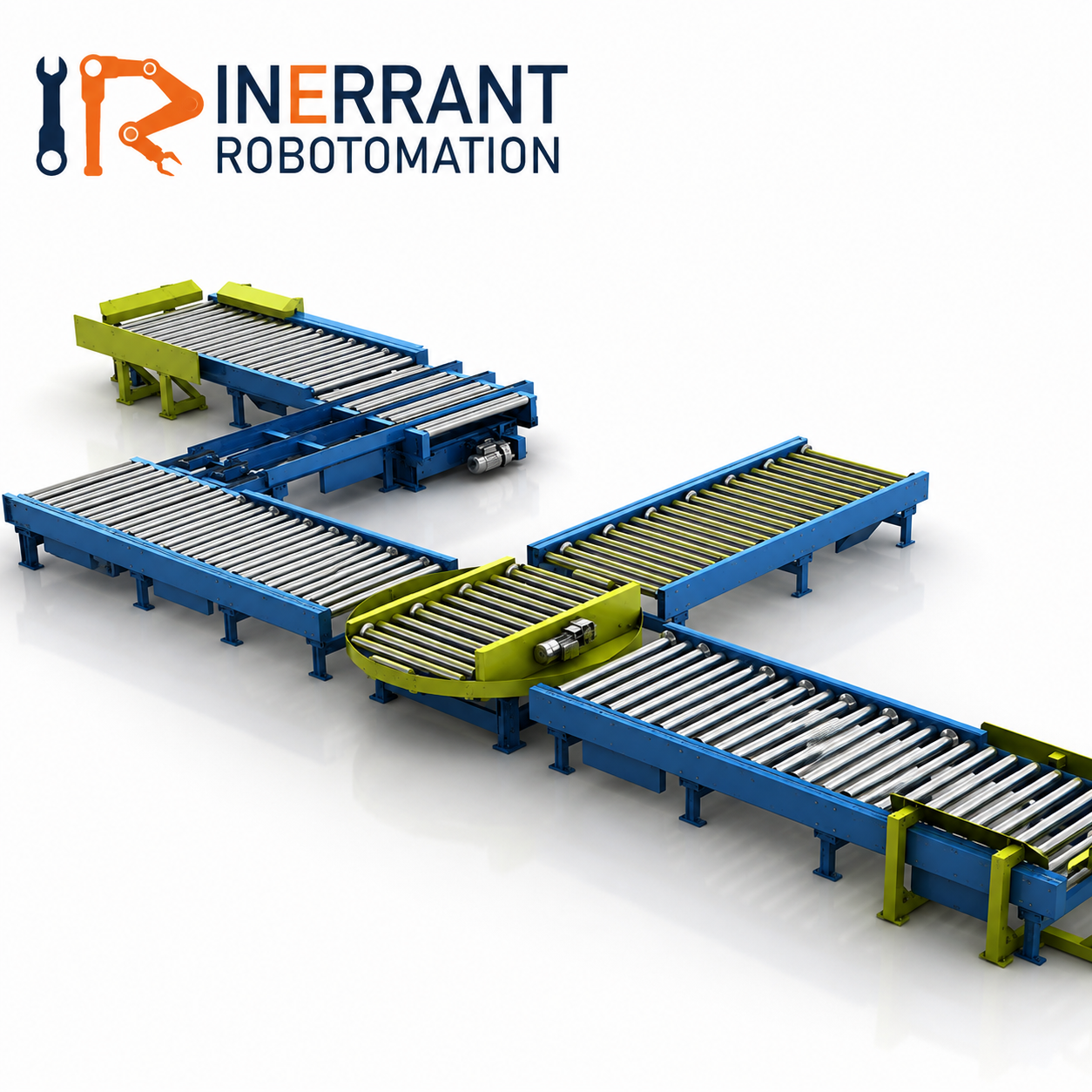 | Conveyors At Inerrant Robotomation Pvt. Ltd., we design and manufacture advanced Pallet Conveyor Systems engineered for precision, reliability, and seamless... View product → |
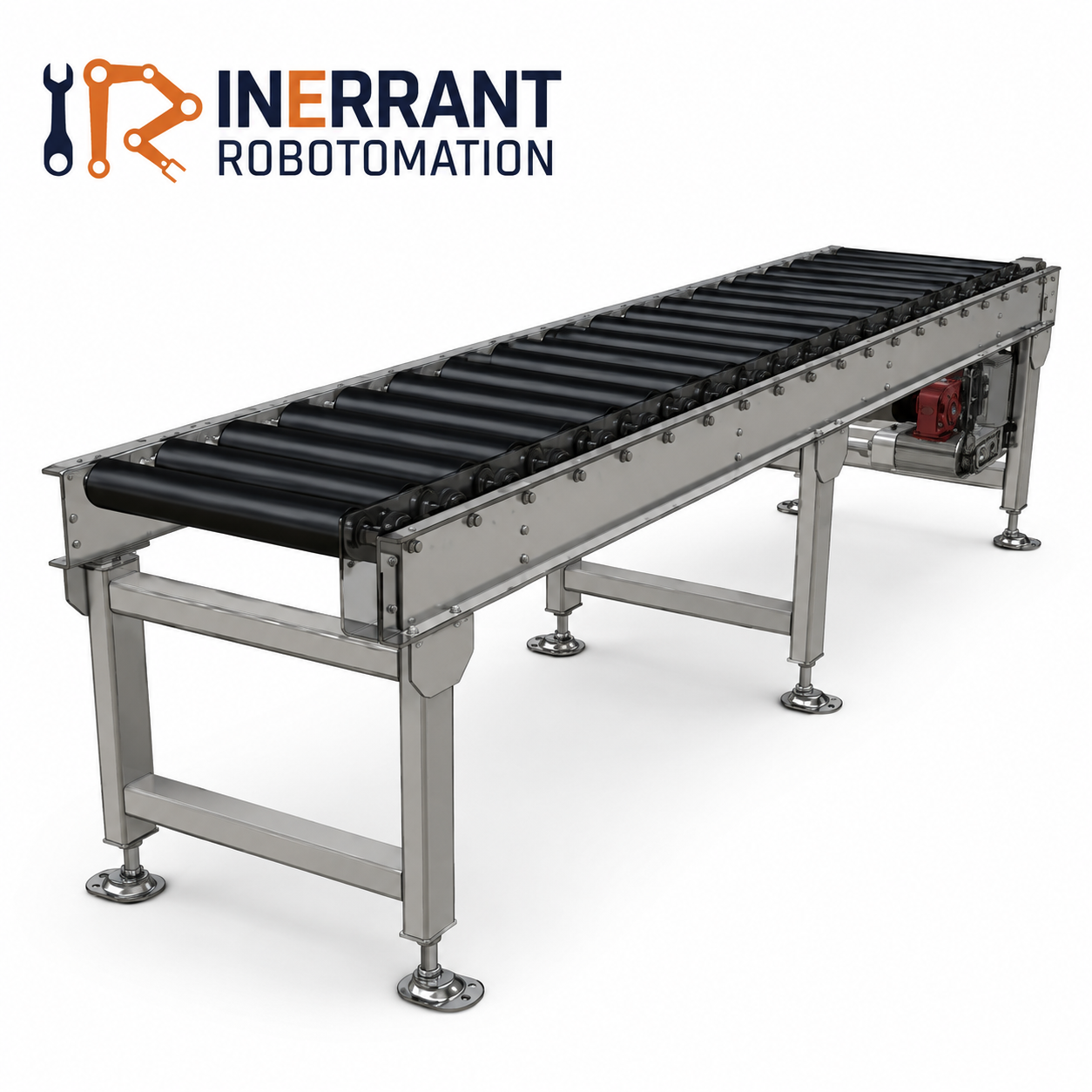 | Conveyors Chain Conveyors at Inerrant Robotomation Pvt. Ltd. – Reliable Material Handling Solutions In today’s fast-paced industrial world, efficient and... View product → |
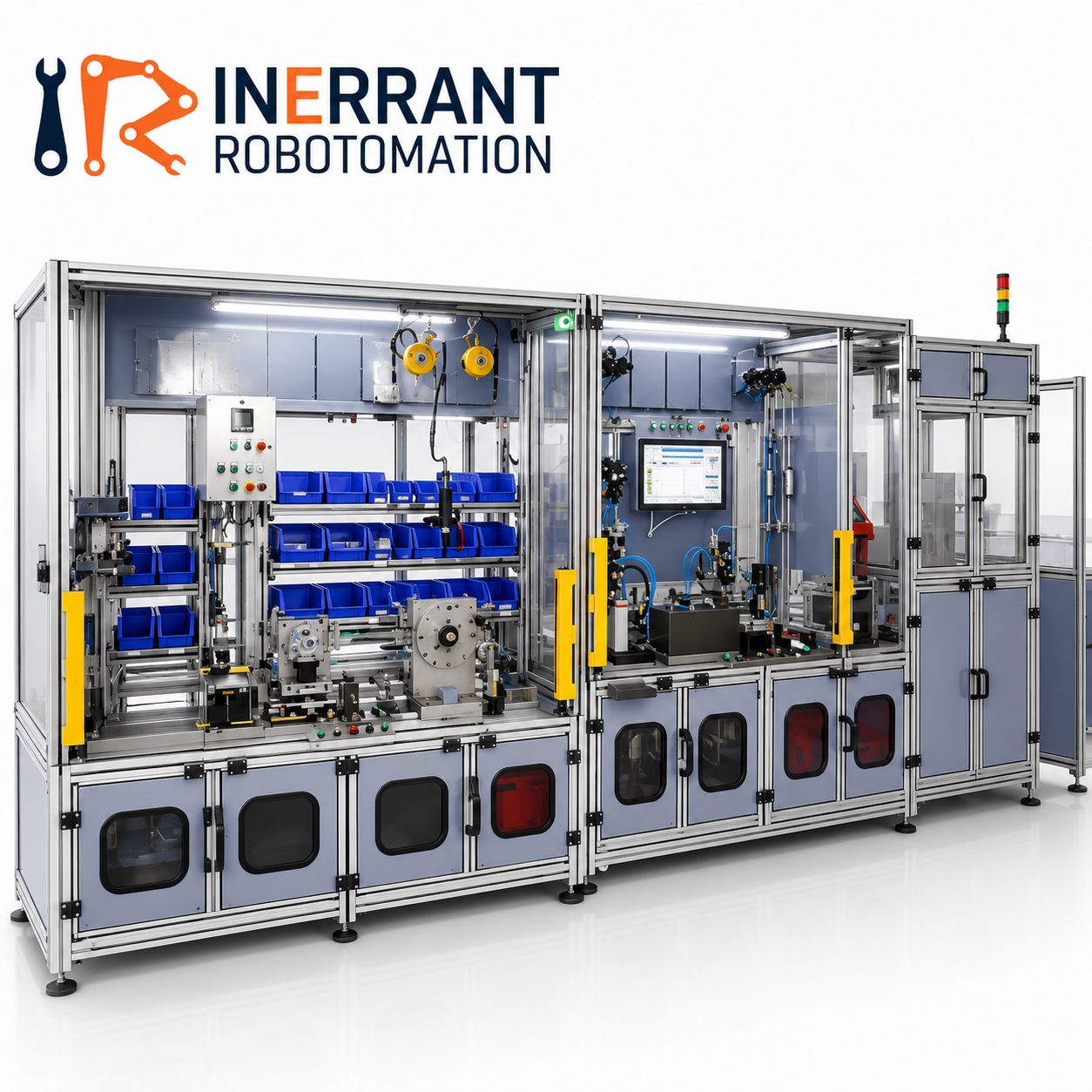 | Assembly Line And Automation System Assembly Line And Automation System Our assembly line and automation systems offered at Inerrant Robotomation Pvt. Ltd. View product → |