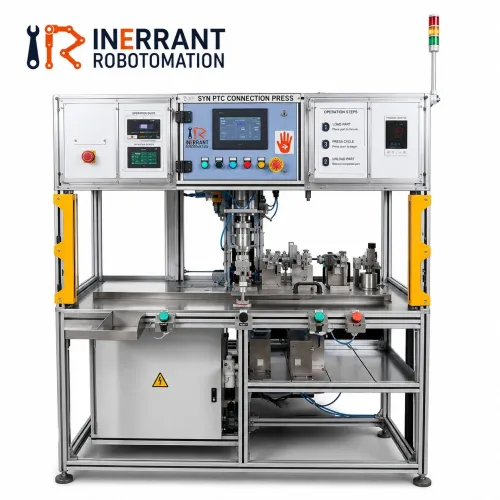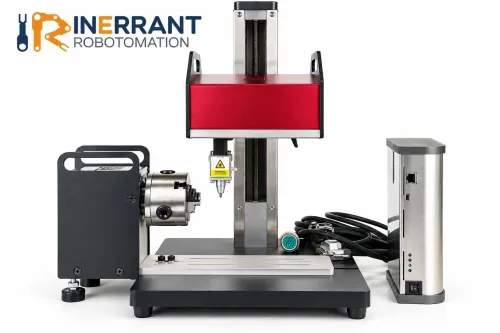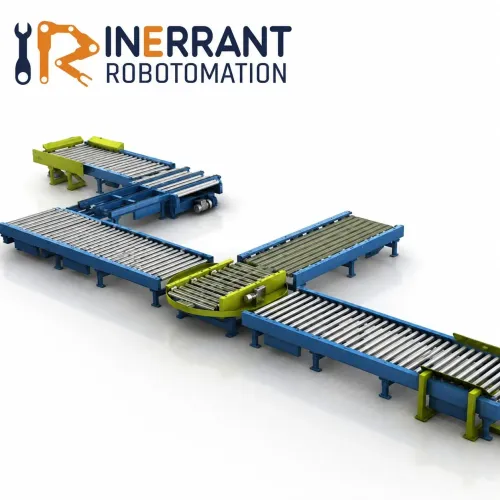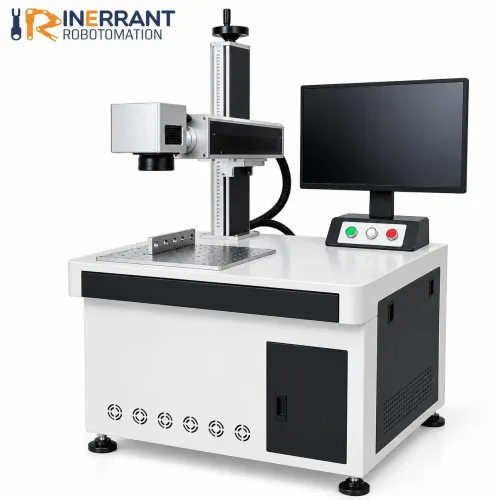
Manual laser marking can be perfectly suitable for low-volume production, prototyping, repair work, or batches containing frequent product changes. As volumes increase, however, repeated loading and unloading can become a production constraint. An Automatic Laser Marking Machine in Pune may become worth evaluating when marking needs to keep pace with a structured manufacturing process.
The decision should start with production data.
Suppose an operator takes eight seconds to load a component, three seconds to confirm its position, ten seconds for marking, and another five seconds to unload it. The laser itself is working for only part of the total cycle. Automation may reduce some non-marking time by using conveyors, indexing tables, pneumatic fixtures, robotic handling, or automatic feeding.
Automation can also help where incorrect loading creates quality problems. A fixture combined with sensors can confirm whether a component is present and correctly positioned before marking begins.
Typical signs that an automatic system deserves evaluation include:
Increasing daily production quantities
Excessive operator handling
Inconsistent mark location
Frequent wrong-part or wrong-program errors
Need for serial number automation
Requirement for machine-readable traceability
Integration with an existing assembly line
Repetitive loading of identical components
Need for automatic code verification
Manufacturers should still calculate whether automation solves a genuine constraint. If marking represents only a small part of production and components vary constantly, a highly automated system may add unnecessary complexity.
Data management is especially important in automatic marking. The machine may need to receive a serial number from a PLC, barcode scanner, manufacturing system, or database. Controls should prevent duplicate codes and ensure that the correct marking file corresponds with the correct component.
For Pune's automotive and engineering manufacturing ecosystem, automatic marking can also become part of error-proofing. A component can enter the station, be identified, positioned, marked, verified, and released only after the required conditions have been satisfied.
This creates an important distinction between machine automation and process automation. Adding an automatic door to a laser machine does not necessarily create a fully automated marking process. True process automation considers component handling, identification, recipe selection, marking, verification, rejection, data communication, and recovery from faults.
INERRANT ROBOTOMATION in Pune works within this broader industrial automation environment, where production equipment may require integration between mechanical handling and control systems.
Manufacturers considering automation should document their existing cycle first. Measure actual loading time, marking time, unloading time, rejection rate, changeover frequency, and operator involvement. This establishes a baseline against which an automated solution can be evaluated.
The best automatic laser marking configuration is not necessarily the one with the most mechanisms. It is the one that removes meaningful production constraints while remaining maintainable, safe, flexible, and easy to operate.
A careful assessment of production volume, component variety, traceability requirements, available space, and expected future demand can help determine whether automatic marking offers genuine operational value.