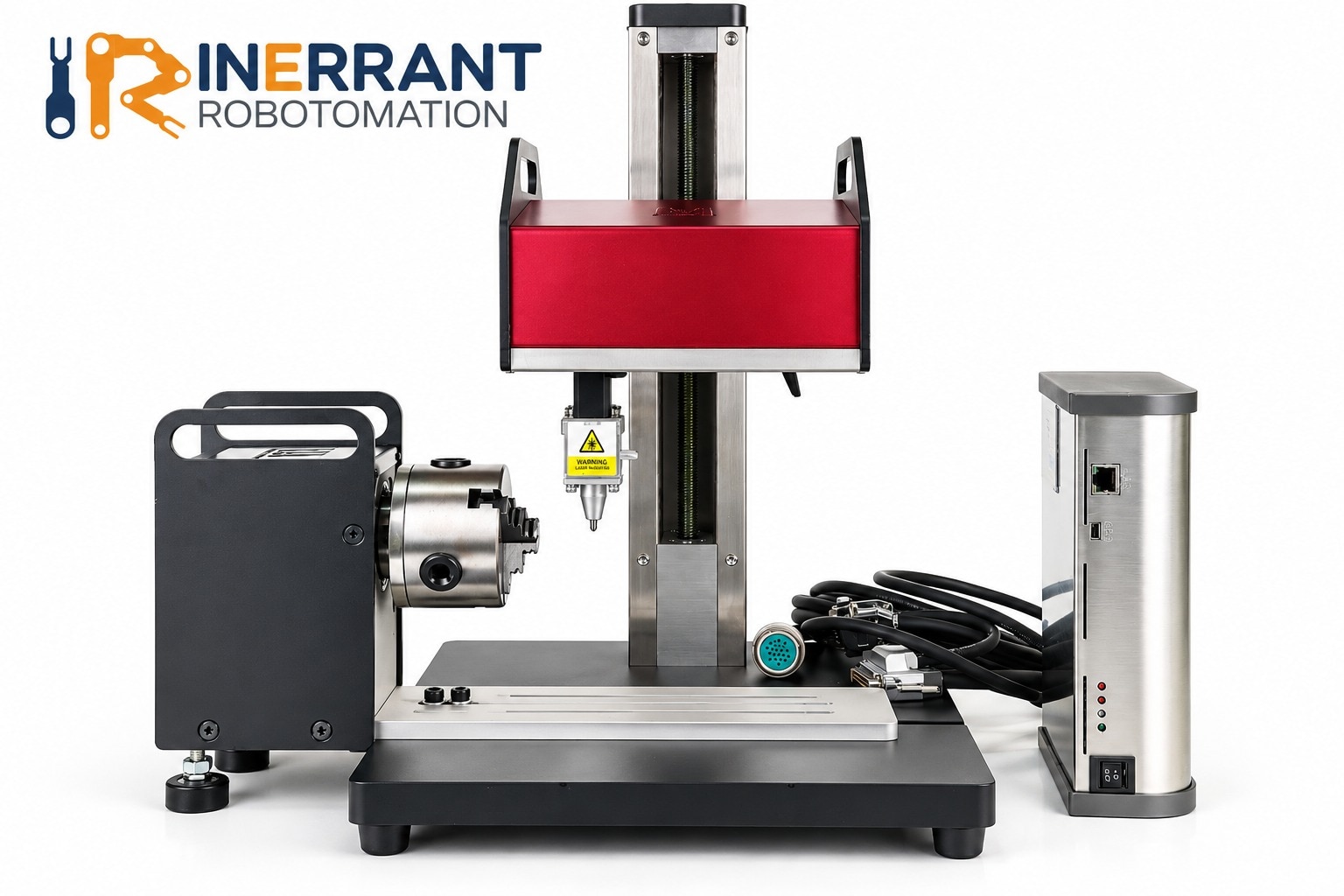
The available product description leaves out the specifications needed to approve Patmark Plus for production: marking area, electrical requirements, consumables, workflow, material limits and repeatability evidence. By the end, you will have a practical checklist for identifying the process, comparing it with dot peen and laser alternatives, and requesting a trial that proves whether the mark meets your part specification.
Key takeaways
- Use electrolyte, a stencil and electrical current to etch conductive parts.
- Document voltage, current, electrolyte, stencil and mark settings for repeatability.
- Clean and align the workpiece before every marking cycle.
- Choose electrolytic marking for shallow, high-contrast marks without impact damage.
What marking process does Patmark Plus actually use?
PATmark Plus is an electrochemical, or electrolytic, marking system—not a dot-peen machine. It passes electrical current through a prepared stencil and electrolyte onto a conductive workpiece, producing an etched mark without driving a carbide pin into the surface.
| Process | How the mark is made | Procurement consequence |
|---|---|---|
| Electrochemical marking | Current transfers the stencil image through electrolyte | Specify stencils, electrolyte, electrical return path, conductive materials and surface-finish limits |
| Dot-peen marking | A pneumatically or electrically actuated carbide pin creates impact dots | Specify pin size, force, depth, noise, deformation limits and software-driven variable data |
The distinction changes what you must request from a supplier:
- Write electrochemical/electrolytic marking in the specification. The phrase electrical marking machine manufacturer for patmark plus is too broad because “electrical marking machine manufacturer” could describe an electrochemical etching supplier, an electrical-discharge engraver or another powered marker.
- Reject dot-peen assumptions about depth, tooling and permanence. PATmark Plus does not mechanically indent the part, so it avoids impact deformation, burr formation and work-hardening risks on thin sheet, precision-machined or finished components.
- Define the acceptance test around surface durability. Electrical marking is normally a surface process and lacks dot-peen’s direct depth-verification method; specify whether the mark must survive machining, blasting or coating, then name the inspection method.
- Budget for stencil preparation and changeovers. Stencil-based artwork is less flexible for serial numbers and other variable data than software-controlled dot-peen or laser marking.
Which Patmark Plus product details must the manufacturer document?
Do not approve a quotation that says only “electrical marking machine.” Ask the electrical marking machine manufacturer to state explicitly that the process is electrochemical or electrolytic, not dot-peen or electrical-discharge engraving.
| Specification | Obtain from manufacturer | Why it matters |
|---|---|---|
| Marking envelope | Maximum stencil and marking-window dimensions, maximum character height, mark-depth range | Confirms that the artwork fits and survives the required downstream operation |
| Machine mechanics | Overall dimensions, weight, workpiece clearance and clamping method; confirm that no stylus or carbide pin is used | Determines installation, handling and fixture requirements |
| Electrical system | Supply voltage, power rating, battery voltage and capacity, operating time, charging time, battery type and spare-battery availability | Prevents unexpected downtime and incompatible power arrangements |
| Consumables | Compatible electrolytes, stencil materials, replacement-pad part number, pad life, stencil lead time and storage limits | Reveals recurring cost and whether production can continue after consumables run out |
| Control and data | App name, supported iOS and Android versions, connection method, file formats, offline operation, artwork loading and programme-saving method | Exposes the limits of stencil-based text and variable serial numbers |
| Production performance | Cycle time for your actual artwork, including electrolyte application, marking and cleaning | Stops a catalogue speed from distorting capacity planning |
Request a sample mark at the stated depth and define an inspection method. If the part will be machined, blasted or coated afterward, require evidence that the mark remains readable; surface etching does not provide dot-peen-style depth verification.
How do you prepare, run and repeat a Patmark Plus mark?
Prepare the stencil with the exact artwork or text, then place it flat against a clean, conductive surface. Patmark Plus passes current through the stencil and electrolyte into the workpiece, so a fixed stencil is the controlling template. Changing a serial number usually means changing the stencil; do not assume software-generated variable data.
- Degrease the marking area and remove paint, oil, scale and loose oxidation. A rough or contaminated surface produces uneven contrast.
- Position the stencil without gaps, wrinkles or movement. Check its edges and openings before applying electrolyte.
- Connect the electrical return lead to clean, exposed metal on the same workpiece. A loose clamp, coated contact point or insulated fixture interrupts the circuit and weakens the mark.
- Apply the specified electrolyte evenly, then use the approved current and dwell time. Record the electrolyte type, stencil, alloy, surface finish and settings.
- Run a sample, inspect contrast and legibility, and approve it before production. Do not compensate for a poor stencil by increasing current indefinitely.
Repeatability depends on a controlled recipe, not the machine’s nominal power rating. Keep the part position, contact location, electrolyte application, dwell time and cleaning method constant, and save the approved settings with the stencil identification.
A search for an electrical marking machine manufacturer for patmark plus does not establish these process controls; request them in the work instruction.
Which materials, marks and production tasks suit the process?
Use electrochemical marking on electrically conductive metals when you need a visible surface mark rather than a deep engraving. Steel, stainless steel, aluminium, copper and brass are suitable, but the alloy, polish and contact path affect contrast. An insulating paint, powder coat or anodised layer can block the circuit; test the finished surface before approval.
| Material or task | Fit | What to verify |
|---|---|---|
| Steel and stainless steel | Strong fit for logos, part numbers, grades and batch codes | Electrolyte, dwell time and surface finish |
| Aluminium, copper and brass | Suitable, with alloy-specific contrast trials | Oxide layers, staining and electrolyte compatibility |
| Conductive coated surface | Conditional | Confirm the coating conducts and remains intact around the mark |
| Plastic, ceramic or glass | Not suitable | Choose laser, inkjet, pad printing or another non-contact process |
| Repeated names, symbols or fixed codes | Strong fit for low-to-medium volume batches | Stencil life, artwork-change time and consumable cost |
| Frequent unique serial numbers or large data sets | Weak fit | A laser or dot-peen system handles variable data more directly |
The process suits operators who repeat approved artwork across batches. It becomes inefficient when every part needs a new stencil, or when marks must survive machining, blasting or coating; specify allowable downstream operations and inspect depth or readability afterward because electrochemical marking is primarily superficial.
Tell an electrical marking machine manufacturer to state “electrochemical” or “electrolytic” marking in the quotation. Do not accept “electrical marking” alone: that phrase can describe an electrical-discharge engraver or another powered marker. For deep, mechanically verifiable identification, compare dot peen or laser engraving instead.
How should you compare Patmark Plus with dot peen, laser and other markers?
Approve the process on representative parts, not brochures. Compare the same artwork, alloy, surface finish and production target across every supplier, then inspect the result after the operations that follow marking.
| Option | Contrast and depth | Production trade-offs |
|---|---|---|
| Electrochemical (Patmark Plus) | High surface contrast with shallow etching; depth and post-process durability need measurement | Quiet, little deformation, stencil preparation required, and variable data changes are less flexible |
| Dot peen | Impact dots create measurable physical depth and strong permanence | Audible impact, possible burrs or deformation, fast software-driven serialisation |
| Laser | Contrast and depth depend on wavelength, power, focus and material | Quiet and highly flexible for data, but enclosure, extraction and higher capital cost can apply |
| Inkjet or scribe | Ink gives contrast without depth; scribing cuts a line into the surface | Fast for suitable surfaces, but ink can wear and scribing can distort thin parts |
Ask every supplier to run your actual part, not a coupon. The sample pack must record cycle time, mark size, contrast, measured depth, noise at the operator position, dimensional change or burrs, and readability after washing, coating, machining or blasting.
- Request the complete cost: machine, electrolyte, pads, stencils, software, batteries, maintenance, extraction and labour for artwork changes.
- Test your highest serial-number variation and confirm the file format, offline operation and repeat-job controls.
- Require the electrical marking machine for patmark plus to be specified as electrochemical or electrolytic, not as a dot peen marking machine manufacturer product.
- If Inerrant supplies the comparison, require these same part-level results and replacement-consumable lead times.
Related product
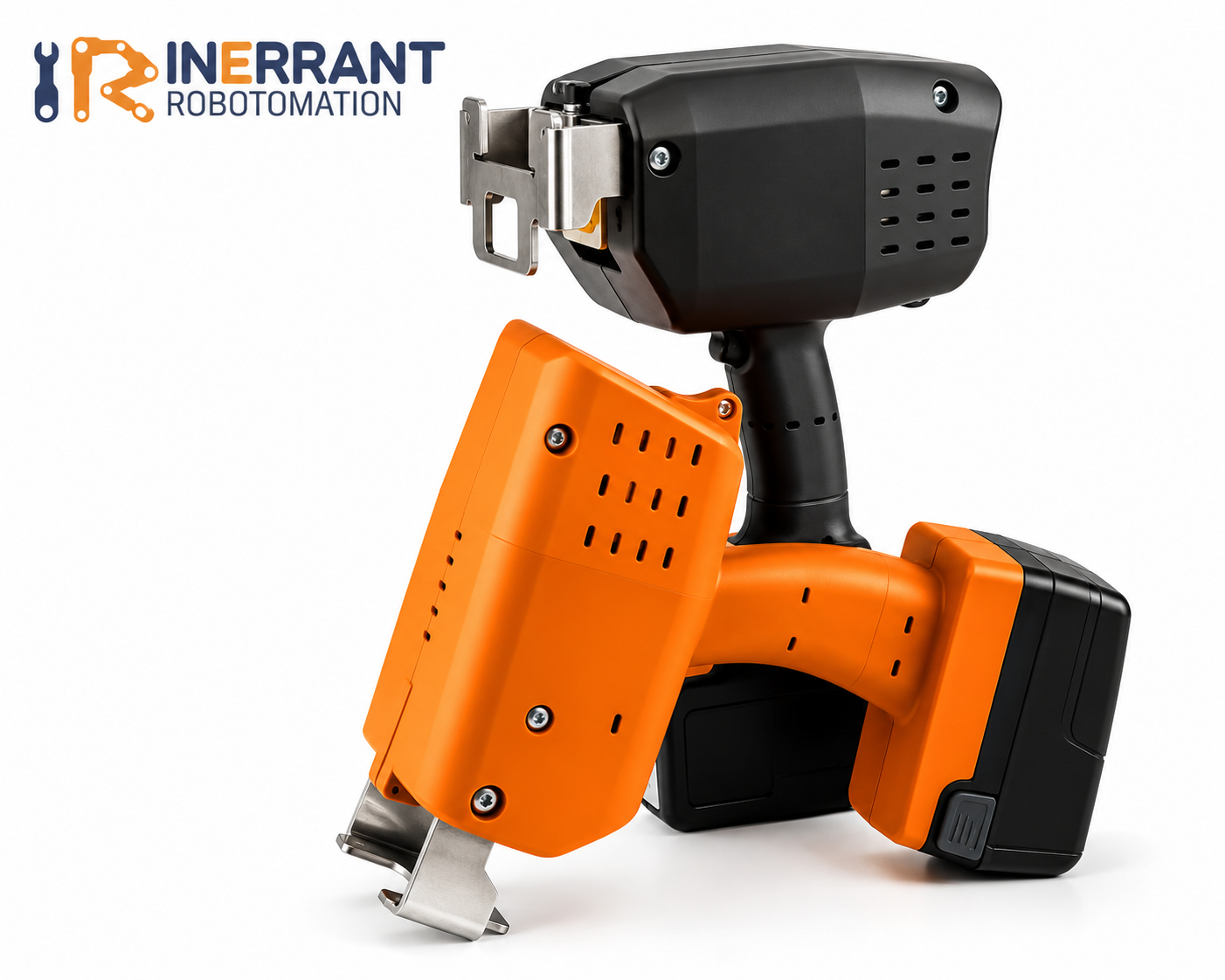 | Dot Peen Marking Machine Patmark lets you expand your marking capabilities, efficient and cost-effective marking solution. View product → |
Frequently asked questions
What marking process does Patmark Plus use?
Patmark Plus uses electrolytic marking: electrical current passes through a prepared stencil and electrolyte onto a conductive workpiece, creating an etched mark.
Which Patmark Plus product details should the manufacturer document?
Document the machine model, electrical settings, electrolyte specification, stencil type, workpiece material, mark size, cleaning method and repeatability controls.
How do you prepare and repeat a Patmark Plus mark?
Clean the conductive surface, position and secure the stencil, apply the electrolyte, use the specified current and timing, then clean and inspect the mark.
Which materials and tasks suit electrolytic marking?
The process suits conductive metals and tasks requiring shallow, readable identification marks, such as part numbers, serial numbers and traceability codes.
How does Patmark Plus compare with dot peen and laser marking?
Electrolytic marking avoids dot-peen impact and laser heat, but it requires a stencil, electrolyte and a conductive surface.