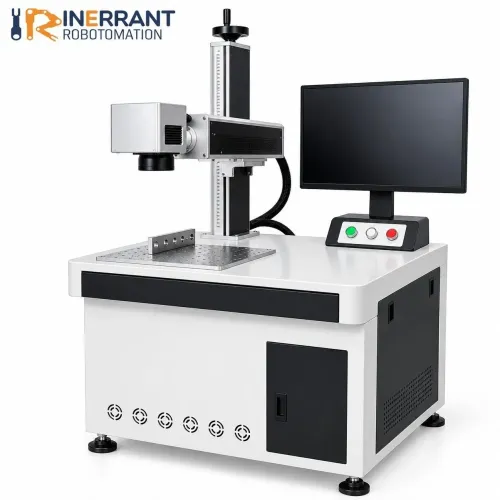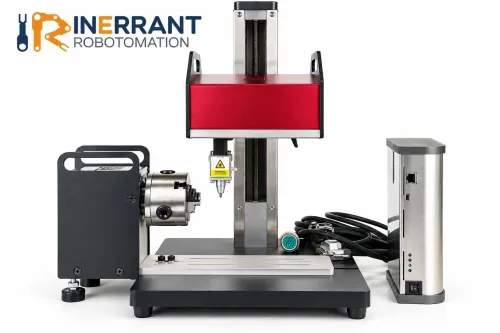
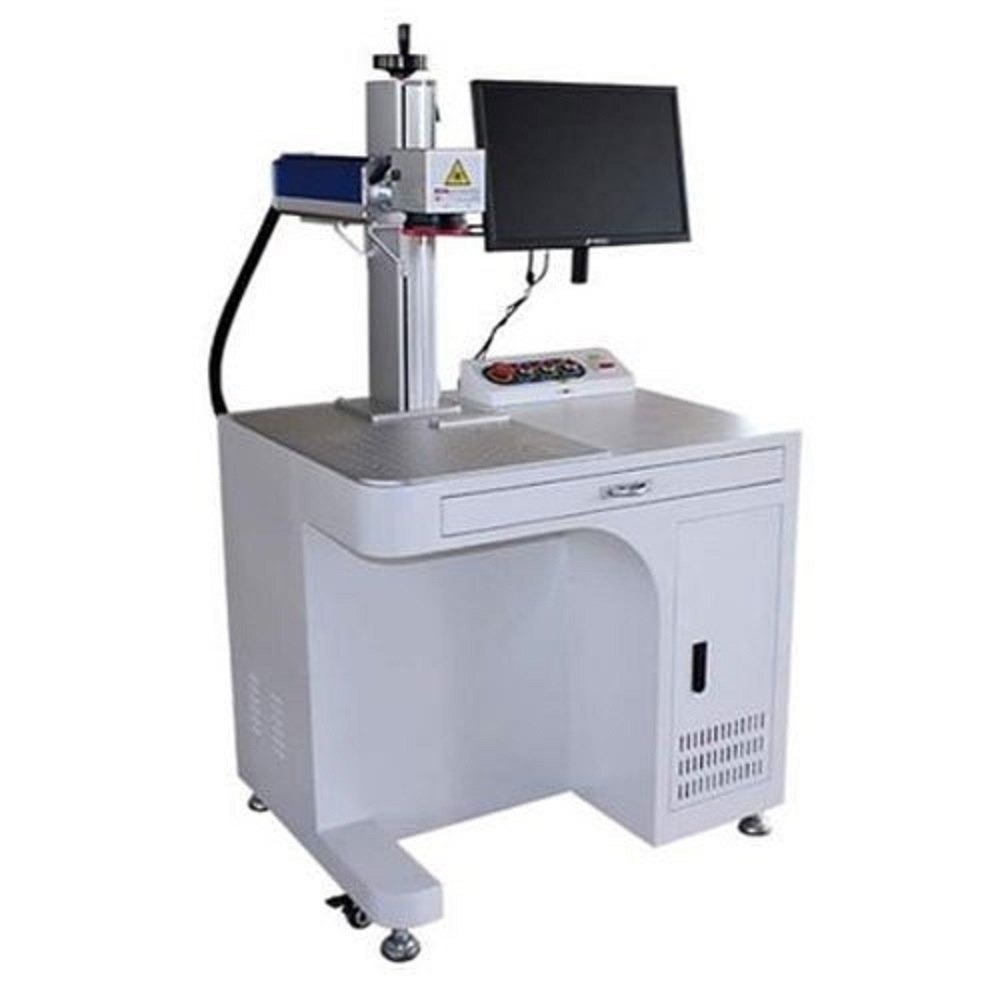
Manufacturers evaluating permanent marking technology often encounter several laser options, making it important to understand where each technology fits. A Fiber Laser Marking Machine in Pune is commonly considered for industrial metal marking because fiber laser technology can provide precise, repeatable marking across many metallic components.
The decision, however, should be based on the actual application rather than the popularity of the technology.
Fiber lasers are widely associated with marking materials such as stainless steel, mild steel, aluminium, brass, and various coated or treated metals, subject to application testing. They can be used for serial numbers, identification codes, logos, barcodes, QR codes, Data Matrix codes, and other production information.
One of the main reasons manufacturers evaluate fiber laser marking is the need for permanent identification without relying on consumables such as ink or adhesive labels. This can be valuable where components experience regular handling or where traceability needs to remain associated with the physical part.
Before choosing a system, manufacturers should compare five important application factors.
Material compatibility: The component material and surface condition should be tested. Bare metal, anodized surfaces, coated parts, and polished components may respond differently.
Required mark: Deep engraving and high-contrast surface marking are different objectives. The desired depth, appearance, readability, and marking time should be specified.
Production speed: Marking a simple serial number can require considerably less time than creating a detailed logo or dense machine-readable code.
Component size: The working area and focal arrangement need to accommodate the product dimensions and required mark location.
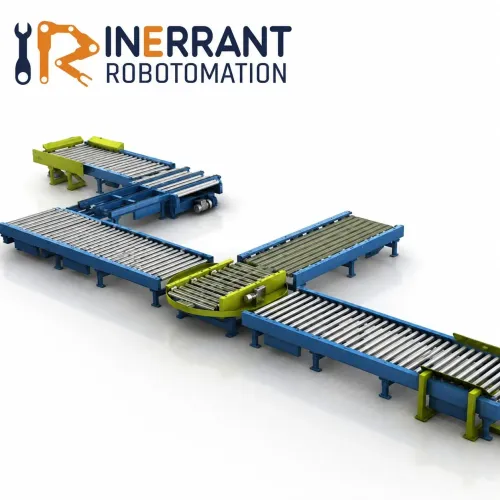
Automation level: Manual loading may suit smaller batches, while high-volume manufacturing may require conveyors, indexing mechanisms, robots, scanners, or automatic fixtures.
For manufacturers in Pune, Chakan, Bhosari, Pimpri-Chinchwad and other Maharashtra industrial clusters, another consideration is product variety. A facility may produce several components on the same machine. In such cases, recipe management and changeover arrangements become important.
A useful comparison is between standalone and integrated laser marking.
A standalone system offers flexibility for batch production. Operators can load parts, select the appropriate program, initiate marking, and unload the component. This approach can work well where production volume is moderate or several different products need to share one machine.
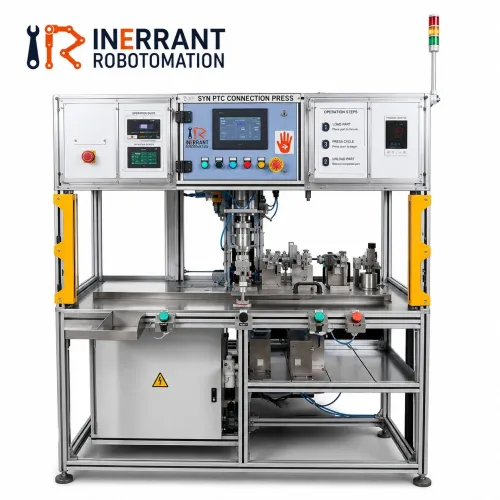
An integrated system becomes attractive when marking is one stage of a continuous manufacturing process. The equipment can receive information from the production line, confirm component presence, perform marking, and communicate completion to the next station.
INERRANT ROBOTOMATION in Pune works with industrial automation requirements where marking technology may need to operate as part of a larger production sequence.
Potential buyers should therefore avoid choosing a fiber laser based only on laser wattage or headline specifications. A more useful evaluation includes sample marking on the actual component, cycle-time testing, readability checks, fixture assessment, software requirements, automation compatibility, and maintenance access.
When those factors align with production needs, fiber laser technology can provide a practical approach to permanent metal identification and traceability.