Manufacturing businesses are under constant pressure to increase output, maintain product quality, reduce repetitive manual work, and make production processes more predictable. This is where an experienced Assembly Line Automation Company in Pune can play an important role. Assembly line automation combines mechanical systems, sensors, controls, material handling, inspection, and process equipment to perform repetitive production activities with greater consistency.
In a conventional assembly line, operators may be responsible for component loading, positioning, fastening, checking, marking, transferring, and unloading. These activities can work well at lower production volumes, but increasing demand often exposes limitations. Cycle-time variation, operator fatigue, inconsistent assembly, production bottlenecks, and difficulty tracking defects can affect overall productivity.
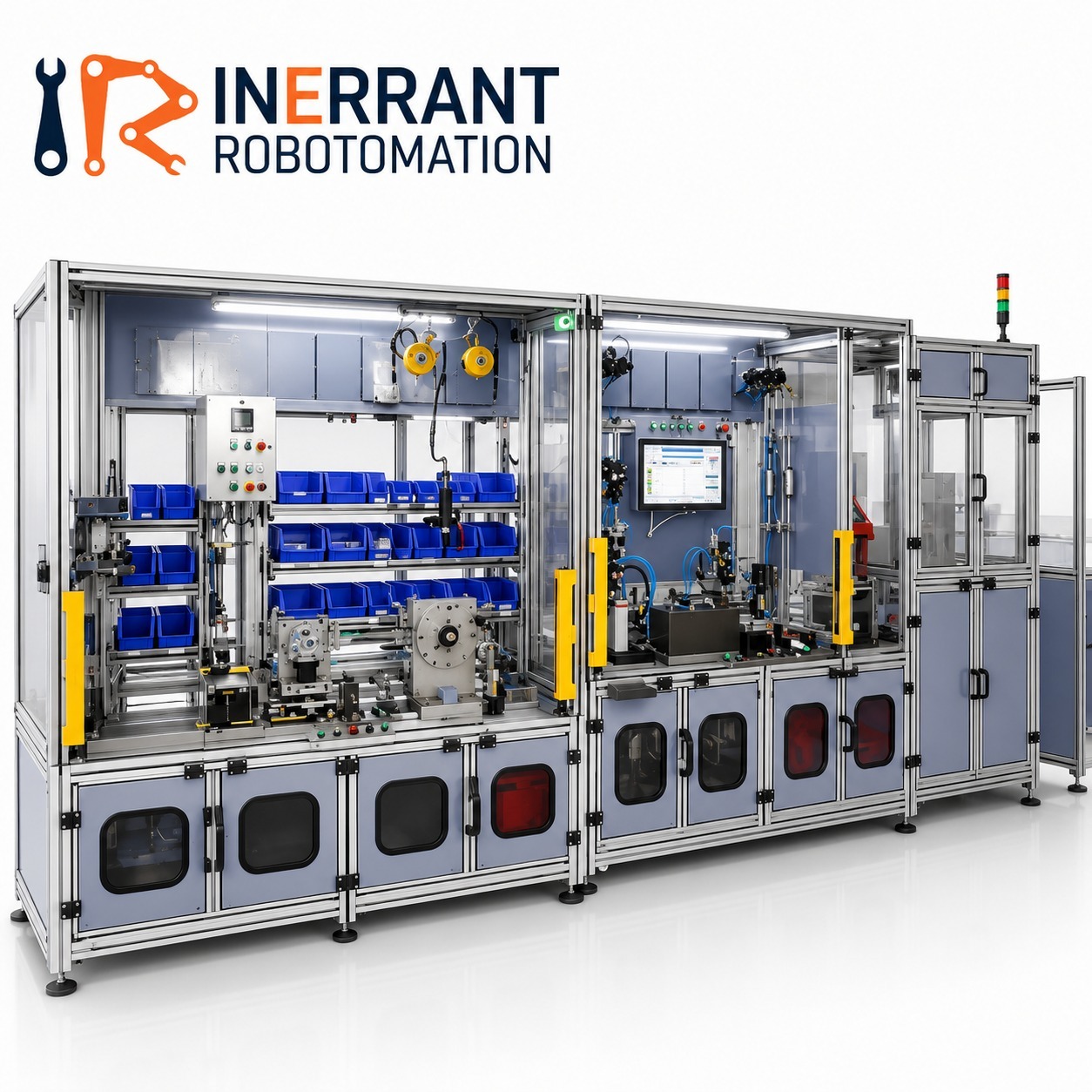
Automation is not simply about replacing manual work. A well-designed system identifies which activities benefit from automation and which still require human judgement. Depending on the application, an automated assembly line may integrate:
Component feeding and orientation
Pick-and-place mechanisms
Pneumatic or servo-operated stations
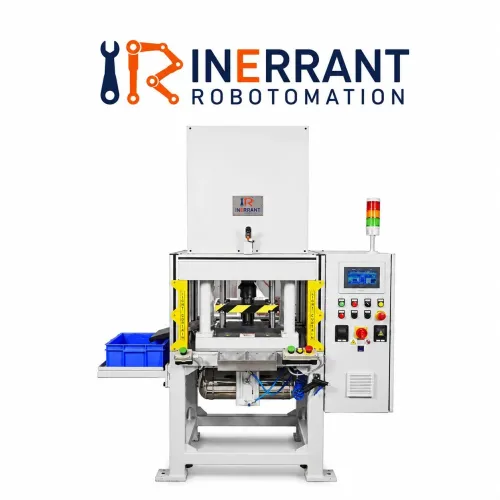
Pressing and joining operations
Sensors for component presence
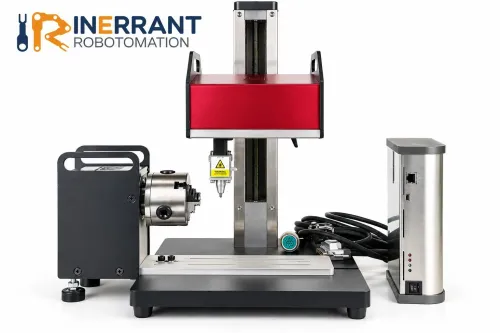
Laser marking and traceability
Inspection and rejection mechanisms
PLC and HMI-based controls
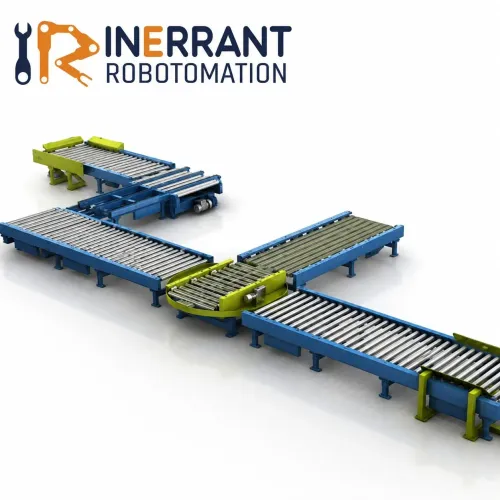
Conveyors and material transfer systems
Production data collection
For manufacturers in Pune and other industrial areas of Maharashtra, automation can be particularly useful when production volumes increase or when customers require tighter process control. Automotive components, electrical products, engineering assemblies, consumer products, and precision-manufactured parts can all involve repetitive operations suitable for automation.
Before automating a production line, manufacturers should study the existing process carefully. The first question should be whether the current production problem is caused by insufficient capacity, inconsistent processes, poor workstation design, material flow issues, or quality variation. Automating an inefficient process without addressing its underlying problems may simply reproduce those problems at a higher speed.
Cycle time is another important consideration. Each station should be designed around the required takt time while allowing adequate time for loading, processing, inspection, and transfer. If one operation takes significantly longer than the others, it can become a bottleneck for the entire line.
Flexibility also matters. Manufacturers producing multiple variants should determine whether tooling, fixtures, recipes, and controls can accommodate future product changes. Modular automation can sometimes provide greater long-term value than a highly specialized system designed around only one product.
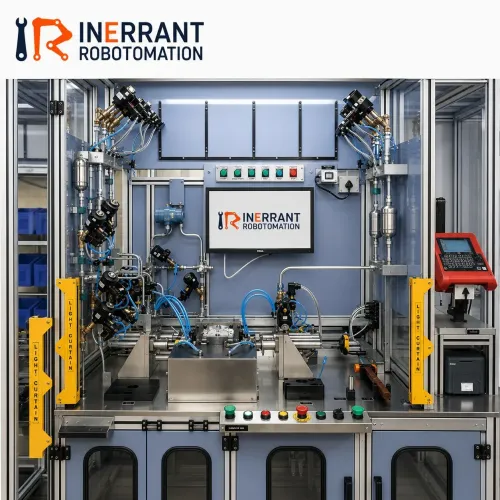
Safety should remain part of the engineering process from the beginning. Guards, interlocks, emergency stops, light curtains, sensors, and safe operating sequences should be selected according to the machinery and process requirements.
INERRANT ROBOTOMATION works in the industrial automation space in Pune, where manufacturers increasingly need production systems that combine productivity with repeatability and practical operation.
A successful assembly line automation project therefore starts with process understanding rather than equipment selection. Manufacturers should define production targets, quality requirements, available floor space, product variations, operator involvement, traceability needs, and future capacity before finalizing the system architecture. When these factors are considered together, automation can become a structured manufacturing improvement rather than simply another machine on the shop floor.