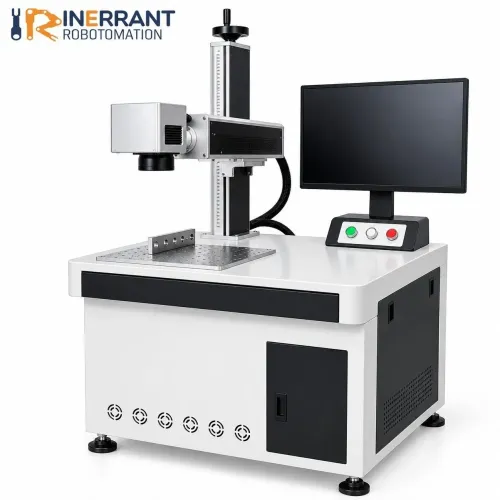
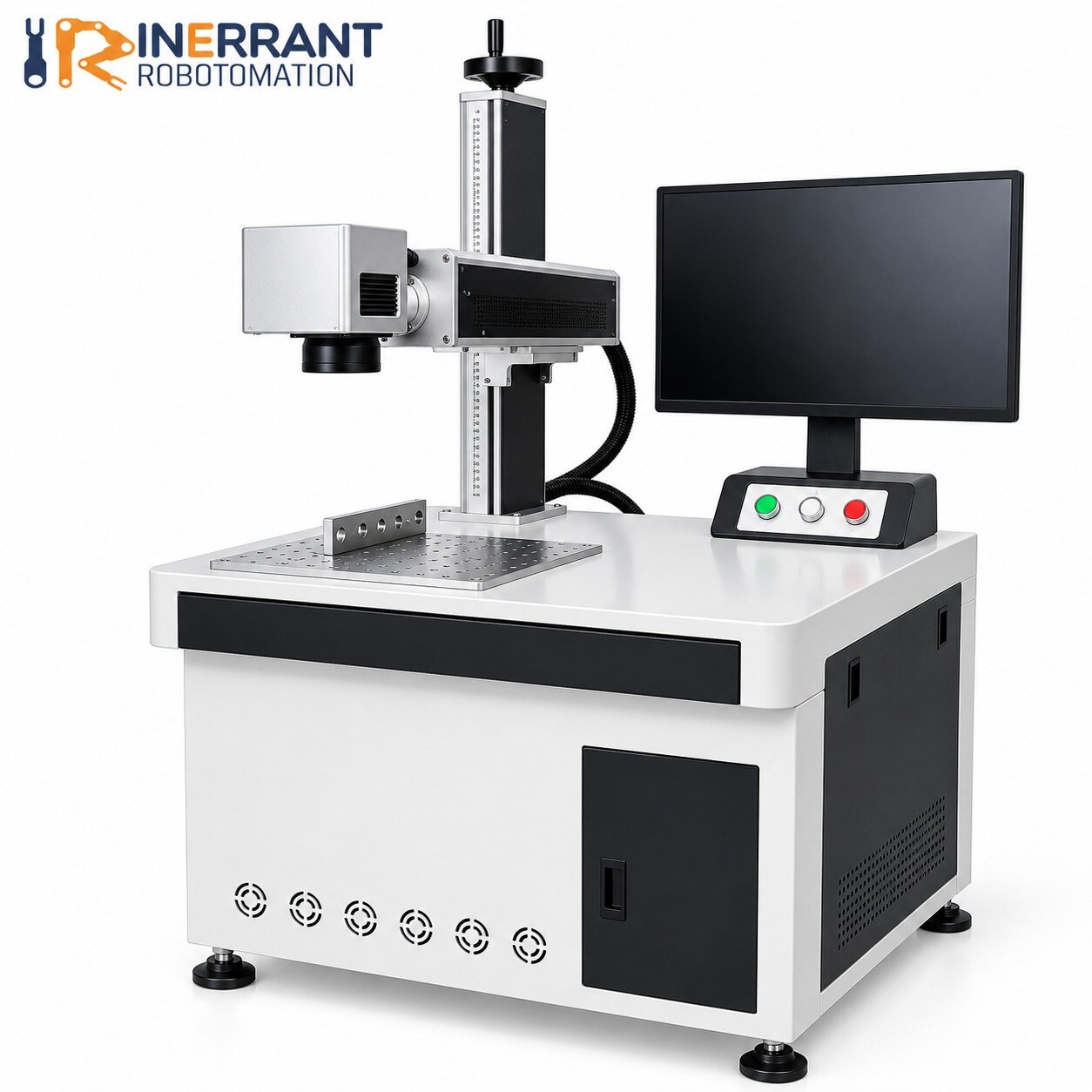
A CNC controller determines how the beam or workpiece moves; UV identifies the laser wavelength and its interaction with the material. Separate those two decisions, then match the marking process to the substrate, required contrast, depth, inspection method and production risks.
Key takeaways
- Match wavelength and marking process to the substrate and required mark.
- Use UV for heat-sensitive materials, but test optics, residues and surface damage.
- Compare UV, fiber and CO2 sources before specifying the machine.
- Demand sample marks, inspection criteria and documented safety controls.
CNC and UV describe different parts of the machine
CNC describes motion and toolpath control; UV describes the laser’s wavelength. A CNC laser marking machine can use a fiber, CO2 or UV source, while a UV laser marking machine can use galvanometer scanning, CNC axes, or both. They are not competing categories.
| Option | What it controls | Typical use |
|---|---|---|
| CNC | Part, head or rotary-axis movement | Large parts, multiple faces, controlled stand-off and repeatable toolpaths |
| Galvo scanner | Beam position across a fixed work plane | Fast marks within a defined field |
| UV laser | 355 nm wavelength and its interaction with the material | Fine, high-contrast marks on plastics, films, coatings, glass and ceramics |
| CNC plus UV | Motion and wavelength together | Large or irregular components needing UV’s lower-thermal-impact process |
Choose based on the positioning problem and the substrate, not the label alone. A galvo UV marker may be faster for small flat parts; CNC movement suits a housing, pipe or rotary component that cannot sit inside one scan field. Combining them requires coordinate transformation, calibration, backlash control and synchronisation.
Adding an axis does not guarantee accuracy.
Also separate marking from engraving. Marking can change colour, reflectivity or surface chemistry with little depth; engraving removes material and creates a measurable recess. If depth, roughness, burrs or cleanability matter, specify those measurements rather than accepting a visually strong mark.
Choose the marking process by substrate and required result
Choose UV for a clean, high-contrast mark on heat-sensitive plastics, films, coatings, glass or ceramics; choose fiber for fast, durable marks on bare metal. The required result matters as much as the substrate: a colour change is marking, while material removal creates measurable engraving depth.
| Option | Best substrate | Result and trade-off |
|---|---|---|
| UV laser | Plastics, films, painted parts, glass, ceramics | Fine, low-heat contrast with less melting or charring; pigment, filler, flame retardant and surface texture can change the result. |
| Fiber laser | Stainless steel, aluminium, brass and other bare metals | Fast annealing, colour change or engraving; high average power suits production metal marking. |
| CO2 laser | Paper, wood, rubber, leather, glass and some coated materials | Efficient absorption on non-metals; unsuitable for many clear plastics and bare metals. |
| Dot-peen | Hard metal plates, tools and vehicle components | Deep, tactile, durable identification that survives abrasion; the impact can deform thin or cosmetic parts. |
| Electromagnetic marking | Conductive metal requiring controlled indentation | Quiet, programmable dot or scribe marks without a high-power optical source; it cannot mark non-conductive substrates. |
Test black, white and coloured plastic parts rather than approving one sample. A UV mark that looks excellent on unfilled nylon can fade or turn chalky on glass-filled, flame-retardant nylon.
For an industrial laser marking machine, qualify fume extraction with the material safety data sheet. Capture smoke at the mark, protect the lens from redeposited debris, and reject PVC or halogenated stock unless the system is engineered for its corrosive decomposition products.
Why UV solves some marking failures—and creates others
UV earns its place when a 1,064 nm fiber laser melts, yellows or chars the part, damages a coating, or produces unreadable fine text. A 355 nm UV laser marking machine can trigger surface chemistry with less bulk heating, making it useful for thin films, coated parts, glass, ceramics, electronics and heat-sensitive plastics.
It does not guarantee cold marking: excessive fluence still causes melting, carbonisation, burrs, cracking and a heat-affected zone.
| Option | Best fit | Main risk |
|---|---|---|
| UV | Fine, high-contrast marks on plastics, coatings, glass and ceramics | Slow processing, debris on optics, formulation-sensitive results |
| Fiber | Bare steel, aluminium and other metals requiring durable contrast or depth | Melting, whitening or poor contrast on some polymers |
| CO2 | Wood, paper, leather and selected films or painted surfaces | Excess heat, charring and weak marks on reflective or heat-sensitive parts |
A UV mark may change colour or reflectivity without removing measurable material; choose engraving when you need a defined recess, depth or roughness limit. Test the actual part, not just its polymer name.
Titanium dioxide, carbon black, flame retardants, glass fibre, plasticisers and UV stabilisers can turn the same nominal ABS into a white, dark, foamed, melted or nearly invisible mark.
Clean and stabilise the surface before testing: oil, mould release, moisture, scratches, texture and uneven coatings alter focus and contrast. Run black, white and coloured samples at production speed, then inspect after cleaning, abrasion and thermal exposure.
Size extraction for the plume; PVC and halogenated materials can release corrosive gases, while residue on the scan lens gradually reduces transmission and contrast.
Compare UV with fiber and CO2 before choosing the laser
UV outperforms fiber and CO2 when you need fine, high-contrast marks on heat-sensitive plastics, films, coatings, glass, ceramics or electronic components. It is an unnecessarily slow and costly choice when a fiber laser already marks bare metal quickly and deeply.
| Option | Best fit | Main limitation |
|---|---|---|
| UV, 355 nm | Fine text, Data Matrix codes, plastics, films, glass and coated parts with low thermal damage | Lower average power can reduce area-marking speed; the source and optics cost more |
| Fiber, 1,064 nm | Bare steel, aluminium, brass and other metals; deep engraving and high throughput | Can melt, yellow, char or create a heat-affected zone in some plastics and coatings |
| CO2, 10.6 µm | Wood, paper, rubber, packaging films, acrylic and other organic materials | Poor choice for bare metals; heat can burn edges or distort fine detail |
Choose fiber when the specification calls for a measurable recess, strong wear resistance or rapid serial-number production on metal. Choose CO2 for broad-area marking on packaging and organic sheets. Choose UV when contrast, edge sharpness and low substrate damage matter more than maximum removal rate.
Do not assume “cold marking” means damage-free. Excessive UV fluence can still melt polymer, leave debris, crack glass or carbonise additives. A laser engraving machine may create an attractive mark that fails depth, roughness or cleanability limits; qualify the actual part on an industrial laser marking machine before comparing cycle times and purchase cost.
Qualify the machine with samples, inspection and safety controls
Approve the system only after it marks your production parts, not a supplier’s generic coupon. Supply black, white and coloured plastics, coated metals, glass or ceramics, plus the dirtiest surface condition and fastest intended cycle.
- Run a statistically meaningful sample at the proposed speed, power, pulse settings, focus, fixture and cycle time. Include start-up and repeat cycles.
- Measure character height, contrast, position and depth with calibrated tools. Confirm readability after cleaning, abrasion, chemicals, heat, humidity and the required service life.
- Inspect glass and ceramics under magnification for microcracks and chips; use proof or mechanical testing when a marked part is safety- or pressure-critical.
- Ask how a CNC laser marking machine maintains accuracy across the scan field, including calibration, backlash compensation, coordinate transformation and axis synchronisation.
- Reject a laser engraving machine if it creates excessive recess depth, burrs, roughness or debris where a clean, shallow mark is required.
- Require a written fume-extraction plan covering capture position, airflow, filters, maintenance and the material safety data sheet. Do not process PVC or halogenated material without a documented hazard assessment.
- Inspect the enclosure against ISO 11553-1 and IEC 60825-1: verify interlocks, viewing-window rating, beam stops, warning indicators, service controls and emission limits. UV radiation is invisible, so operator awareness is not a safety control.
Inerrant can be evaluated on these same evidence points: sample results, inspection records and guarding—not wavelength claims alone. A passed factory demonstration is not production qualification.
Related products
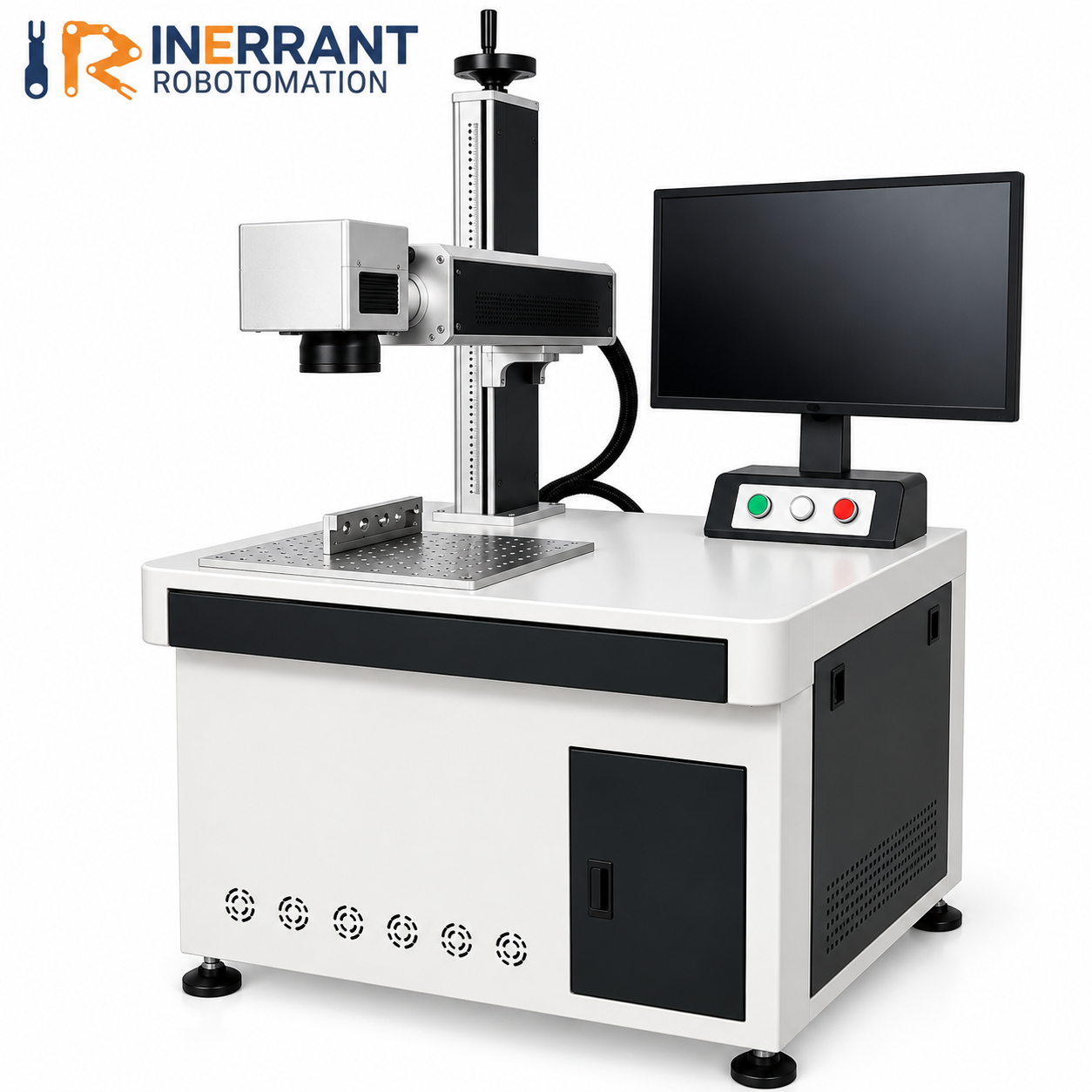 | Laser Marking Machine Inerrant Robotomation Pvt. Ltd.'s UV Laser Marking Machine is created for precise marking of delicate materials and for very specific uses. View product → |
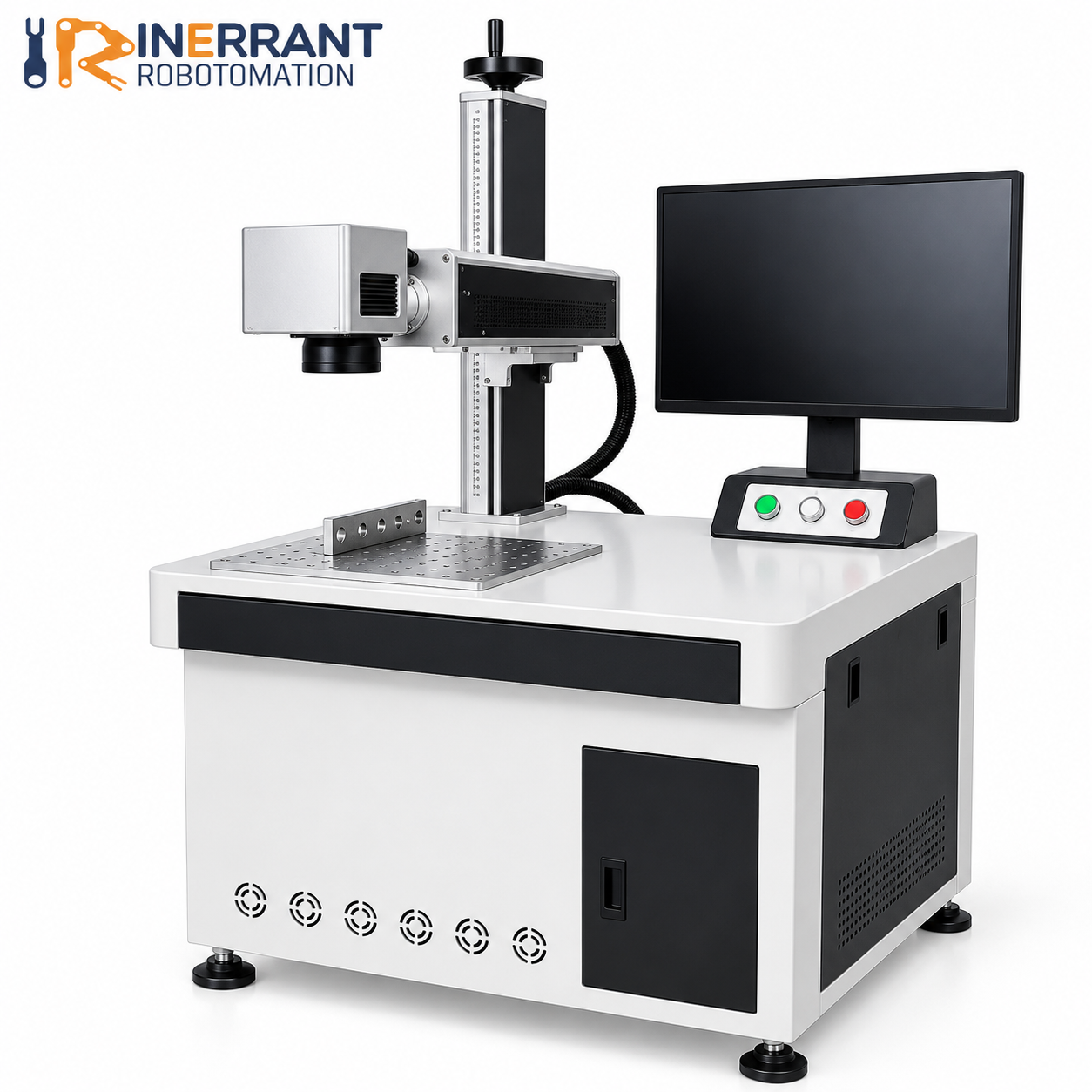 | Laser Marking Machine Inerrant Robotomation Pvt. Ltd is a leading Manufacturer and Supplier of Laser Marking Machine from Pune, Maharashtra, India. View product → |
Frequently asked questions
Are CNC laser marking machines and UV laser marking machines competing categories?
No. CNC describes motion and toolpath control, while UV describes the laser wavelength. A CNC machine can use fiber, CO2 or UV, and a UV machine can use galvanometer scanning, CNC axes or both.
How should you choose between UV, fiber and CO2 laser marking?
Choose by substrate and required result. UV suits fine, low-heat marking on many sensitive materials; fiber suits many metals and some plastics; CO2 suits materials such as wood, glass, paper and selected polymers. Confirm the choice with sample testing.
Why can UV laser marking solve marking failures?
UV uses shorter-wavelength light that can produce fine marks with less thermal spread on suitable substrates. It can reduce melting, burrs, discoloration and heat distortion, but the result still depends on material, coating, settings and surface preparation.
What should you check before buying an industrial laser marking machine?
Request production-representative samples, define contrast and readability criteria, test mark durability and verify inspection, enclosure, interlock, extraction and laser-safety controls.
Related products
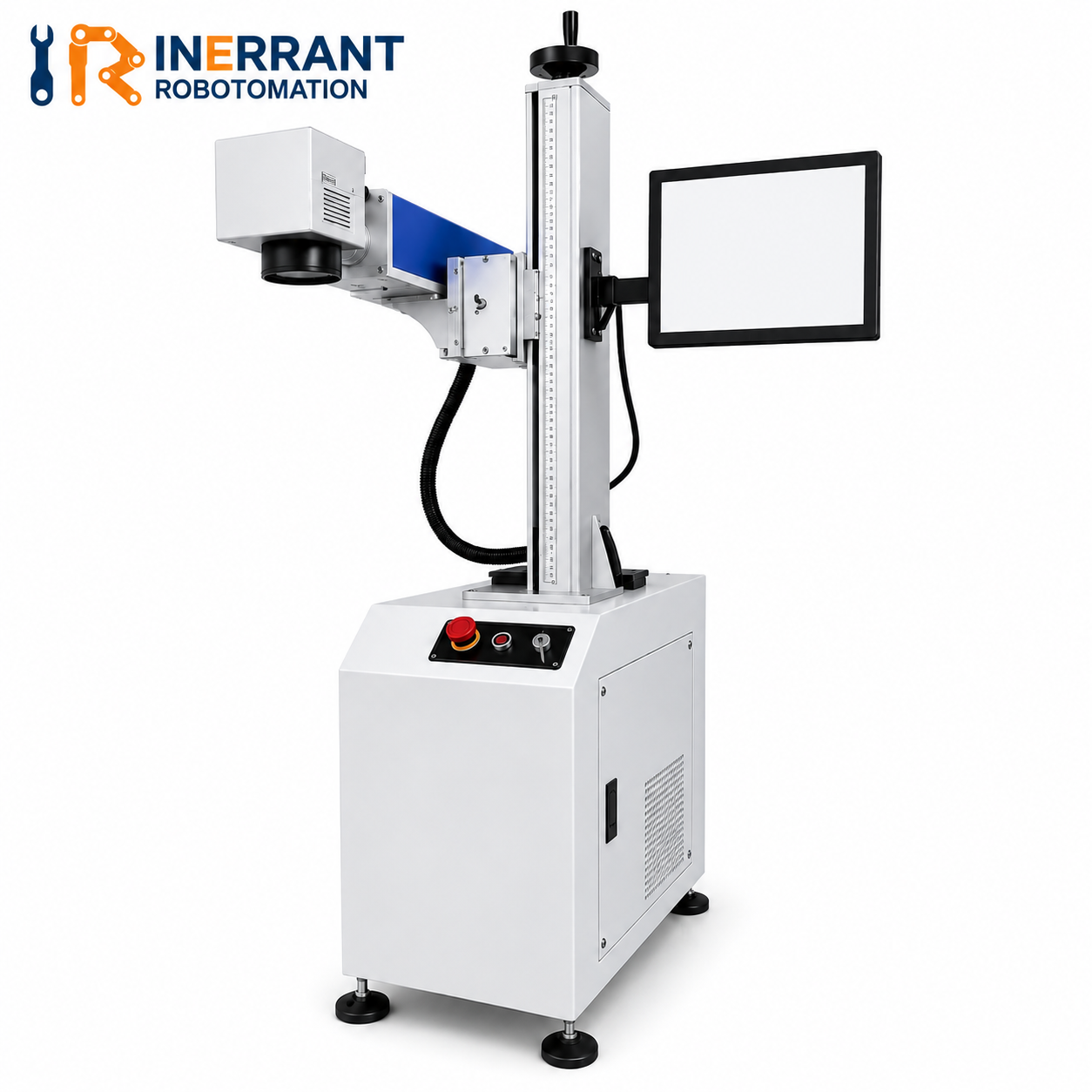 | Laser Marking Machine Inerrant Robotomation Pvt. Ltd. is proud to offer fly laser marking machines, a revolutionary technology for adding permanent and precise markings to... View product → |
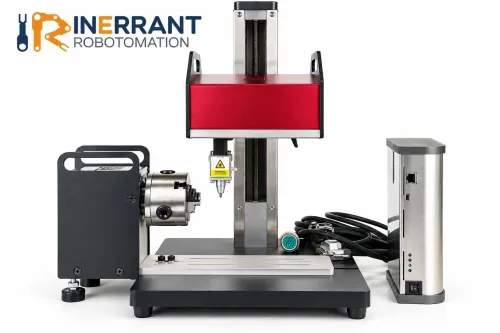
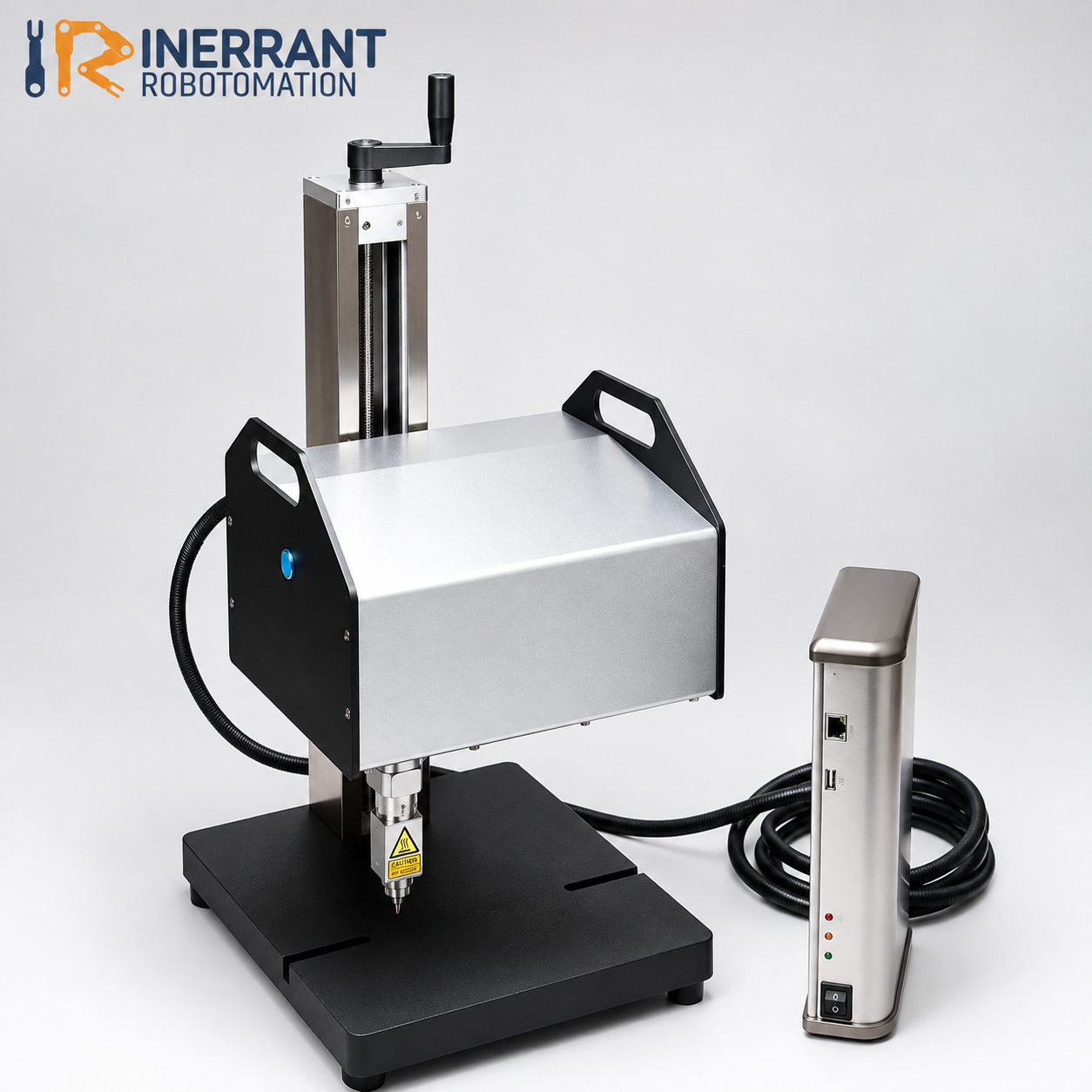 | Column Mounted Marking Machine Column Mounted Marking Machine The column mounted dot peen marking system. Ideal for marking small to medium sized parts,its working speed, consistent quality, and reliable... View product → |