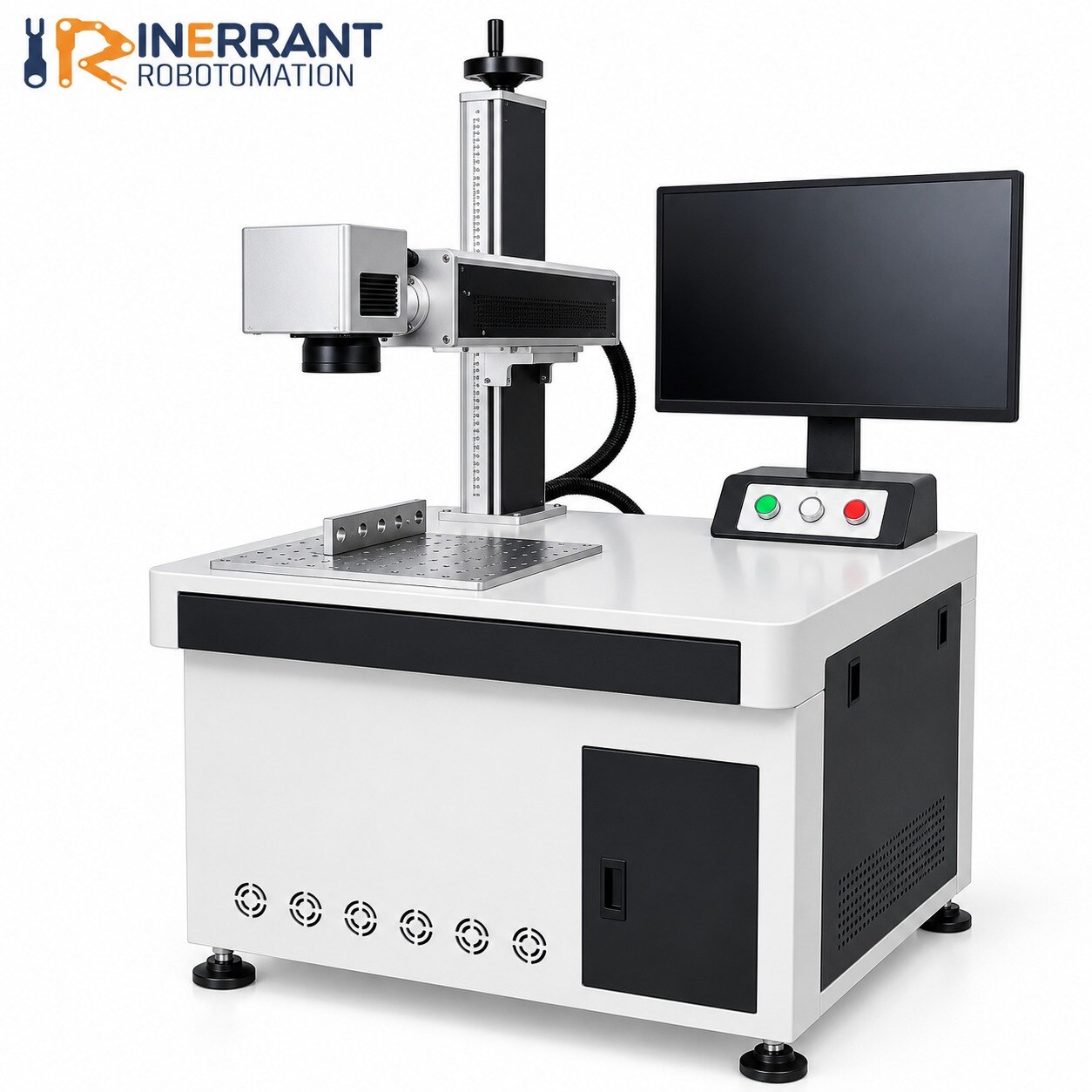
Portable marking can mean a wheeled Class 1 workstation, a detachable marking head or an open Class 4 system that must be taken to the part. Before comparing quotations, identify the laser source, safety architecture, workholding, power arrangement and traceability software you need; by the end, you can turn those requirements into a practical Pune-site acceptance test.
Key takeaways
- Choose the laser source from your material and required mark.
- Treat open-beam portable systems as Class 4 hazards.
- Define portability at the part, not only by machine weight.
- Demand a sample-marking trial and written acceptance criteria.
Start with the laser source, safety class and real marking requirement
Choose the laser source and safety class from the material, mark and operator exposure—not from the word “portable.” A portable laser marking machine may be a wheeled, enclosed Class 1 workstation or an open marking head that exposes a Class 4 beam; battery power does not make the latter safe.
| Option | Best fit | Safety and configuration |
|---|---|---|
| Fiber, 20–50 W | Bare or coated steel, stainless steel, aluminium; serial numbers, logos and deep engraving | Enclosed Class 1 wheeled unit for routine production; open heads require controlled access |
| MOPA fiber | Anodised aluminium, coloured plastics and heat-sensitive finishes; black or colour-contrast marks | Specify pulse width and frequency; enclosure and interlock still determine safety |
| CO2, 30–60 W | Plastic, rubber, wood, glass and painted non-metals; surface marking | Confirm extraction for smoke and fumes; use a Class 1 enclosure where operators work nearby |
| UV, 3–10 W | Fine marks on plastics, films, electronics and fragile coated parts | Lower thermal load, but beam protection and interlocks remain necessary |
Ask for wavelength, rated power, pulse characteristics, marking speed, field size, working distance, focus tolerance and repeatability. A CNC laser marking machine may use two-axis galvo steering with software Z focus, not conventional cutting axes, so specify the rotary axis, datum method and coordinate accuracy you need.
For Pune production, confirm 230 V supply, earthing, dust control, extraction discharge and service access. Require an interlocked door for Class 1 equipment, or a written Class 4 procedure with beam barriers and warning signage. Acceptance-test your actual parts for contrast, code grade, depth, cycle time and repositioning repeatability.
Define what portable means at the part
Portable means the marking system reaches the part, not simply that one person can lift it. A wheeled, enclosed Class 1 workstation still needs a level floor and enough clearance to roll through doors. An open-frame or handheld head needs controlled beam access, warning signs, interlocks where possible and documented Class 4 laser procedures.
Before approving a portable laser marking machine, specify:
- Movement: machine weight, castors or lifting points, door width, floor loading and the time allowed for relocation.
- Positioning: a clamp, magnetic base, tripod or adjustable stand that holds the head against a fixed or curved part without shifting.
- Reference: the datum, coordinate accuracy and repeatability required after transport; “CNC” may mean galvanometer X-Y steering with software Z focus, not a conventional multi-axis machine.
- Focus: working distance, autofocus or a mechanical gauge, marking-field size and the focus tolerance across the surface.
- Services: 230 V supply, earthing, extraction discharge, network connection and access for servicing.
For a large vessel, pipeline or installed machine, confirm that the head can travel to the part and that its cable length supports the location. For remote work, record battery runtime, charging time and any generator or inverter requirement; a small battery does not make an exposed beam safe.
The phrase CNC laser marking machine portable machine in Pune describes a search, not a specification. Demand a relocation and re-reference procedure in the quotation.
Compare marks, materials and production performance
A laser gives a clean, high-resolution mark without touching the part; dot-peen creates a permanent indentation with a stylus. Choose by substrate and evidence, not by the advertised scan speed of an industrial laser marking machine.
| Dimension | Laser marking | Dot-peen marking |
|---|---|---|
| Metals | Fiber lasers mark steel, aluminium, brass and coated metals | Best suited to steel, aluminium and other hard metals |
| Plastics | CO2 or UV sources suit selected plastics; test each grade | Works on some rigid plastics but can crack thin parts |
| Finishes | Removes paint or anodising, or changes colour with limited abrasion | Breaks through the finish and leaves a punched pattern |
| Appearance | Sharp text, logos and 2D codes; black, white or coloured results depend on recipe | Dotted, tactile characters with lower fine-detail capability |
| Depth | Surface mark or engraving; depth depends on power and passes | Direct mechanical depth, but leaves a cratered surface |
| Speed | Fast scanning, yet loading, focusing, verification and unloading set throughput | Rapid for simple serials; impact rate and character size limit output |
| Heat | Adds a heat-affected zone; UV reduces it on suitable plastics | No laser heat, but impact can deform thin parts |
| Noise and damage | Quiet, with little contact damage; extraction is required for coatings, oil or plastic | Audible impacts and visible indentation or burr risk |
Test a CNC laser marking machine on production parts after repositioning. Record contrast or code grade, depth, line width, complete cycle time and repeatability; a high scan-speed figure is not completed-part throughput.
Specify codes, software, extraction and verification before buying
Do not buy a marker that only accepts typed text. Specify how it will generate unique serial numbers, import logos, encode Data Matrix ECC 200 or QR symbols, and prevent duplicate or skipped numbers.
1. Require recipe-based software with user permissions, locked marking parameters, date and shift fields, serial-number rules, and a database or CSV/API connection. It must record the part ID, operator, timestamp, recipe version, result and machine fault, then export that history for audits.
2. Ask for vector logo formats such as DXF, SVG or AI, plus font control and barcode settings. The software must show cell size, error-correction level, quiet zone and human-readable text before marking; incorrect content should block the cycle rather than produce a bad part.
3. Specify camera verification separately from laser marking. A camera must read the actual symbol after marking, reject unreadable or mismatched content, and report a defined grade under ISO/IEC 15415 or ISO/IEC 29158. Test contrast, dot gain, distortion, contamination and curved surfaces using your own parts.
4. Include fume extraction sized for the material and an interlock that stops marking when extraction fails. A portable laser marking machine needs a stable focus reference and repeatable part datum after relocation; an industrial laser marking machine also needs documented calibration, spare protective windows and a camera or scanner that can be serviced locally.
Put these functions in the quotation and acceptance test. Verify completed-part cycle time, not just galvo scan speed, including loading, focusing, extraction clearance, verification and data logging.
Use a Pune supplier quotation and acceptance test to expose hidden limits
A quotation is only useful if it states what survives transport, not just the laser’s rated power. Ask every laser marking machine manufacturer to quote the same part, mark size, material, cycle time and verification method, then compare service risk as well as machine price.
For a CNC laser marking machine, compare each portable machine in Pune against these items:
| Item | Require in the quotation | Hidden limit to expose |
|---|---|---|
| Laser and optics | Source, wavelength, pulse settings, spare protective windows and galvo availability | A high-power source is useless if optics need frequent replacement |
| Portability | Weight, dimensions, head format, field size, working distance and reference-reset method | A “portable” head may still need a rigid fixture and precise re-alignment |
| Utilities and site | 230 V current, earthing, battery runtime, charging time, inverter or generator limits, extraction and network needs | Relocation can add setup time or prevent operation at the job |
| Support | Source warranty, calibration method, Pune response time and who re-qualifies the machine after relocation | Alignment responsibility is left with your operator |
Run the acceptance test on production parts, including curved, coated and worst-case surfaces. Record contrast or Data Matrix grade, line width, engraving depth, cycle time including handling, focus tolerance and repeatability after repositioning and the intended duty cycle.
Use the actual code content and grading standard. A visually clean mark can fail because of dot gain, distortion, contamination or a damaged quiet zone. Test the enclosure interlock too: an open-frame Class 4 head needs controlled access and documented beam procedures, unlike a fully enclosed Class 1 workstation.
Ask Inerrant to record these results before dispatch and again after relocation.
Related products
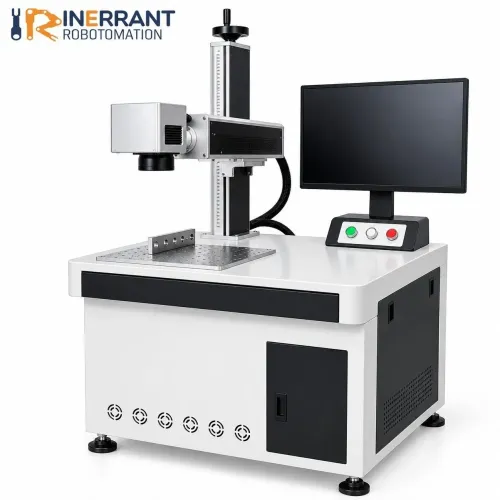
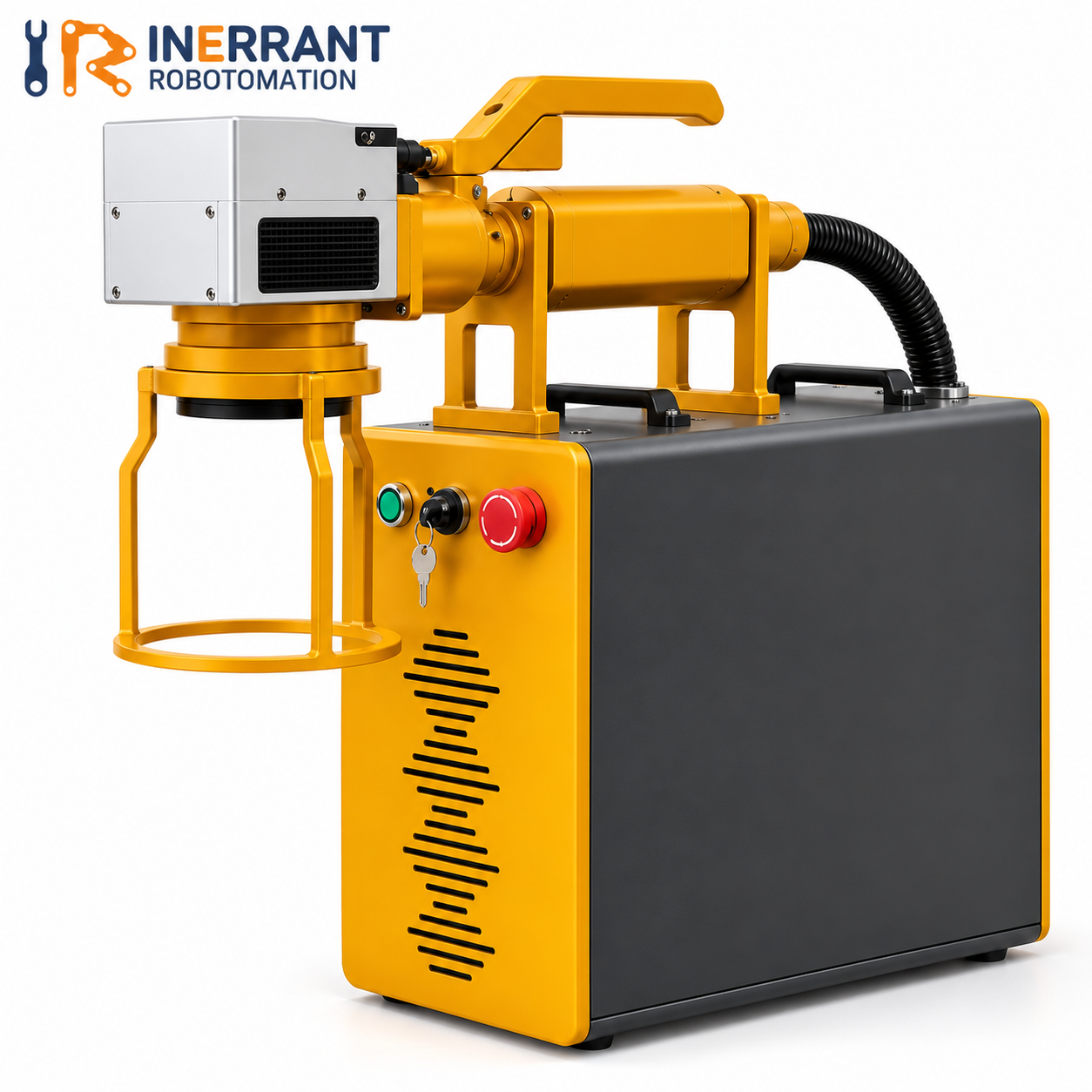 | Laser Marking Machine Inerrant Robotomation Private Limited is proud to present our Portable Model machine. View product → |
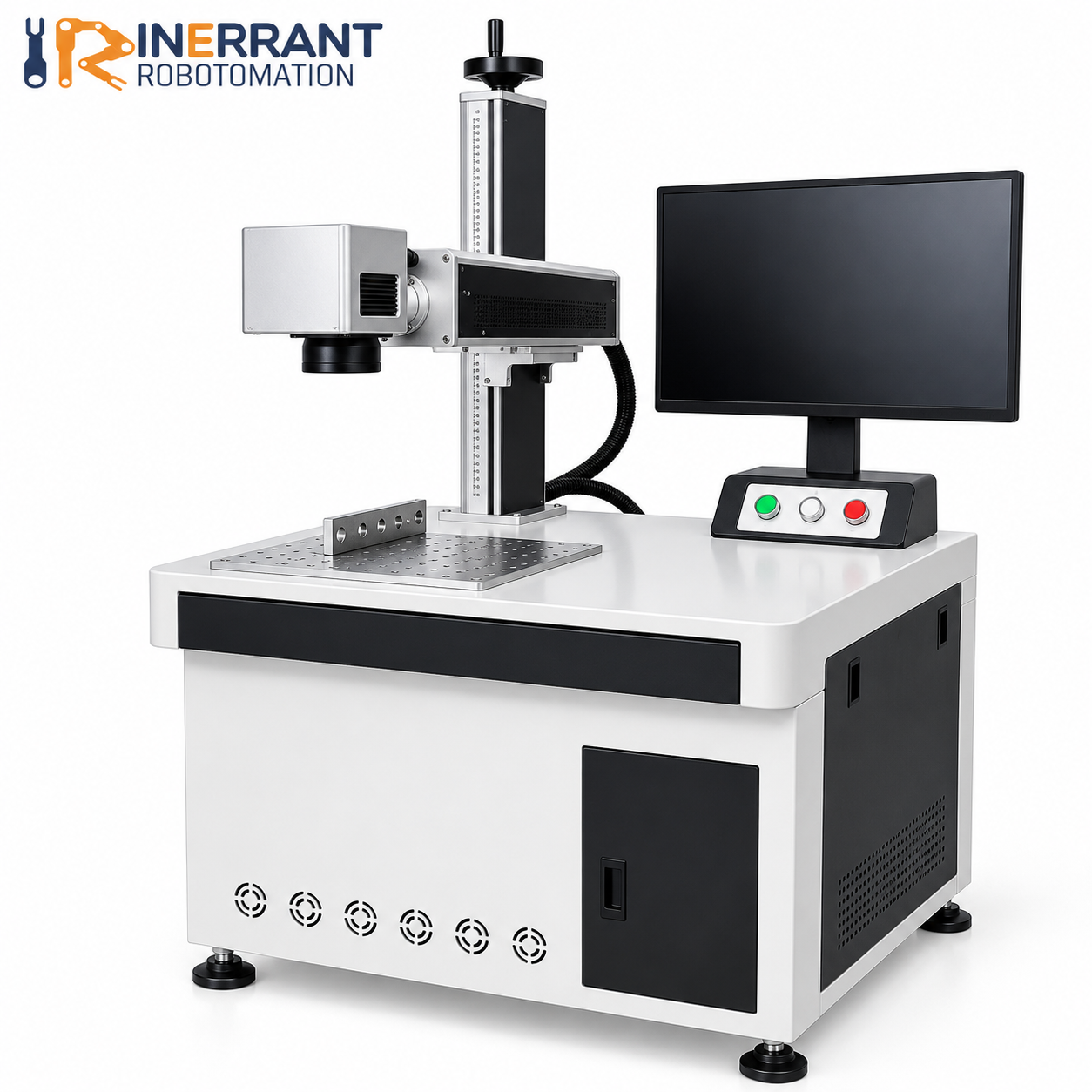 | Laser Marking Machine Inerrant Robotomation Pvt. Ltd is a leading Manufacturer and Supplier of Laser Marking Machine from Pune, Maharashtra, India. View product → |
Frequently asked questions
What should determine the laser source for a portable marking machine?
Match the source to the material, mark depth, contrast, speed and operator exposure. Fibre lasers suit many metals, while CO2 and UV sources address different material and marking requirements.
Does a portable laser marking machine automatically provide safe operation?
No. A wheeled enclosed workstation can be Class 1, while an open marking head can expose operators to a Class 4 beam. Battery power does not change the safety class.
What does portable mean in CNC laser marking?
Define whether you need to move the machine to the part, carry the marking head, or wheel a complete enclosed workstation. Check access, fixture clearance, cable length and setup time at the actual marking location.
What should you specify before requesting a Pune supplier quotation?
Specify the material, part dimensions, mark size and depth, code type, cycle time, software interfaces, fume extraction, vision verification and safety enclosure requirements.
How can an acceptance test reveal hidden limits?
Run your parts and production codes during the supplier trial, then record contrast, readability, cycle time, repeatability, reject handling, extraction performance and verification results in the purchase acceptance criteria.
Related products
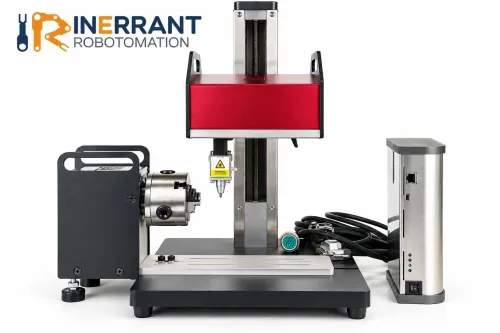
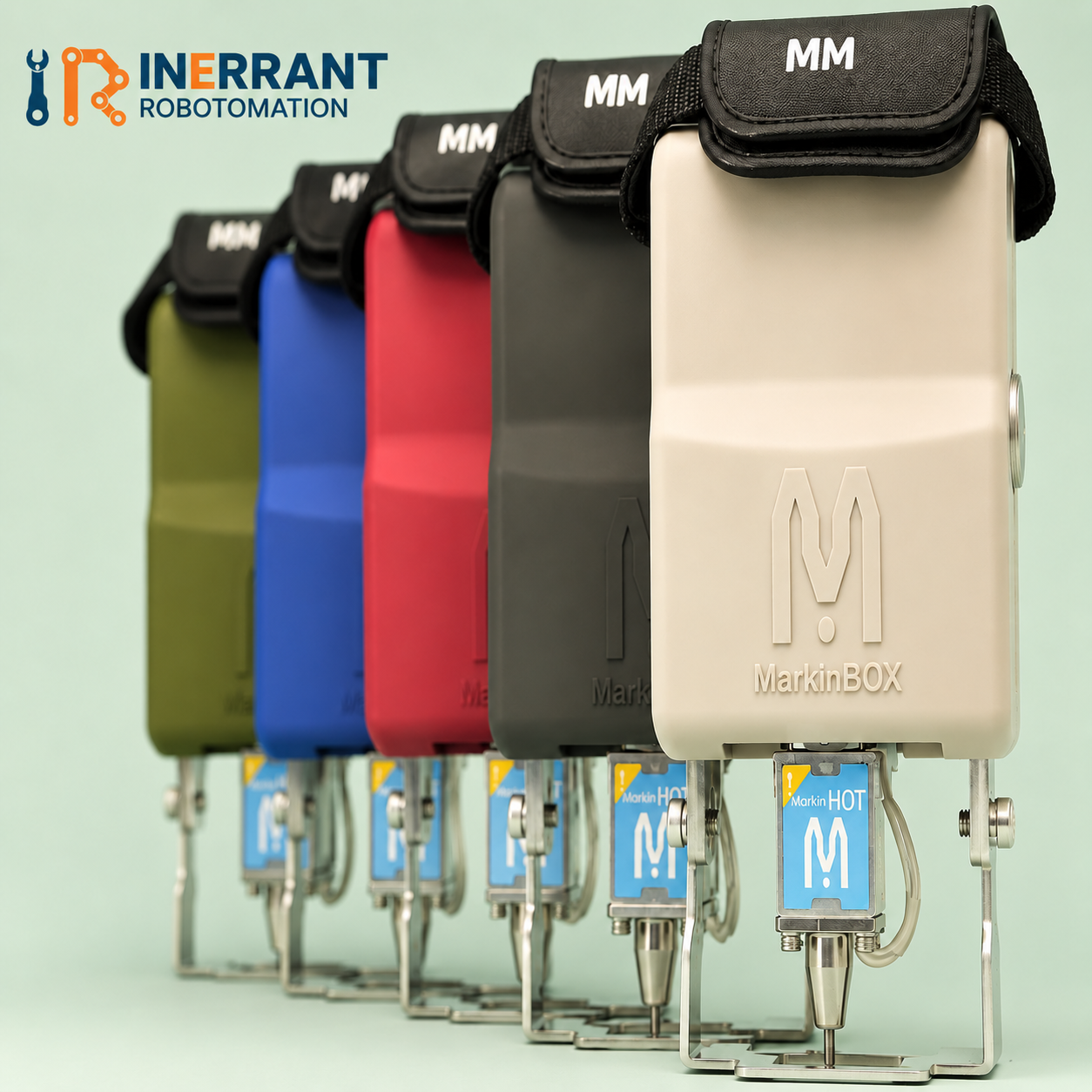 | Portable Marking Machine Inerrant Robotomation Pvt. Ltd. Produces portable marking machine used on-site to mark metals, plastics, and other materials. View product → |
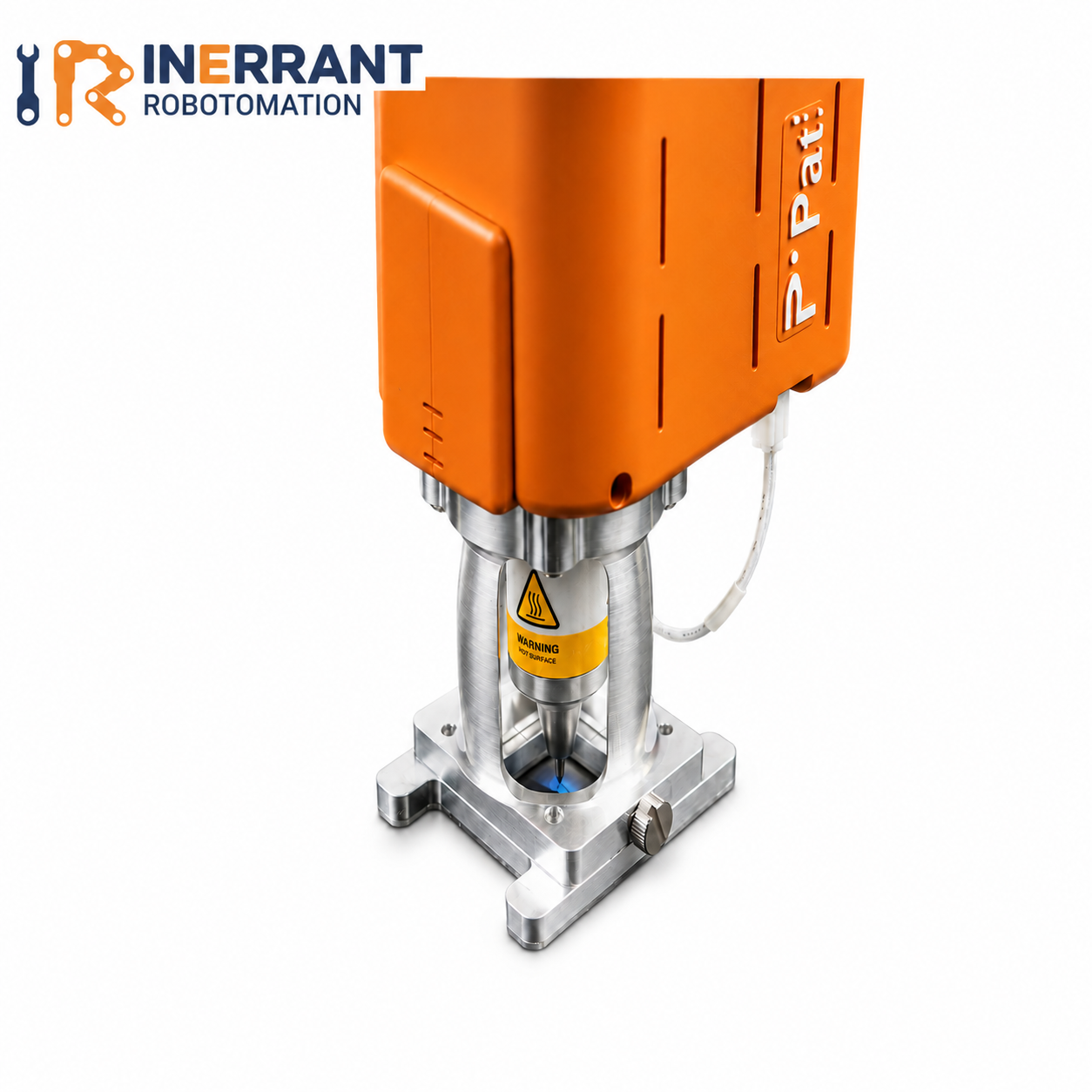 | Dot Peen Marking Machine Patmark lets you expand your marking capabilities, efficient and cost-effective marking solution. View product → |
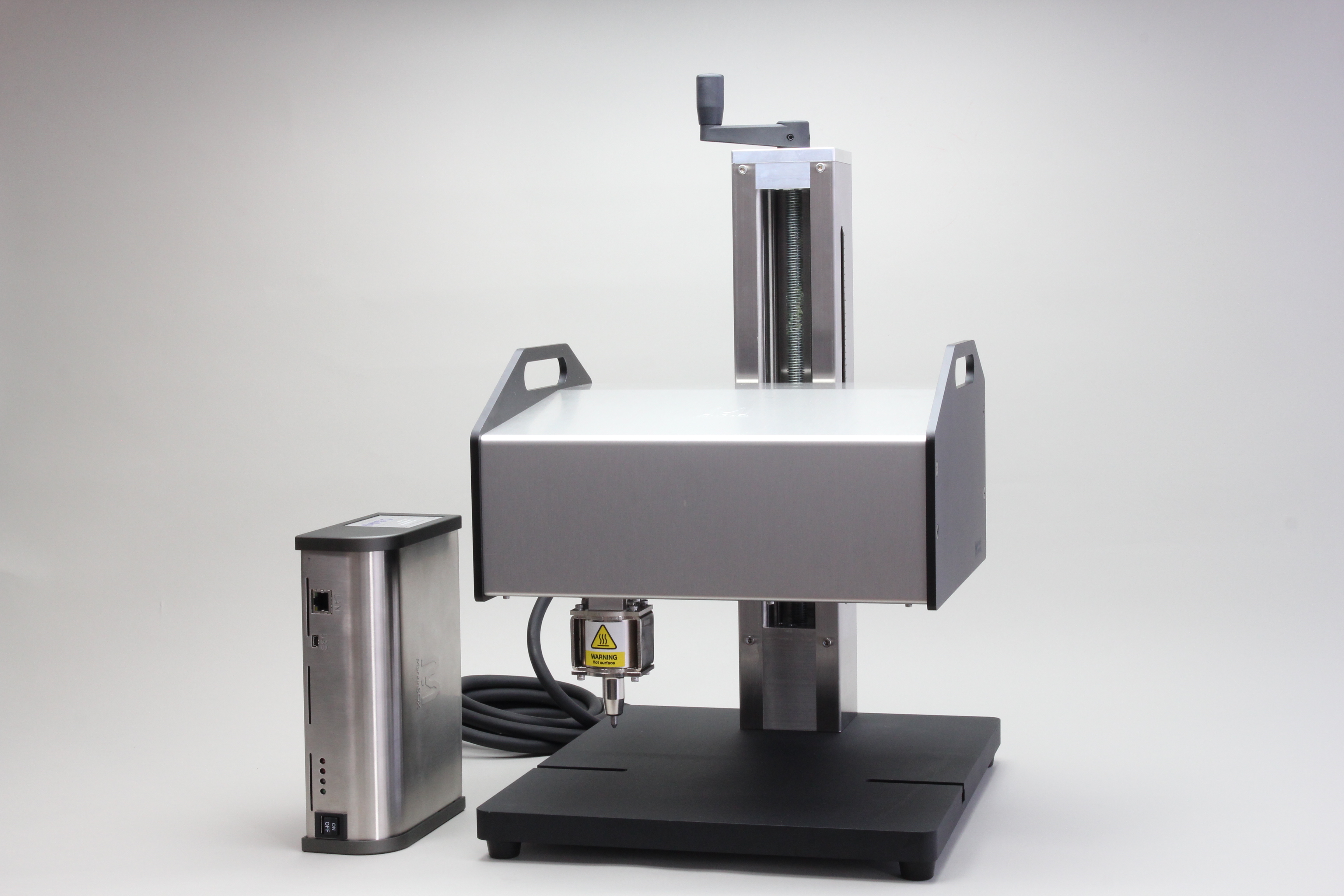 | Deep Marking Machine Marking on surfaces of plastics and hardened steel (up to 60HRC). Marking window Size 80 mm X 20 mm. View product → |
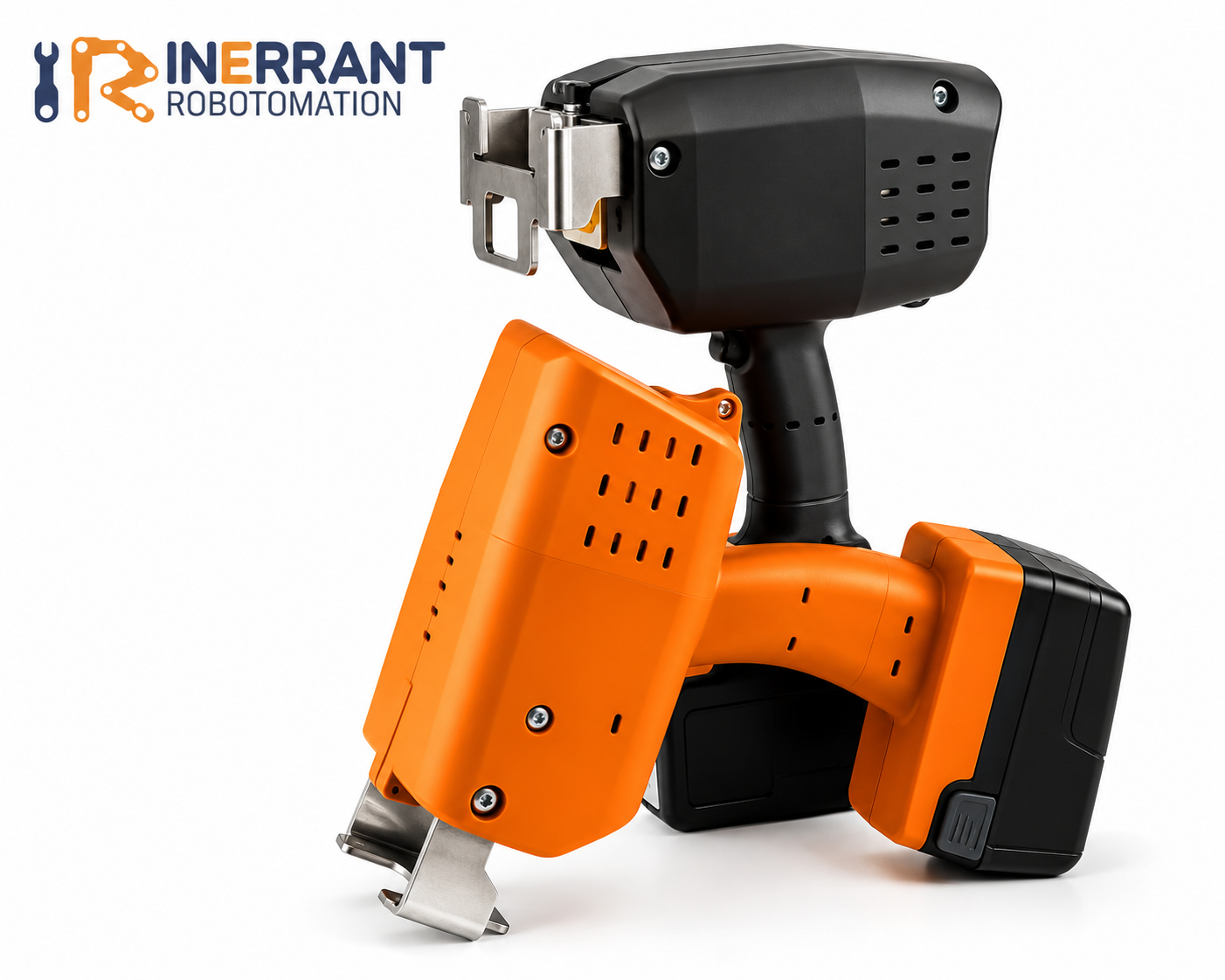 | Dot Peen Marking Machine Patmark lets you expand your marking capabilities, efficient and cost-effective marking solution. View product → |